
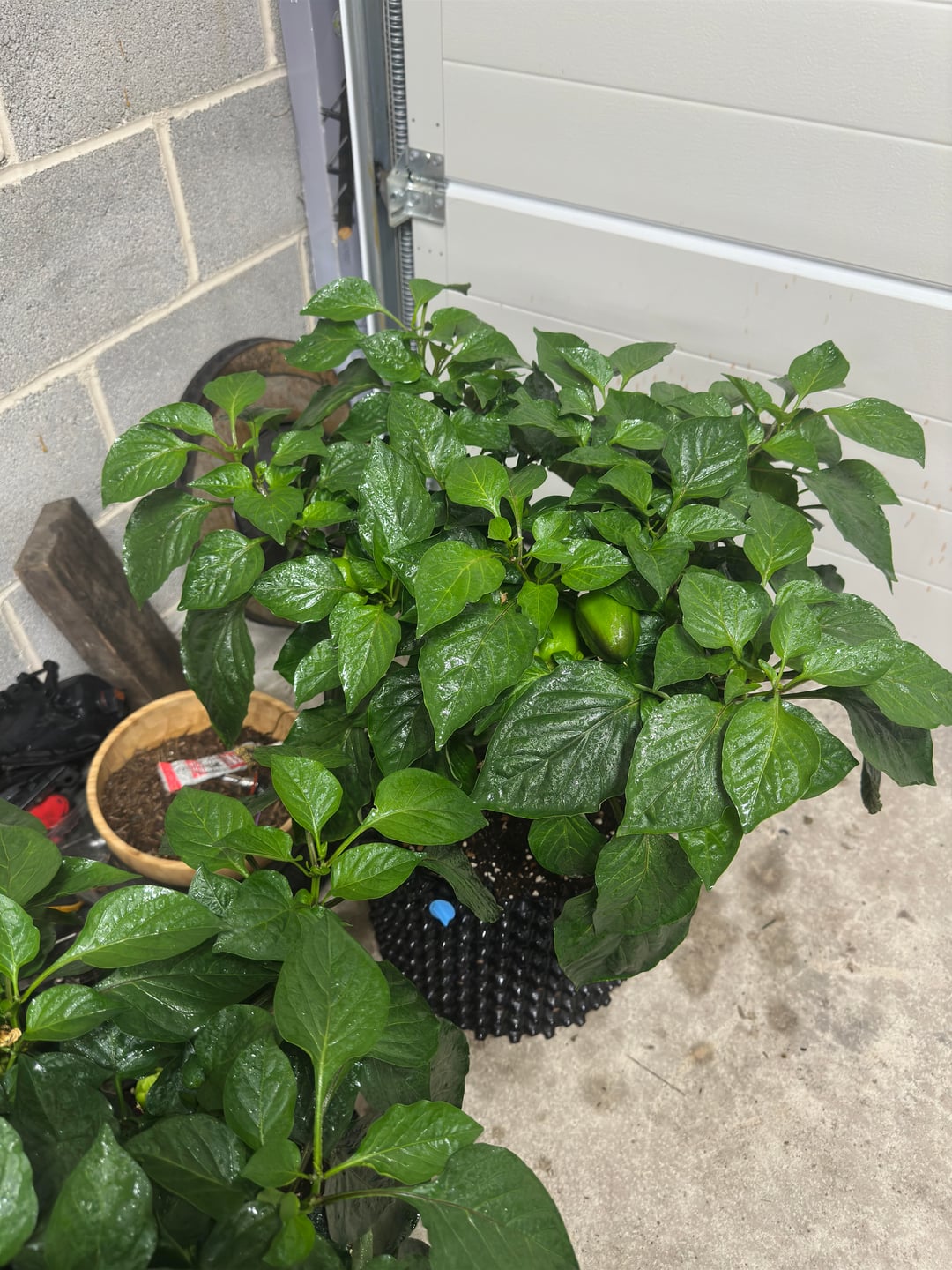
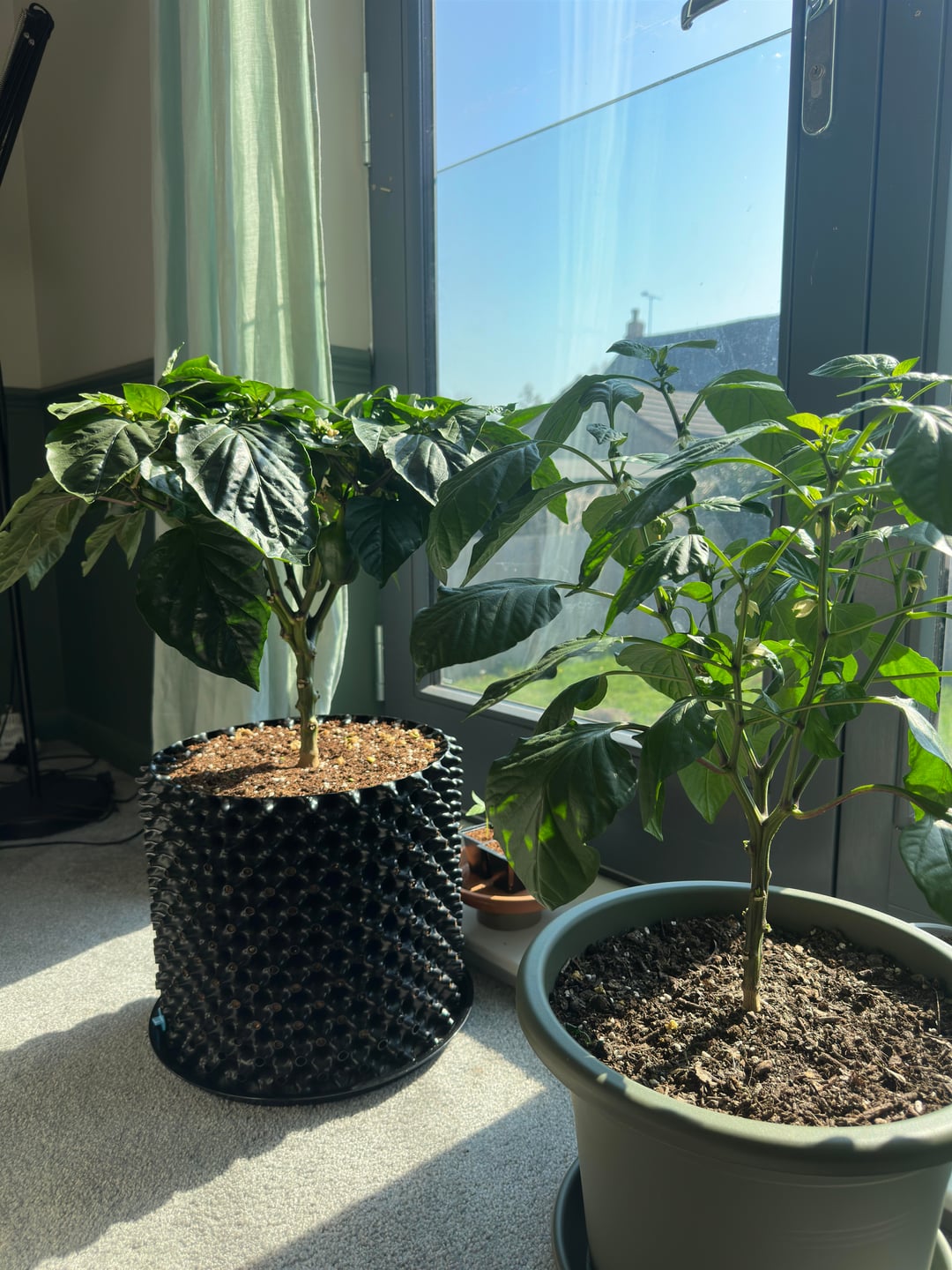
Second photo shows two of the same variety, same age but the one on the right was grown on a south facing window, one on the right with LED SE7000.
I was really intrigued and wanted to see if there was a reason for this difference. I believe it’s something to do with the very high R:FR of the spectrum which makes plants think they are in very bright, unobstructed light despite the PPFD only being 350 which is why you often get more anthocyanin in stems and leaves of peppers grown with certain LED lights despite no UV light. The lack of far red also makes the plants very squat (inverse shade avoidance) – good for seedlings before transplanting out, not so much for the full growth cycle.
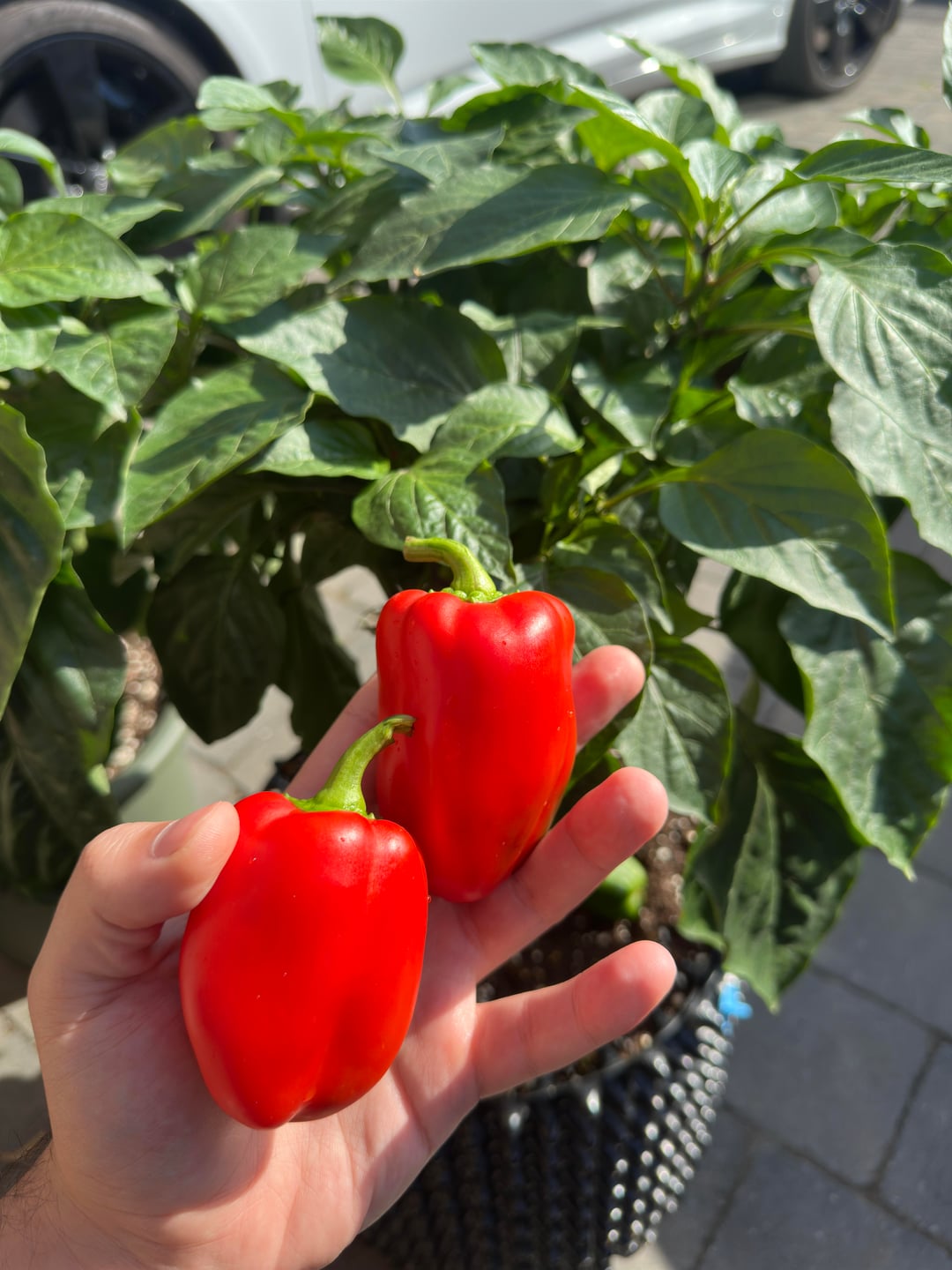
I found the compactness made it hard to get to the fruit and causedI I airflow problems. The crazy vegetative growth also led to small underwhelming fruit. Absolute unit of a pepper plant though. I only used a tomato fertilizer and no high amounts of nitrogen.
For reference, direct sunlight has a R:FR of ~1.2 whereas most high efficiency LEDs are >8. Sunlight has a full spectrum with high blue and green as well as UV which counter the high amount of far red so I don’t think it’s absolutely necessary to match the sun when it comes to R:FR. A small boost of FR would go a long way.
This time I’m adding far red LEDs to promote more natural growth. Studies show added FR during the entire photoperiod as well as during the “night” period has the biggest effect on internode space and plant height. Yield and fruit quality has also been found to improve with added FR to artificial light environments. But needs to be used with caution as you don’t want the plants to grow too leggy and weak either.
by smveeesb