


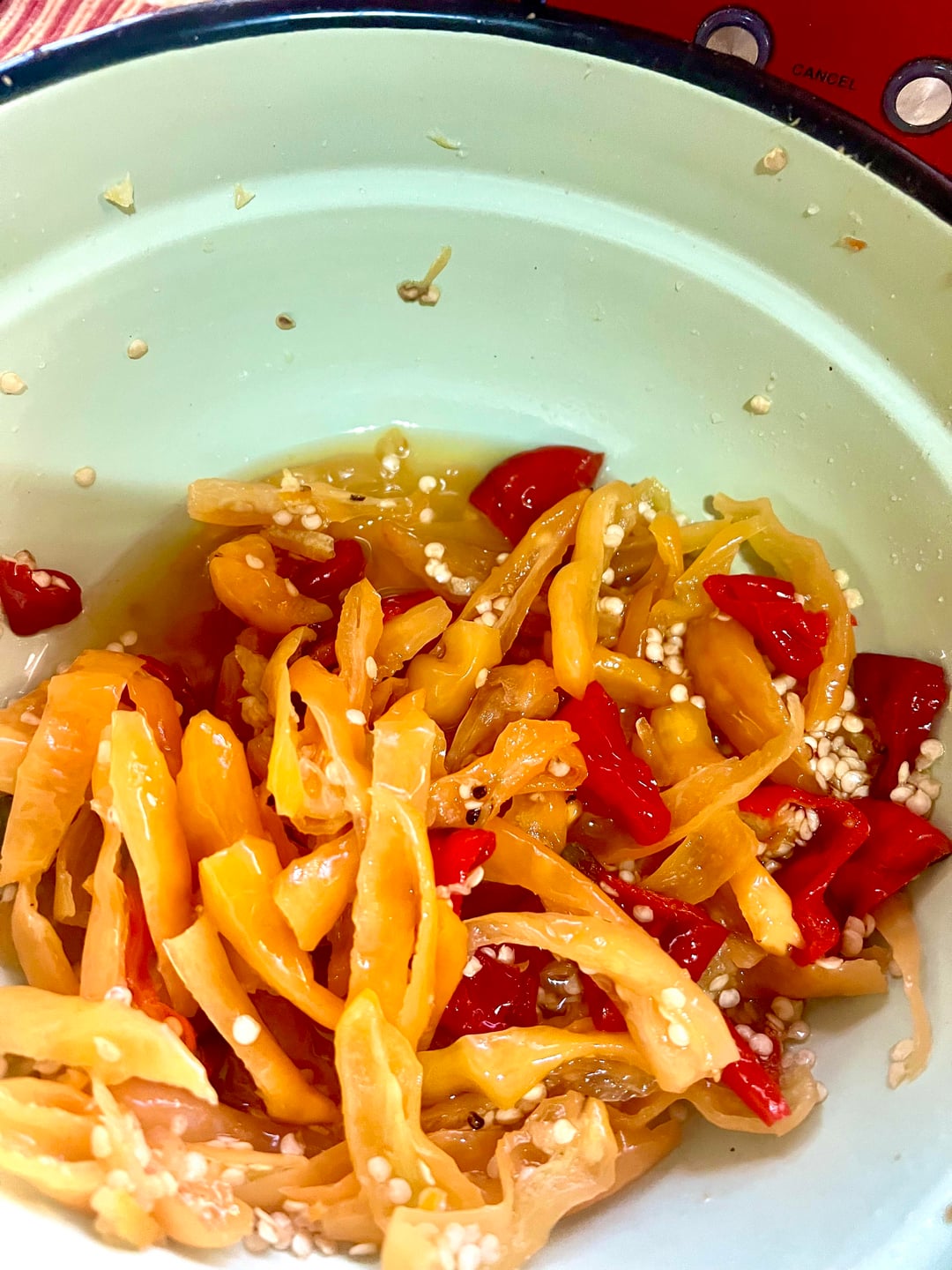
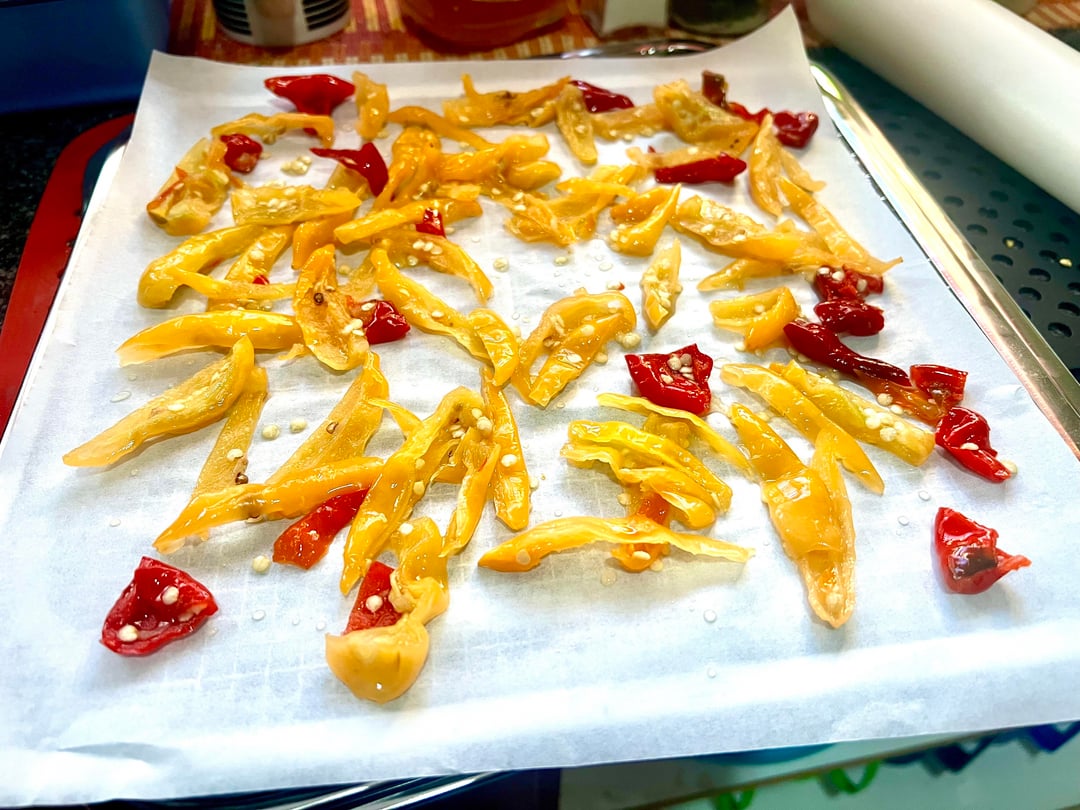

I asked AI 🤖 to summarise the process so you can follow:
I’ve been experimenting with a method that combines short fermentation, citrus sugar infusion, low-temperature dehydration, and partial roasting before grinding superhot peppers. The result is a powder that tastes far more complex than standard dried pepper powder.
Here’s the full process and why it works.
—
# Process
Peppers: mixed superhots (I selected Sugar Rush Peach, Jamaican Mushroom and Ghost (Bhut Jolokia) in a 3:2:1 ratio.
Fermentation time: 36 hours total
### Step 1 — Initial salt (0–12 hrs)
Add 1.5% salt by weight to the peppers and mix well.
What this does:
– Pulls water out of the pepper cells (osmosis)
– Activates enzymes in the fruit
– Allows naturally occurring microbes to begin working
– Starts releasing aromatic compounds
This stage softens the peppers and begins developing deeper flavor.
—
### Step 2 — Second salt addition (12 hrs)
At the 12-hour mark, add another 1.5% salt.
Now total salt = 3%.
Why stage the salt?
– Stabilizes the ferment
– Selects for lactic acid bacteria
– Prevents spoilage organisms
– Encourages controlled fermentation rather than random microbial growth
This is when you start smelling those strong fruity / fermented aromas.
—
### Step 3 — Citrus sugar addition (24 hrs)
At 24 hours, add orange marmalade or orange jam equal to the weight of the total salt used (3%).
Example:
– 4 kg peppers
– 120 g total salt
– Add 120 g marmalade
Why marmalade?
It introduces:
– sucrose
– glucose
– citrus oils
– pectin
The microbes immediately start metabolizing the sugars and create new aroma compounds like esters. Citrus oils also bind nicely with capsaicin, which gives a longer aromatic heat instead of harsh heat.
This creates a flavor curve that goes:
sweet → fruity → heat → lingering finish
—
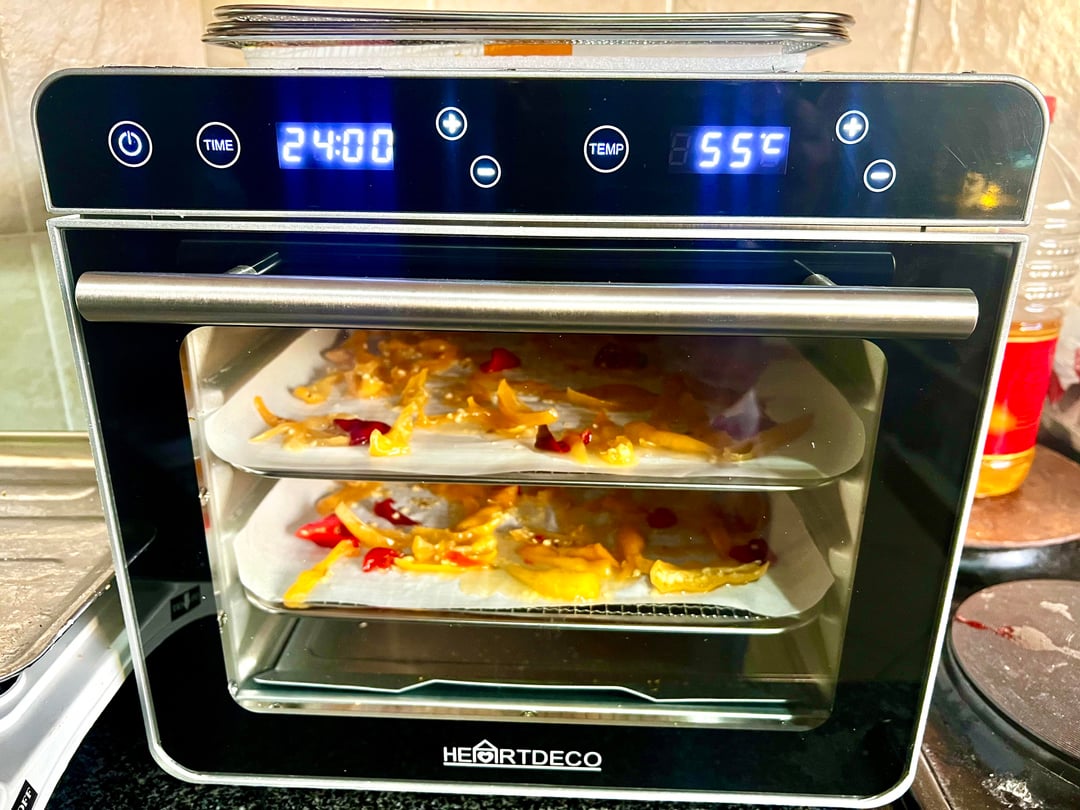
### Step 4 — Dehydration
After 36 hours total fermentation, dehydrate.
Temperature:
55 °C (131 °F)
Dry for about 24 hours until fully crisp.
This temperature is important because it:
– preserves fermentation aromatics
– preserves fruit esters
– avoids “cooking” the peppers
Higher temperatures flatten flavor.
—
### Step 5 — Partial roasting
Before grinding, take a portion of the dried peppers and heat them on medium heat for about 60 seconds in a pan.
Then let them cool and mix them back with the rest.
This step creates light Maillard reactions.
It adds:
– roasted notes
– nutty depth
– caramelized sugars
Because only part of the batch is heated, the final blend contains two flavor layers:
| Component | Flavor |
|—|—|
| unheated peppers | bright fruit + fermentation |
| heated peppers | roasted depth |
—
### Step 6 — Grinding
Grind everything into powder.
At this point the spice will smell intense but slightly sharp.
—
# The Important Final Step: Micro-Aging
Instead of sealing immediately, let the powder rest for 48–72 hours.
How:
Put powder in a wide bowl or tray
Cover with cloth or paper towel
Store in a cool dark place
Do not seal yet.
Why this matters:
Grinding ruptures the oil glands in the peppers. The powder contains:
– capsaicin oils
– fermentation esters
– citrus oils
– carotenoid pigments
These volatile compounds need time to redistribute and stabilize.
During this period:
– aromatics integrate
– sharp edges soften
– the smell becomes deeper and more unified
Think of it like coffee resting after roasting or wine breathing.
—
# Optional finishing touch
After aging, mix in 0.2–0.4% very fine sugar.
This tiny amount:
– rounds the heat
– enhances aroma release
– extends flavor on the tongue
It won’t make the powder taste sweet — it just smooths the heat.
—
# Why This Is More Gourmet Than Standard Chili Powder
Normal chili powder production is simple:
harvest → dry → grind
That mainly removes water.
This method adds several layers of transformation:
Short fermentation
develops acids and fruity esters
Citrus sugar infusion
adds aromatic oils and supports microbial flavor development
Low-temperature drying
preserves delicate aromas
Partial roasting
introduces Maillard depth
Post-grind aging
allows volatile oils to integrate
The result is a powder with a flavor progression like:
citrus sweetness
tropical fruit notes
fermented tang
roasted warmth
expanding superhot heat
long lingering finish
Instead of just raw heat, you get layered flavor.
—
If anyone else here has experimented with short ferments before dehydrating peppers, I’d be curious to hear how it affected your final powder. 🌶️
by EverydayEpics