
PSA for everyone itching to get their pepper plants outside right now.
I get it — the days are warming up, the seedlings are looking good, and every instinct says get them in the ground. But if you're growing Capsicum chinense (reapers, ghosts, scorpions, 7 pots — anything superhot), nighttime temps in the 30s are still a real threat even when the forecast looks borderline.
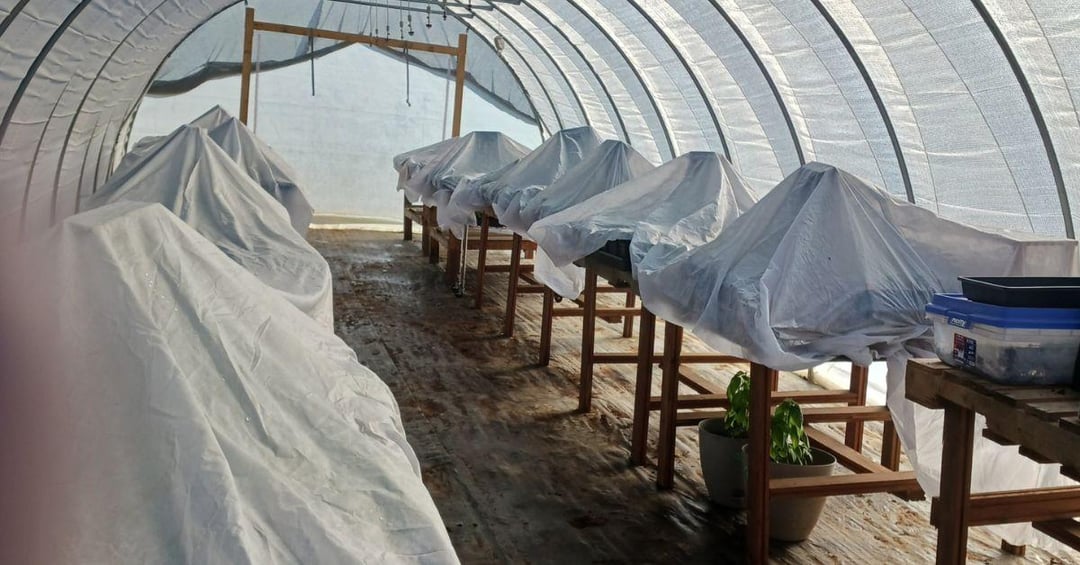
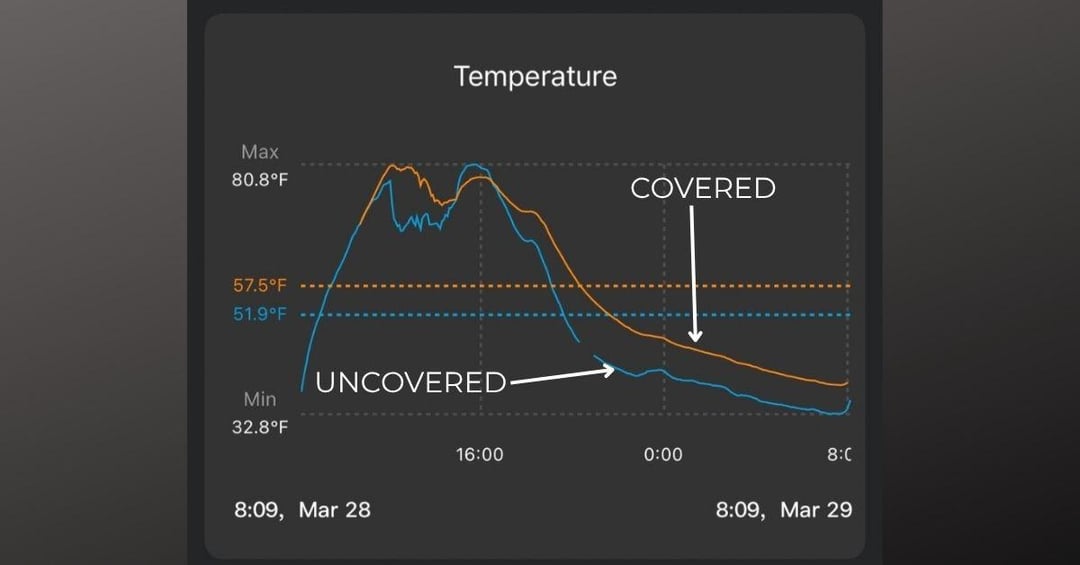
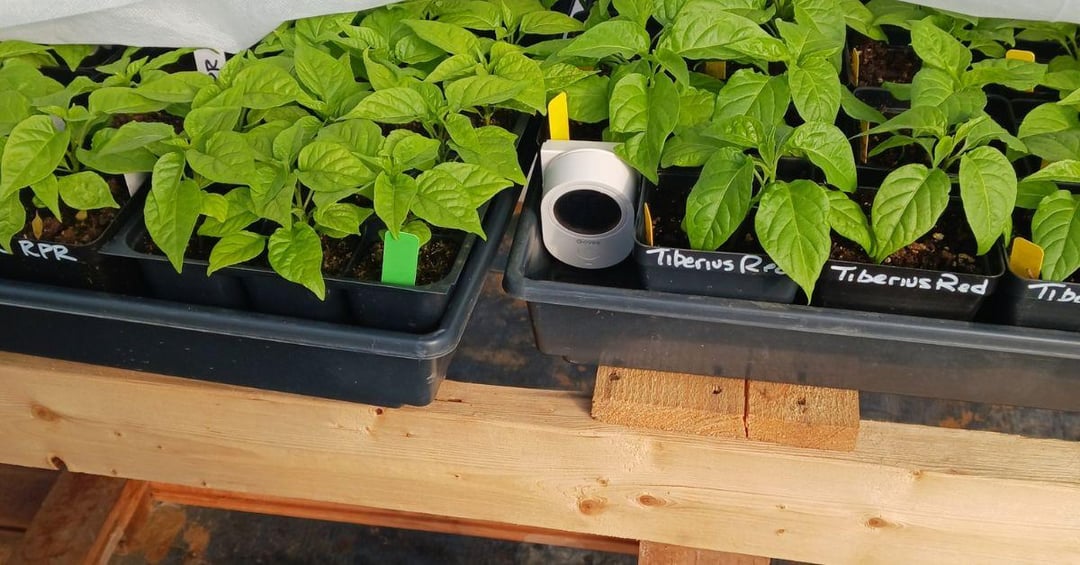
We ran a little experiment in our commercial nursery last night during a near-freeze here in upper East Tennessee. Two dataloggers — one uncovered, one under a single layer of 1.5 oz floating row cover over a tray of chinense seedlings.
Uncovered: 32.8°F overnight minimum
Under row cover: ~38–40°F
Delta: 5–6°F
That gap is the difference between a healthy transplant and a plant that never fully recovers. Chinense starts accumulating chilling injury below 50–55°F with extended exposure. Below 32°F you're looking at irreversible cell damage within the hour.
This was done on nursery seedlings but the concept applies exactly the same to plants in the ground or outside in containers. A single layer of row cover, sealed at the edges, buys you meaningful protection on nights when the forecast is flirting with freezing.
One thing worth knowing: a forecast of 34°F doesn't mean your plants see 34°F. On calm, clear nights the canopy can run 3–5°F colder than the official air temperature reading due to radiative heat loss. Apply your cover before dusk — not at midnight. The ground heat you're trying to trap is already gone by then.
Happy Growing.
by HarmonySpringsFarmTN
1 Comment
Yeah, I’m not moving them to greenhouse till May.