
Bitter: ⭐⭐✰✰✰
Salty: ⭐✰✰✰✰
Sour/Tangy: ⭐⭐✰✰✰
Sweet: ⭐⭐✰✰✰
Umami: ⭐⭐⭐✰✰
Heat: ⭐✰✰✰✰✰✰✰✰✰
Quick Flavor Notes: Onion, Vegetal, Corn
Recommended: Yes
Texture: Medium-thick and emulsified
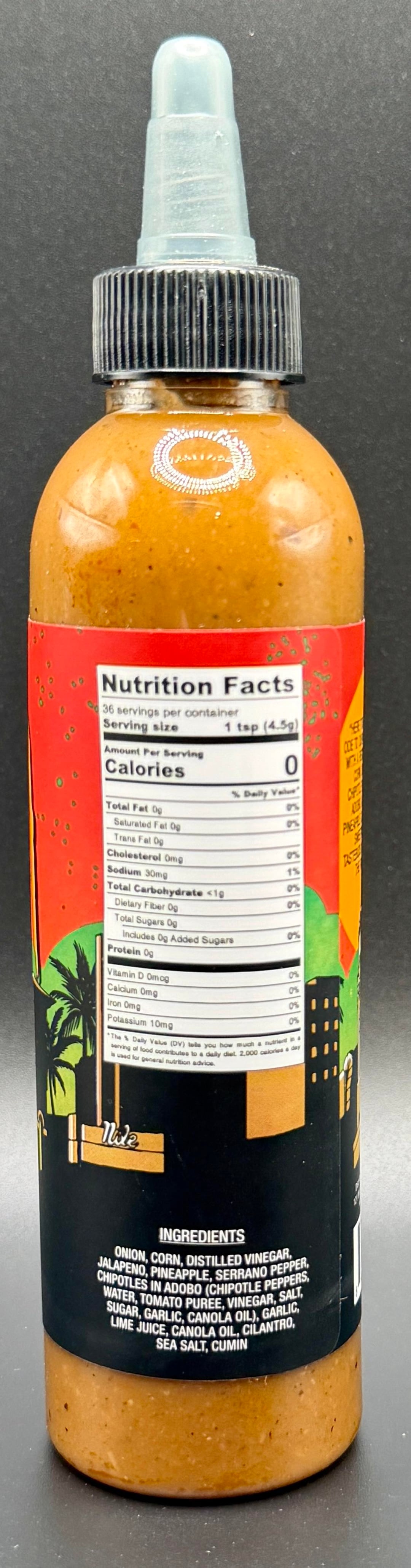
Ingredients: Onion, corn, distilled vinegar, jalapeno, pineapple, serrano pepper, chipotles in adobo (chipotle peppers, water, tomato puree, vinegar, salt, sugar, garlic, canola oil), garlic, lime juice, canola oil, cilantro, sea salt, cumin
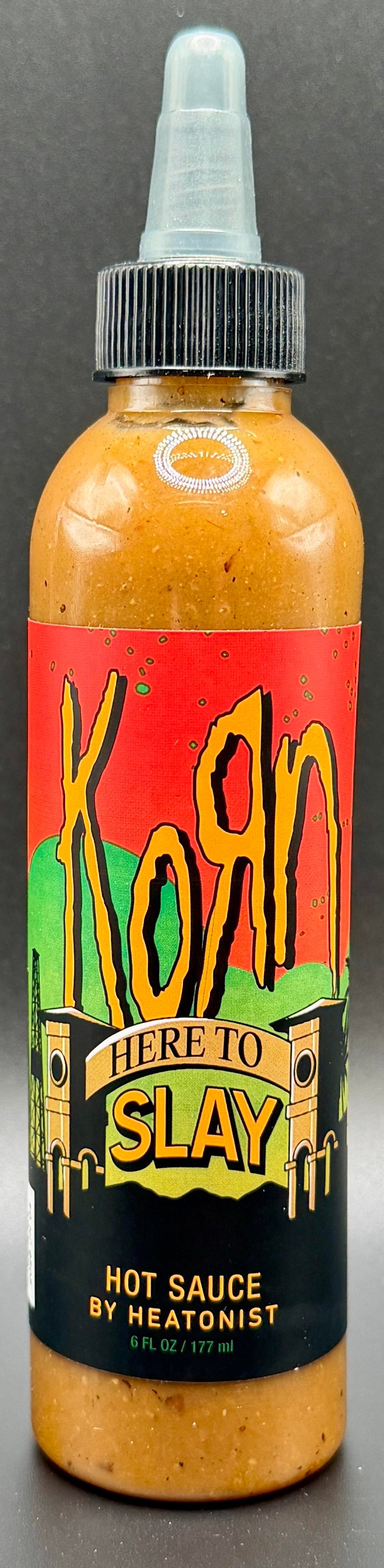
Korn is a nu-metal band from California who debuted in 1994 with a self-titled album with thirteen more studio albums following. According to Heatonist, which distributes this sauce, the band reached out to them about creating their own hot sauce and the inspiration came from the band’s hometown of Bakersfield, CA, a small city in California’s agriculturally-rich central valley. Heatonist then reached out to Thunder Bay Canada’s Heartbeat Hot Sauce to actually produce the sauce. With ingredients featuring corn and a variety of peppers and aromatics, and having had good experiences with band-affiliated hot sauces in the past, I was excited to give it a try.
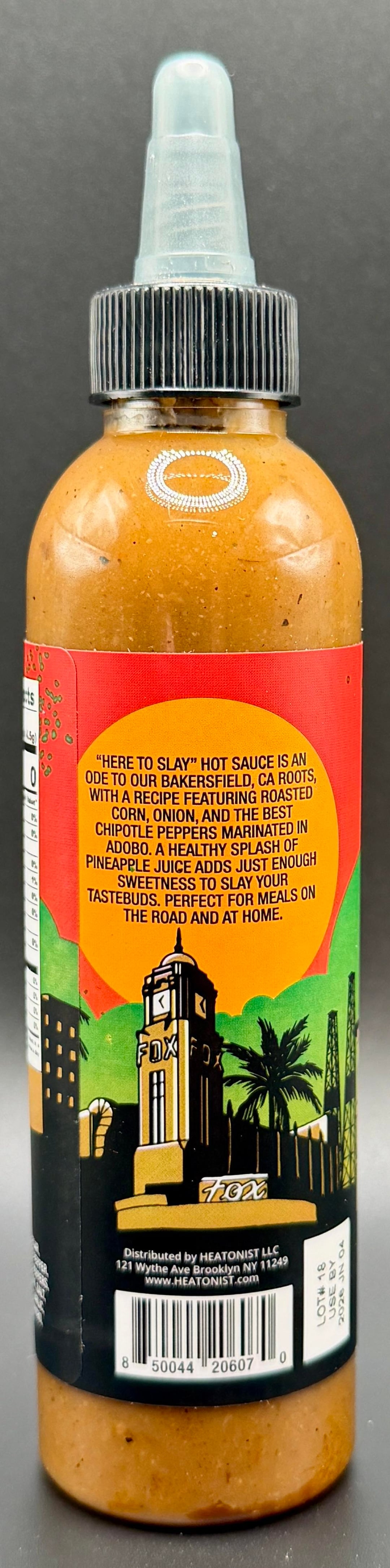
Here to Slay (a play off of the Korn song Here to Stay) starts off with onions and corn, which the back-label indicates is roasted. Heat comes from jalapenos, serranos, and chipotles in adobo. Adobo is interesting in that it means very different things in different cultures and even means different things in different contexts within Mexico. It can be a dried-chile based sauce used to cook meats or poultry or, as it is in this case, it can a tomato-based sauce with aromatics and acid that both adds flavor to the chipotle peppers and absorbs some of the smoky flavor from them. Spices and aromatics you expect to see in Mexican inspired sauces such as cilantro, cumin, and garlic fill out the ingredients list along with some pineapple for sweetness, which is also a common ingredient in al pastor tacos. This sauce also uses some lime juice for additional acidity and canola oil to help give the sauce an emulsified consistency. Here to Slay is creamy and medium-thick, perhaps a little looser than mayonnaise. You can see some small bits of spices and vegetables in the sauce and the aroma of the corn, aromatics, and peppers comes through.
Even though corn is a relatively mild flavor it absolutely comes through in the flavor of the sauce. The two dominant flavors on the first taste are the onions and corn. Despite vinegar being the third ingredient in this sauce it doesn’t come across as vinegar-forward or indeed even super tangy. Since both onions and corn, the first two ingredients, are starchy vegetables I have a feeling they’re blunting a lot of that vinegar sharpness. There is a strong vegetal pepper flavor from the jalapenos and serranos and a smoky undertone from the chipotles. I like the way the chipotles are used here as they’re quite subtle instead of being “big smoke in your face” the way many chipotle sauces can be. The cumin, garlic, onion, lime juice and cilantro do give this a Mexican flavor profile without necessarily tasting like a cumin-heavy taco sauce like the Palo Alto Firefighter’s sauces. With the emulsified texture, the subtle smoky chipotle notes, and the strong onion flavor this sauce has more of an umami richness than I’d have expected. I didn’t pick up a lot of the pineapple flavor and there’s enough savory stuff going on that it doesn’t read as sweet to me. In terms of heat this is very mild, though Heatonist does sell a hotter version but the only change is the addition of ghost pepper powder.
I opened this up when I was heating up a frozen pizza for dinner and this sauce does work very well on pizza. It did shine much more with some tacos where the Mexican flavors of Here to Slay really shine. The Heatonist website mentions that this is good on shrimp and, having a few bags of them in my freezer from a recent Publix sale, I tried it out on some quick-sauteed and found that this sauce is great on seafood – I really do like that oniony vegetal slightly smoky combo with the shrimp and the heat level is low so that it doesn’t overpower. I didn’t love it quite as much as a sandwich sauce, it left me craving more tang and acidity in that application.
While I can’t necessarily recommend the band I can recommend Korn’s Here to Slay as a hot sauce. It’s the first sauce I’ve tried with corn as an ingredient and it makes me wonder why others don’t do it as well (I am aware of the one from Down to Ferment and I may even have a bottle of it somewhere). This sauce is also all natural with no artificial preservatives, colors, flavors, or thickeners.
by MagnusAlbusPater
2 Comments
Bitter: ⭐⭐✰✰✰
Salty: ⭐✰✰✰✰
Sour/Tangy: ⭐⭐✰✰✰
Sweet: ⭐⭐✰✰✰
Umami: ⭐⭐⭐✰✰
Heat: ⭐✰✰✰✰✰✰✰✰✰
Quick Flavor Notes: Onion, Vegetal, Corn
Recommended: Yes
Texture: Medium-thick and emulsified
Ingredients: Onion, corn, distilled vinegar, jalapeno, pineapple, serrano pepper, chipotles in adobo (chipotle peppers, water, tomato puree, vinegar, salt, sugar, garlic, canola oil), garlic, lime juice, canola oil, cilantro, sea salt, cumin
Korn is a nu-metal band from California who debuted in 1994 with a self-titled album with thirteen more studio albums following. According to Heatonist, which distributes this sauce, the band reached out to them about creating their own hot sauce and the inspiration came from the band’s hometown of Bakersfield, CA, a small city in California’s agriculturally-rich central valley. Heatonist then reached out to Thunder Bay Canada’s Heartbeat Hot Sauce to actually produce the sauce. With ingredients featuring corn and a variety of peppers and aromatics, and having had good experiences with band-affiliated hot sauces in the past, I was excited to give it a try.
Here to Slay (a play off of the Korn song Here to Stay) starts off with onions and corn, which the back-label indicates is roasted. Heat comes from jalapenos, serranos, and chipotles in adobo. Adobo is interesting in that it means very different things in different cultures and even means different things in different contexts within Mexico. It can be a dried-chile based sauce used to cook meats or poultry or, as it is in this case, it can a tomato-based sauce with aromatics and acid that both adds flavor to the chipotle peppers and absorbs some of the smoky flavor from them. Spices and aromatics you expect to see in Mexican inspired sauces such as cilantro, cumin, and garlic fill out the ingredients list along with some pineapple for sweetness, which is also a common ingredient in al pastor tacos. This sauce also uses some lime juice for additional acidity and canola oil to help give the sauce an emulsified consistency. Here to Slay is creamy and medium-thick, perhaps a little looser than mayonnaise. You can see some small bits of spices and vegetables in the sauce and the aroma of the corn, aromatics, and peppers comes through.
Even though corn is a relatively mild flavor it absolutely comes through in the flavor of the sauce. The two dominant flavors on the first taste are the onions and corn. Despite vinegar being the third ingredient in this sauce it doesn’t come across as vinegar-forward or indeed even super tangy. Since both onions and corn, the first two ingredients, are starchy vegetables I have a feeling they’re blunting a lot of that vinegar sharpness. There is a strong vegetal pepper flavor from the jalapenos and serranos and a smoky undertone from the chipotles. I like the way the chipotles are used here as they’re quite subtle instead of being “big smoke in your face” the way many chipotle sauces can be. The cumin, garlic, onion, lime juice and cilantro do give this a Mexican flavor profile without necessarily tasting like a cumin-heavy taco sauce like the Palo Alto Firefighter’s sauces. With the emulsified texture, the subtle smoky chipotle notes, and the strong onion flavor this sauce has more of an umami richness than I’d have expected. I didn’t pick up a lot of the pineapple flavor and there’s enough savory stuff going on that it doesn’t read as sweet to me. In terms of heat this is very mild, though Heatonist does sell a hotter version but the only change is the addition of ghost pepper powder.
I opened this up when I was heating up a frozen pizza for dinner and this sauce does work very well on pizza. It did shine much more with some tacos where the Mexican flavors of Here to Slay really shine. The Heatonist website mentions that this is good on shrimp and, having a few bags of them in my freezer from a recent Publix sale, I tried it out on some quick-sauteed and found that this sauce is great on seafood – I really do like that oniony vegetal slightly smoky combo with the shrimp and the heat level is low so that it doesn’t overpower. I didn’t love it quite as much as a sandwich sauce, it left me craving more tang and acidity in that application.
While I can’t necessarily recommend the band I can recommend Korn’s Here to Slay as a hot sauce. It’s the first sauce I’ve tried with corn as an ingredient and it makes me wonder why others don’t do it as well (I am aware of the one from Down to Ferment and I may even have a bottle of it somewhere). This sauce is also all natural with no artificial preservatives, colors, flavors, or thickeners.
Nice review, I also love this sauce. The “Hotter” version is even better in my opinion.