

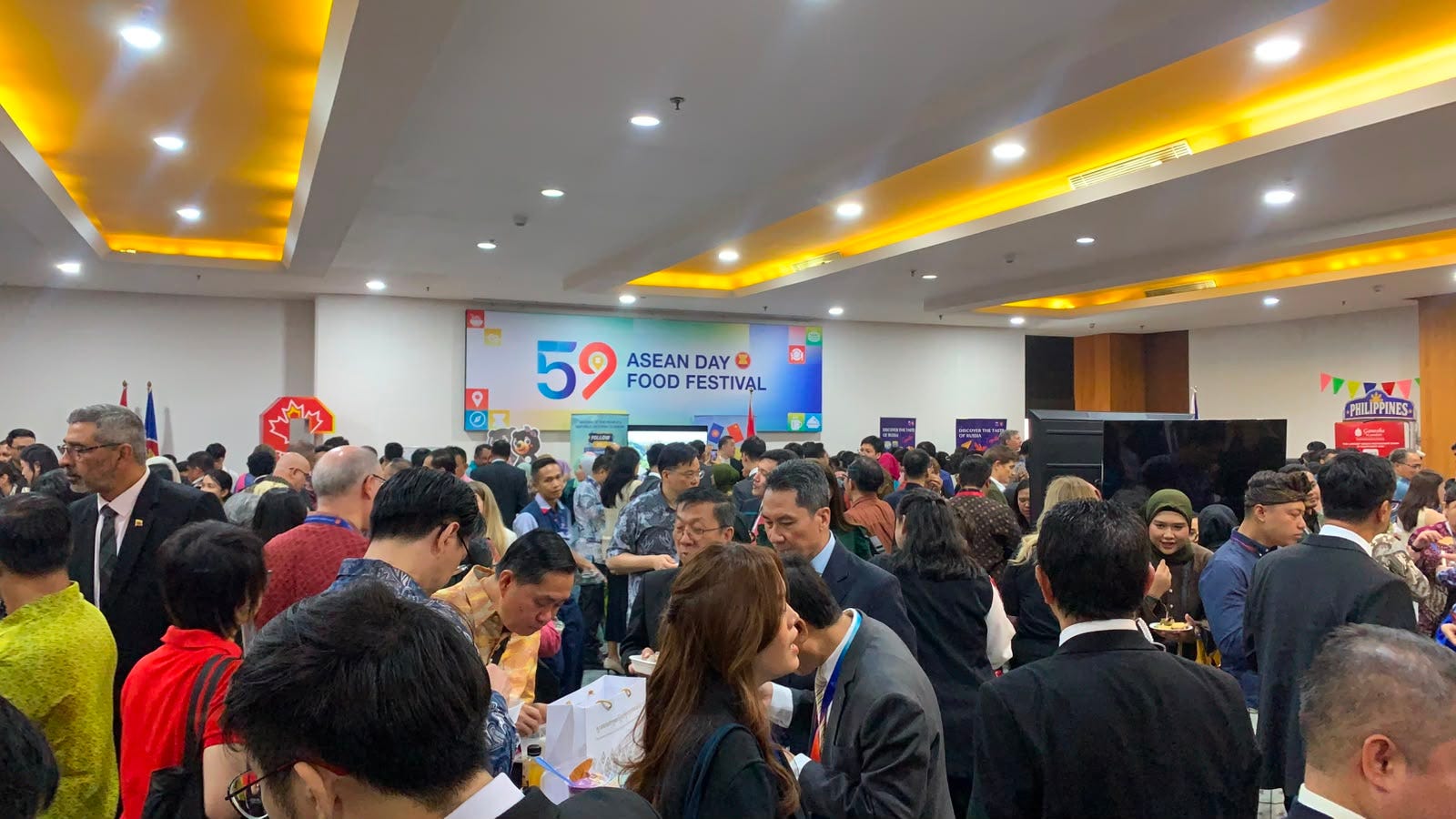
 ASEAN Day 2026 brought together flavours from across the region and beyond at the ASEAN Food Festival in Jakarta. (Photo: The Southeast Asia Desk/Sanria Zerlina Brezky)
ASEAN’s 59th anniversary, or ASEAN Day, under the theme “Navigating Our Future, Together”, put people at the heart of regional cooperation.
Beyond politics, the celebration brought diverse communities together through one universal language: food.
ASEAN’s external partners also joined the festivities, turning the table into a space for friendship and cultural exchange.
🌐 ASEAN’s wider circle: The table brought together ASEAN Member States and external partners, reflecting the bloc’s broad network of relationships.
🍽️ A different kind of diplomacy: The festival shows how food can create connections beyond formal meetings and political dialogue.
👥 People at the centre: By making diplomacy accessible through food, the celebration puts people-to-people ties into practice.
ASEAN’s food diversity reflects centuries of migration, trade and cultural exchange across Southeast Asia.
🧳 Migration: People, recipes and culinary traditions travelled across borders and took root in new communities.
🍜 Shared heritage: Foods like laksa, satay, rendang, sticky rice and noodles appear in different forms across the region.
🌶️ Local twists: The same dish can taste different depending on local ingredients, traditions and interpretations.
🤝 Cross-border connections: Food shows how Southeast Asian cultures have influenced, adapted to and grown alongside one another.
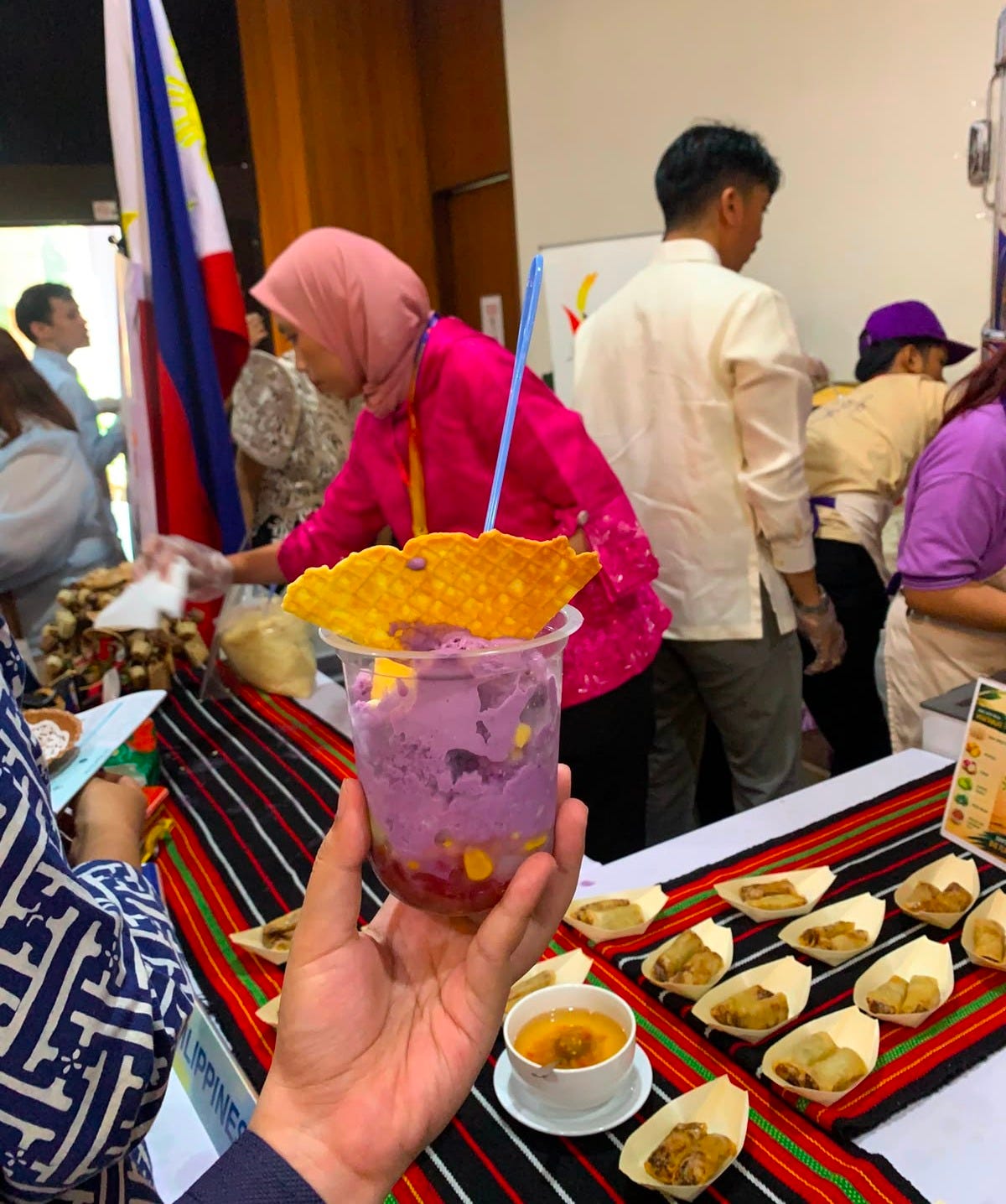 A colourful ube-based iced drink served with sweet corn and a waffle-like treat at the Philippines’ stand during the ASEAN Food Festival. (Photo: The Southeast Asia Desk/Sanria Zerlina Brezky)
The Southeast Asian countries’ stalls featured a diverse selection of traditional dishes, snacks and drinks such as:
🇧🇳 Brunei: Kuih sapit, a thin and crispy wafer, and kuih bahulu, a small, soft sponge cake, showcased two traditional Bruneian treats.
🇱🇦 Laos: River weed (khai pen), made from edible freshwater algae, offered a taste of Laos’ river-based food traditions.
🇸🇬 Singapore: Hainanese chicken rice, featuring poached chicken served with fragrant, seasoned rice.
🇵🇭 The Philippines: An ube halo-halo brought a refreshing, sweet touch to the spread, featuring the vibrant purple-coloured root crop commonly used in Filipino desserts and drinks.
🇹🇱 Timor-Leste: Fehuk da’an, a traditional pumpkin-based dish, was among the foods on display, alongside katupa, rice wrapped in woven palm leaves similar to Indonesian local food.
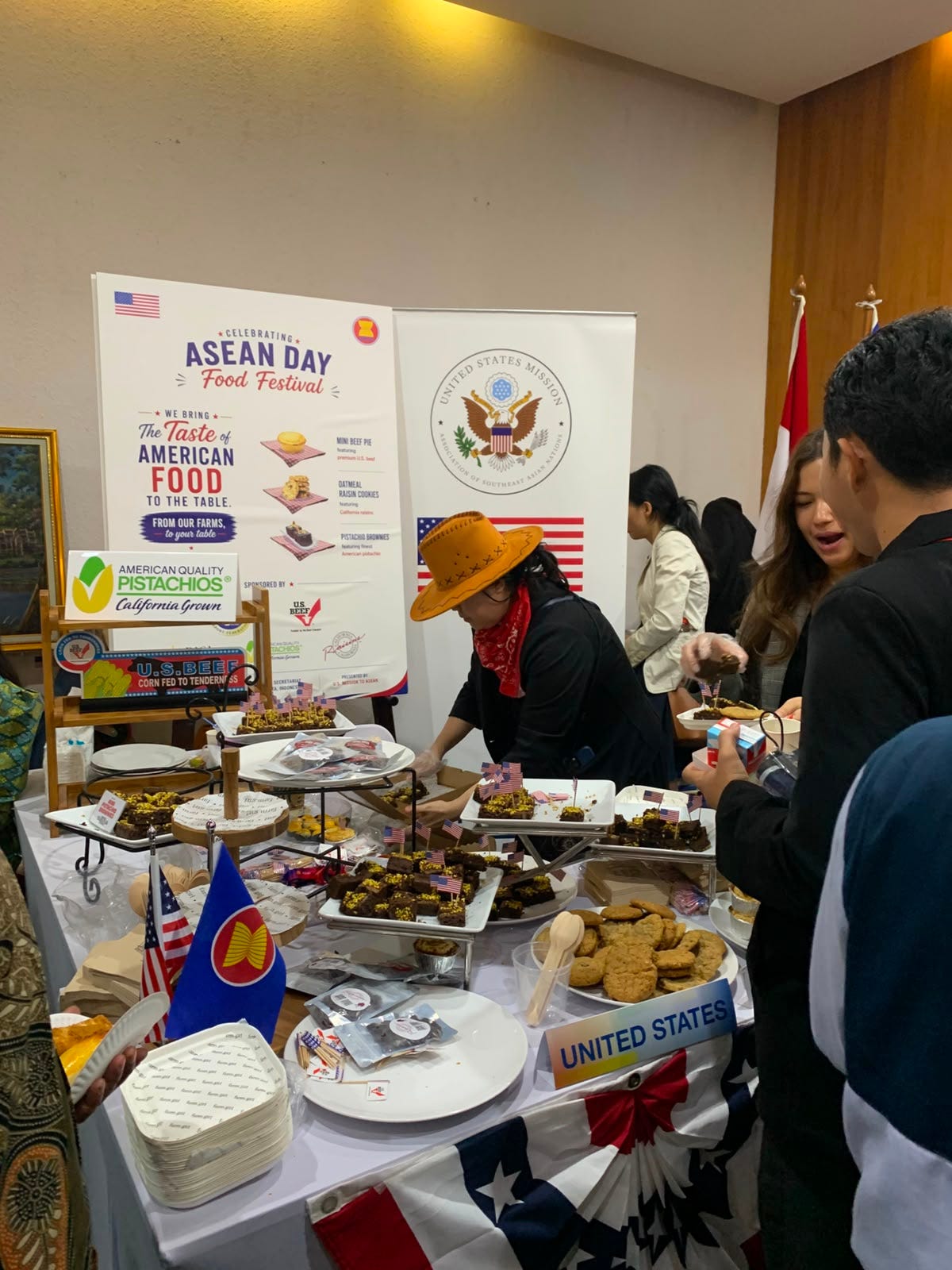 Mini beef pies, oatmeal raisin cookies and pistachio brownies on display at the United States stand during the ASEAN Food Festival. (Photo: The Southeast Asia Desk/Sanria Zerlina Brezky)
The food festival also brought flavours from beyond Southeast Asia, with ASEAN’s partners showcasing dishes and treats from their own culinary traditions. Among those on display were:
🇨🇳 China: Mooncakes, traditionally enjoyed during the Mid-Autumn Festival.
🇮🇳 India: Rose lassi, samosas and chicken tikka, offering a mix of refreshing, savoury and spiced flavours.
🇷🇺 Russia: A berry-based drink, adding a fruity and refreshing option to the spread.
🇰🇷 Republic of Korea: Tteokbokki, chewy rice cakes served in a characteristically spicy and savoury sauce.
🇺🇸 United States: Pistachio brownies and cookies, bringing a sweet twist to the partner showcase.
Across Southeast Asia, familiar food formats often take on their own local twists, creating dishes that feel both distinctly local and recognisably connected.
🧊 Shaved ice: Indonesia’s es serut and the Philippines’ halo-halo both turn shaved ice into colourful, refreshing desserts, with different toppings and flavour combinations.
🐟 Fish snacks: Indonesia’s pempek and Malaysia’s keropok lekor both turn fish into popular snacks, but with distinct preparations and textures. Malaysia’s keropok lekor combines ground fish with sago flour.
🍢 Satay: Satay appears across Indonesia, Malaysia and Singapore, with each culinary tradition giving the skewered dish its own interpretation.
🍜 Rice noodles: Thailand’s pad Thai and the many flat-rice-noodle dishes found across Indonesia, Malaysia and Singapore show how a similar staple can become very different plates. Thailand’s pad Thai is traditionally stir-fried with ingredients including tofu, dried shrimp, egg and peanuts.
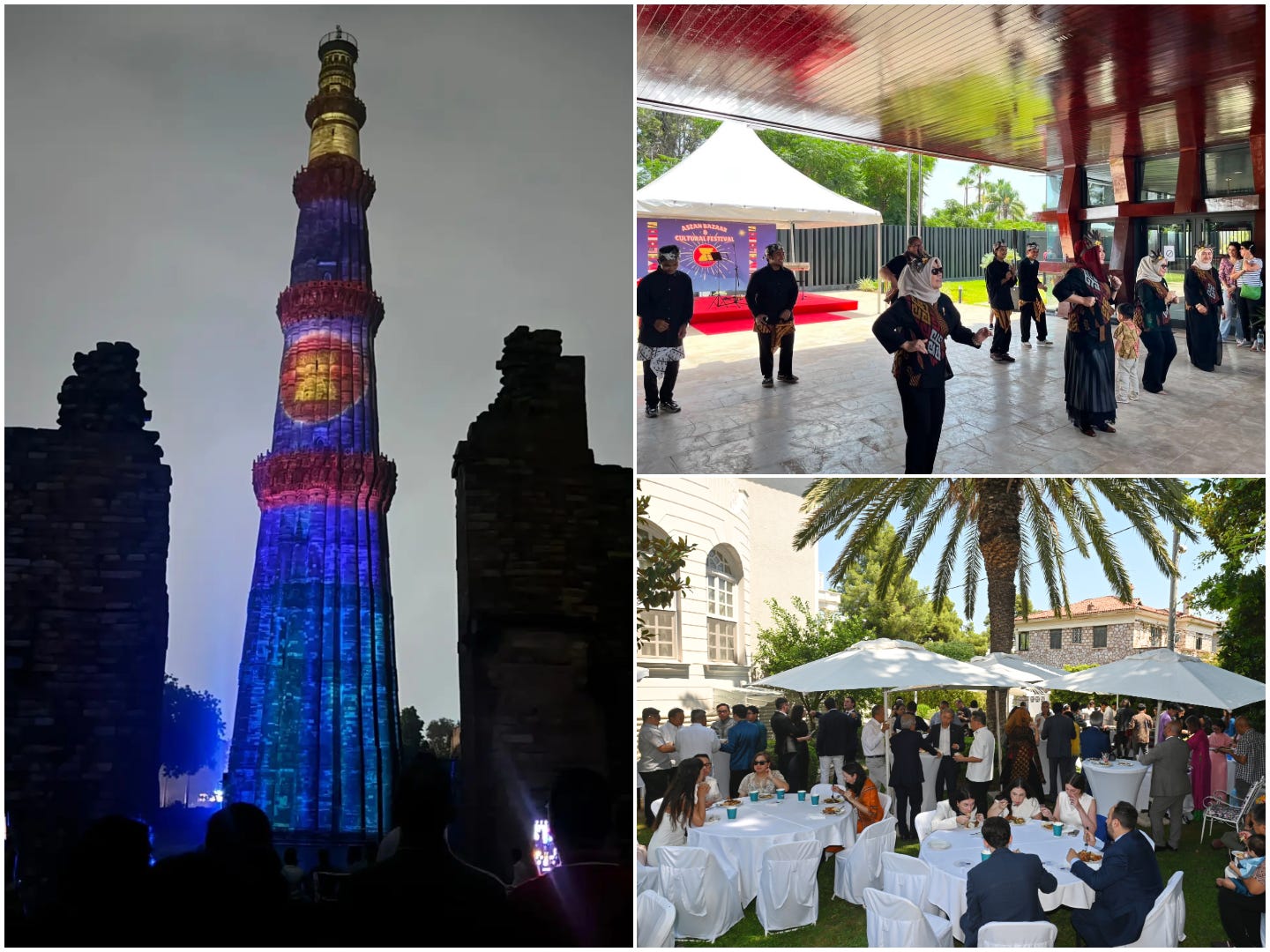 SEAN Day celebrations in Athens, Greece; Rabat, Morocco; and New Delhi, India, showcasing different ways the bloc’s 59th anniversary was marked beyond Southeast Asia—from cultural performances and food showcases to the illumination of Qutub Minar in ASEAN colours. (Photo: Instagram/@indianmissiontoasean; Facebook/@Royal Thai Embassy Rabat; Athens Royal Thai Embassy)
Not only at the ASEAN Headquarters in Jakarta, but the 59th anniversary of ASEAN was also celebrated in various ways outside Southeast Asia, ranging from cultural festivals and food fairs to the illumination of historic monuments.
🇲🇦 Rabat – ASEAN’s cultural bazaar: The ASEAN Cultural Festival combines food, traditional performances, handicrafts and cultural display, giving Moroccan audiences a more direct introduction to Southeast Asian culture. The 2026 edition, held on 25 July, was also the festival’s second edition, with part of the proceeds donated to charity.
🇮🇳 New Delhi – ASEAN takes over a landmark: A projection of colours and the ASEAN emblem, accompanied by the ASEAN Anthem, at Qutub Minar, a UNESCO World Heritage Site. The projection offers a highly visual way of bringing ASEAN to a major public landmark.
🇬🇷 Athens – ASEAN around the dinner table: A celebration at the Thai Residence combined traditional performances and food stalls showcasing ASEAN cuisine, whilst bringing together ASEAN diplomats, Greek officials and representatives of Dialogue Partners.
🧐 So, What Does This Tell Us About ASEAN?
Food shows that ASEAN’s diversity does not exist in isolation. Flavours, recipes and culinary traditions have travelled across borders, evolved locally and created connections that long predate the region’s political institutions.
Meanwhile, celebrations in cities beyond Southeast Asia show how ASEAN’s identity can travel beyond its borders through culture, food and people-to-people connections.
Different plates, shared connections.
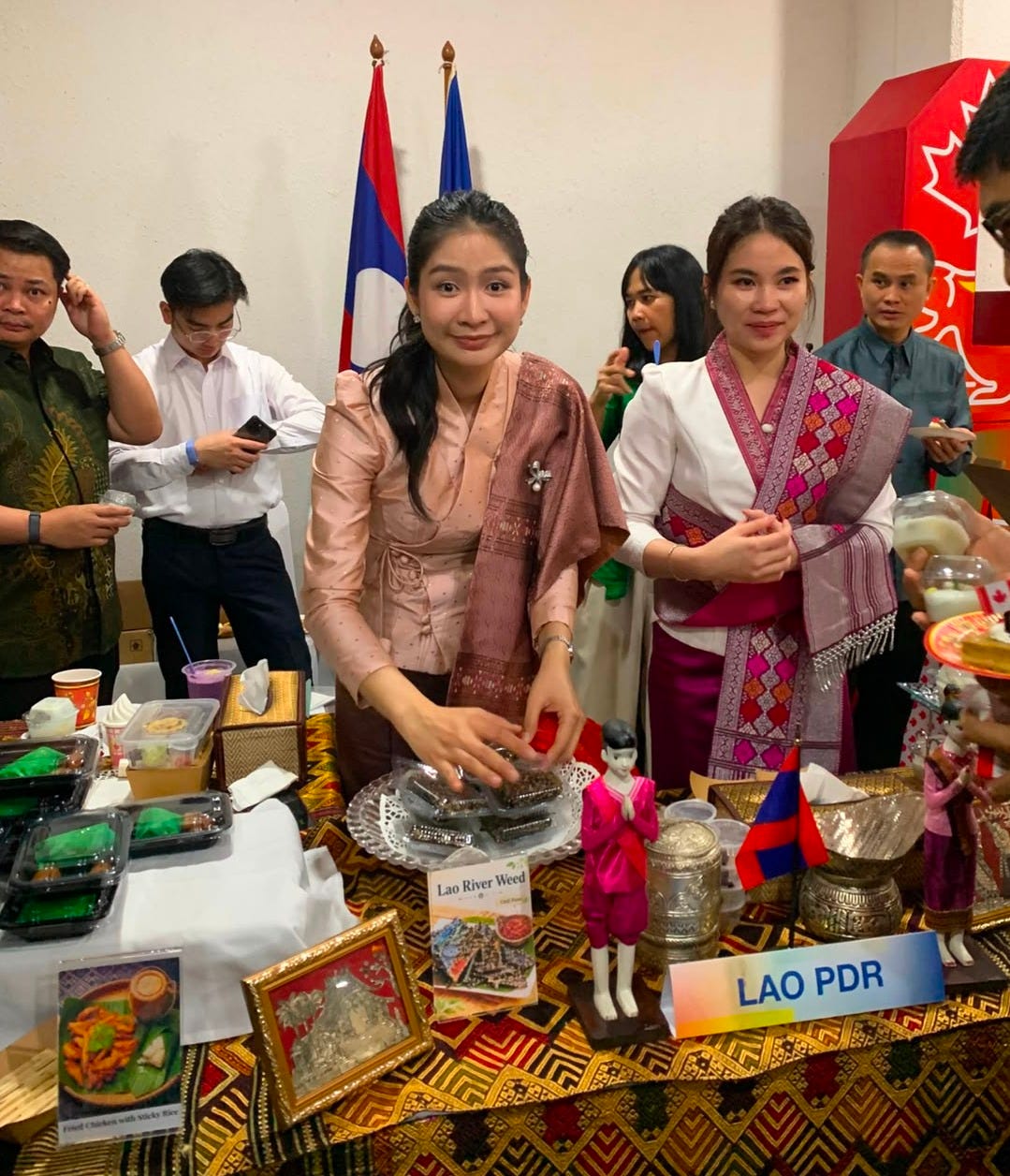 The way food travels mirrors the way cultures meet, adapt and connect. (Photo: The Southeast Asia Desk/Sanria Zerlina Brezky)
The various ways in which ASEAN’s 59th anniversary has been celebrated demonstrate that regional connections are not limited to formal diplomacy, but can also be forged through everything from the flavours of shared family meals to cultural festivals and public celebrations. As ASEAN looks to the future, these connections between people and cultures can help foster inclusive and relevant regional cooperation. Different plates, different celebrations, but shared connections continue to bring ASEAN together. 🤝
#ASEANDay #ASEAN59 #FoodDiplomacy #SoutheastAsia #ASEANCommunity #CulturalDiplomacy #FlavoursOfASEAN #ASEANPartners #Jakarta #ASEANSecretariat
(DHM/BRZ/ELS)