
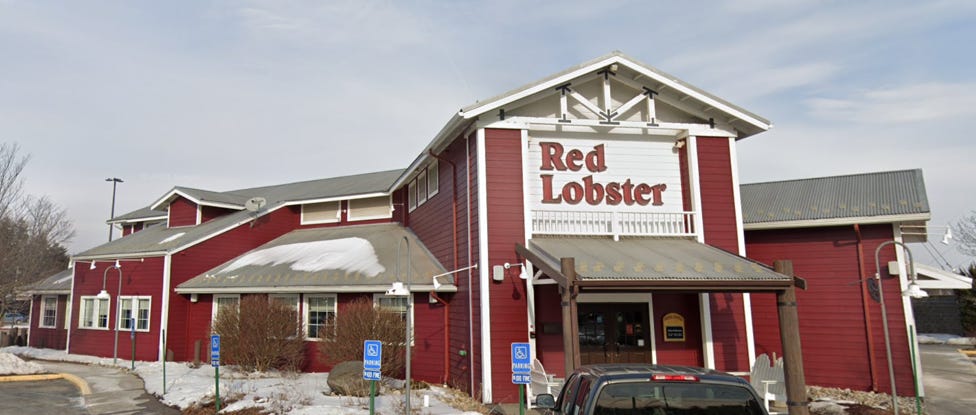
The Red Lobster restaurant in Glens Falls, New York opened in the early 1980s and operated for 40 years.
But the Glens Falls site was one of the ~160 Red Lobster restaurants that closed after the seafood restaurant chain filed for Chapter 11 bankruptcy in 2024.
Seeing as Red Lobster had operated for decades in Glens Falls, the next use of its property was an immediate focus of the local community.
The Glens Falls Chronicle even surveyed community members about what they would like to see as a future use for the building.
The majority of the responses suggested other restaurants take the space with Cracker Barrel CBRL 0.00%↑ and Chick-Fil-A suggested by multiple people.
But there were a few adaptive reuse suggestions as well for the building such as repurposing it as a Trader Joe’s grocery store or a 24 hour veterinary clinic.
One reader even noted that the building was likely to be vacant for a long time.
One thing that did not take long was for Red Lobster to exit bankruptcy.
After just three months Red Lobster emerged from bankruptcy with new ownership, a change in leadership and, of course, a slimmer real estate footprint.
Still the “new” Red Lobster continued to operate over 540 restaurants.
However the seafood chain has continued to struggle since exiting bankruptcy despite new management and an improved capital structure.
Earlier this year Bloomberg reported that the Red Lobster’s sales were ~20% below pre-bankruptcy levels and that ~1/5 of its restaurants were not generating profit.
So it is not a surprise that Red Lobster has closed even more underperforming restaurants in recent months.
The seafood chain’s website currently lists just ~480 locations, a reduction of more than 50 restaurants in just the 2 years since it emerged from bankruptcy.
The good news?
The majority of these 200+ shuttered restaurant buildings have not remained vacant.
In fact much of the Red Lobster real estate has been backfilled by other tenants—like independent restaurant operators—or even repurposed or redeveloped for different uses that include medical offices, c-stores and fuel stations.
The Red Lobster Real Estate
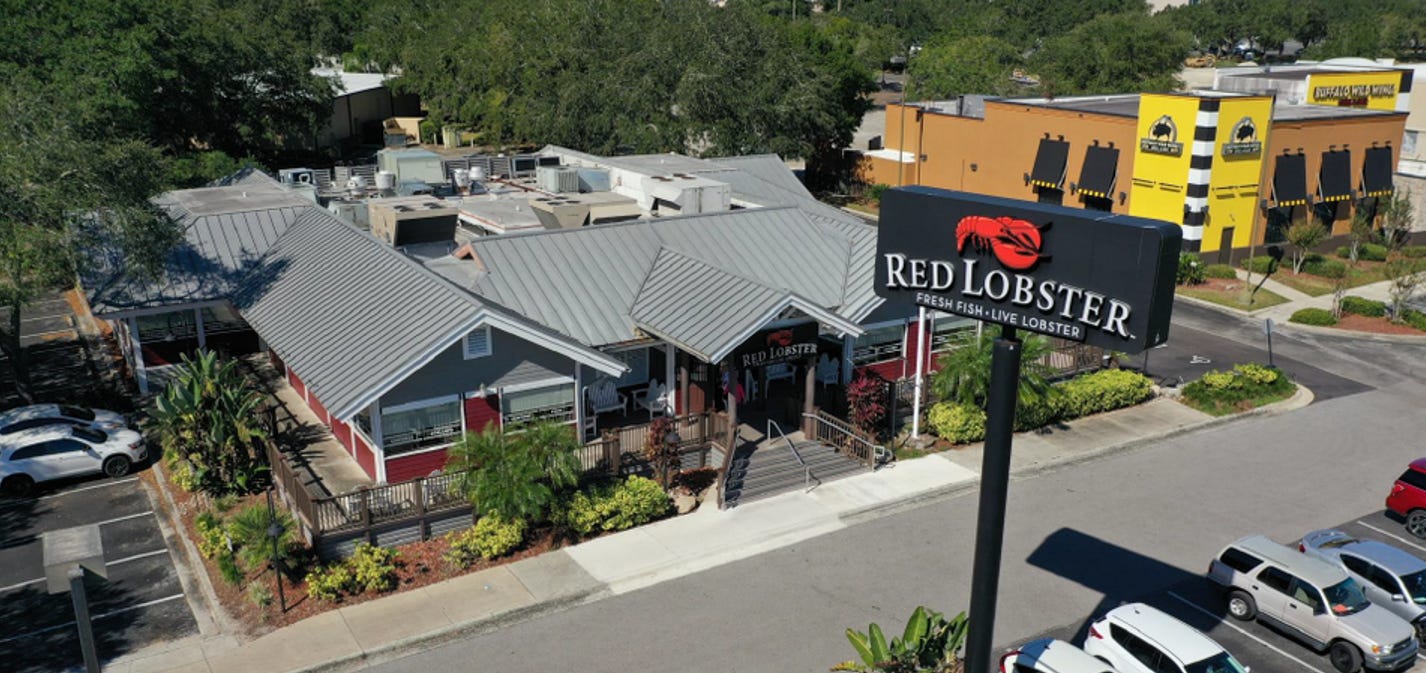
The majority of Red Lobster restaurants are 7,000 – 9,000 square foot, freestanding buildings on ~2 acre sites.
Most are located on a high traffic streets or on shopping center pad sites with ample parking areas and ingress and egress on to major roadways.
And—as is the case with most casual dining chains—the restaurants were custom built for Red Lobster.
Other national casual dining chains such as Olive Garden DRI 0.00%↑, Texas Roadhouse TXRH 0.00%↑, Chili’s EAT 0.00%↑ and Applebee’s DIN 0.00%↑ also typically build custom restaurants.
So it is not a surprise that these national chains have not repurposed many former Red Lobster restaurant buildings for their own use.
But independent restaurants and regional chains have derived significant value from backfilling “2nd generation” former Red Lobster properties.
Independents and Regional Chains Are Targeting Red Lobster Real Estate
The Red Lobster vacancies have been a unique real estate opportunity for independent and regional restaurant chains.
These tenants have been able to repurpose Red Lobster buildings at a modest cost since they were already built out as restaurants.
Plus the sites are well located and have been “known” dining destinations to customers, often for decades.
This has enabled independent and regional operators to take over spaces at a low cost and with an opportunity to capture some of the Red Lobster sales volume.
The Glens Falls Red Lobster that had operated for more than 40 years and that was subject of a community survey as to its next use?
Well the majority of responders won out:
It is being repurposed by another restaurant—Mi Rancho Alegre, a regional Mexican restaurant chain with 1/2 dozen other locations in upstate New York.
Several other former Red Lobster restaurant buildings throughout the country have also been backfilled by independent and regional restaurant operators.
A former Red Lobster in Silver Spring, Maryland reopened as Top Pot Hot Pot & K BBQ, an all-you-can-eat Korean barbecue and Chinese hot pot restaurant.
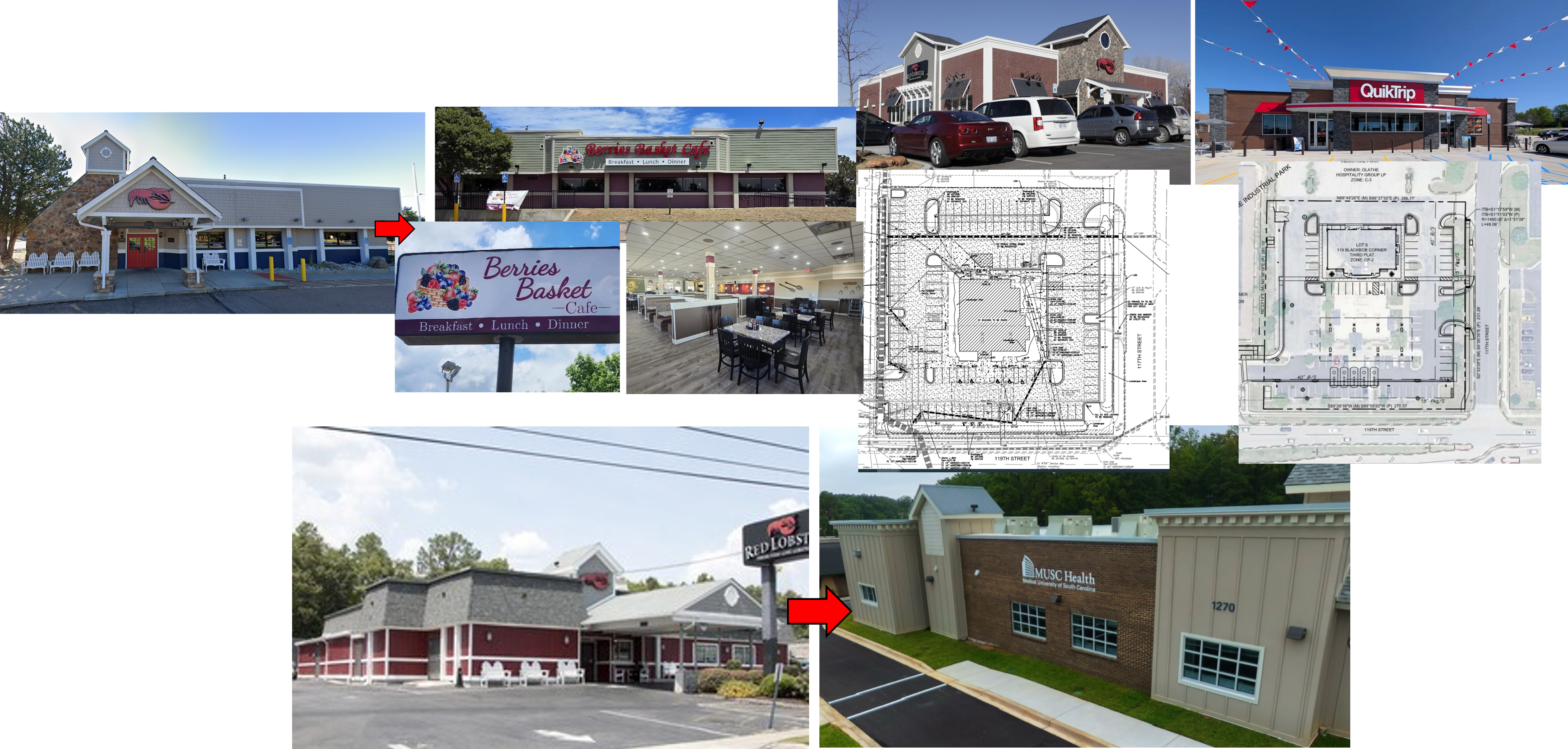
And the Karras family invested $1 MM to transform the former Red Lobster in Colorado Springs, Colorado into Berries Basket Cafe, a neighborhood restaurant.
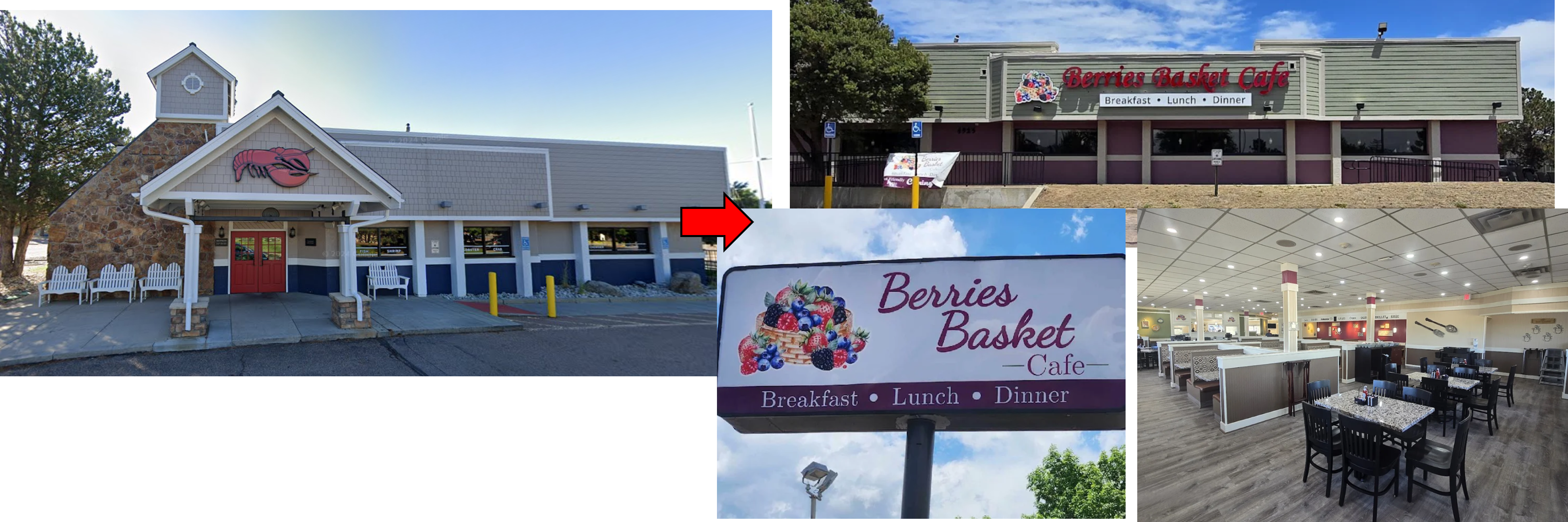
Even recently shuttered Red Lobster restaurants have been in demand.
For instance the Red Lobster in Topeka, Kansas survived the seafood chain’s initial bankruptcy closing but was shuttered for good in April 2026.
Within months, though, it was leased to another restaurant operator.
It will be reopening soon—as the second Berries Basket Cafe.
Some Former Red Lobster Restaurants Are Being Repurposed For Medical Use
A former Red Lobster in South Carolina was recently repurposed as a primary care facility for the Medical University of South Carolina.
The ~8,400 square foot former restaurant building in Cayce, South Carolina opened last month and now houses the offices of four primary care providers.
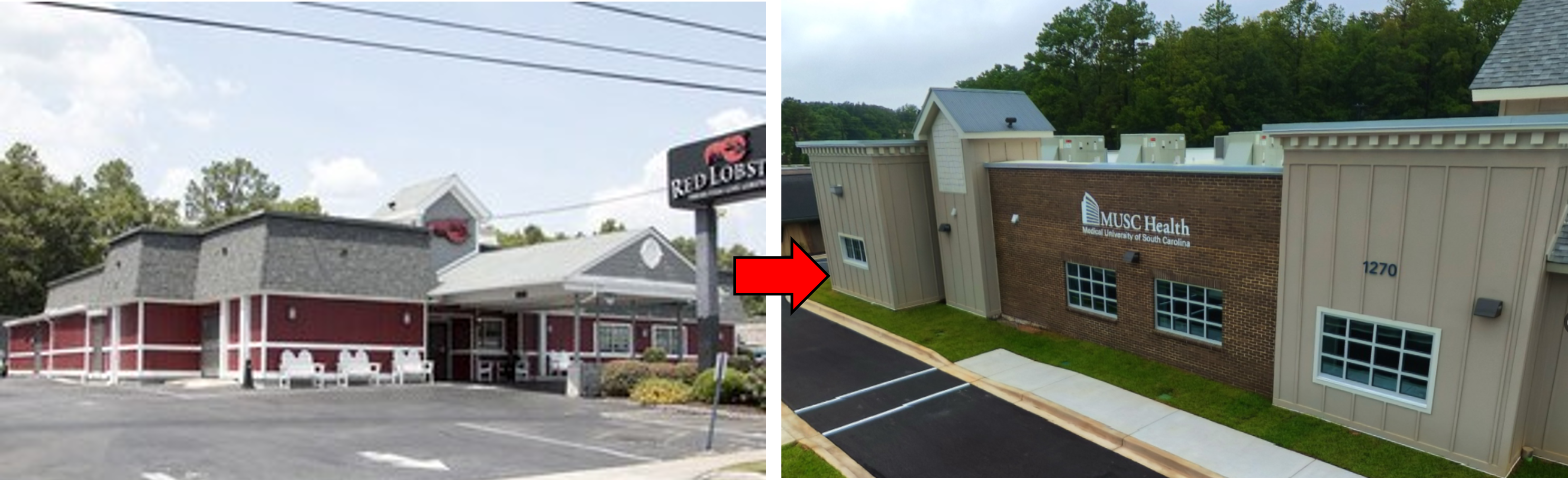
This Red Lobster-to-medical office conversion is not the only healthcare reuse.
A space in downtown Rochester, Minnesota that had been leased by Red Lobster for 25 years was repurposed by the Mayo Clinic, the building’s owner.
And hospital chain HCA leased a shuttered Red Lobster building in Henrico County, Virginia that it intends to repurpose for its CareNow urgent care brand.
Several Red Lobster Sites Are Being Redeveloped As C-Stores And Fueling Stations
In some instances the “dirt” on which the Red Lobster building sits is more valuable than the building and improvements.
One such example is a former Red Lobster site in Gaithersburg, Maryland that is being redeveloped as a c-store, fueling station and car wash.
The ~6,000 square foot Red Lobster is expected to be demolished.
In its place Dash-In Food Stores is planning a 4,800 square foot convenience store, 6 fueling dispensers, 2 EV charging stations and a car wash.
Dash-In is a c-store operator that offers fresh food and beverages along with fueling stations and a car wash at most of its ~60 sites in Maryland, Virginia, Delaware and North Carolina.
But the proposed Gaithersburg project will be its first redevelopment of a former Red Lobster site.
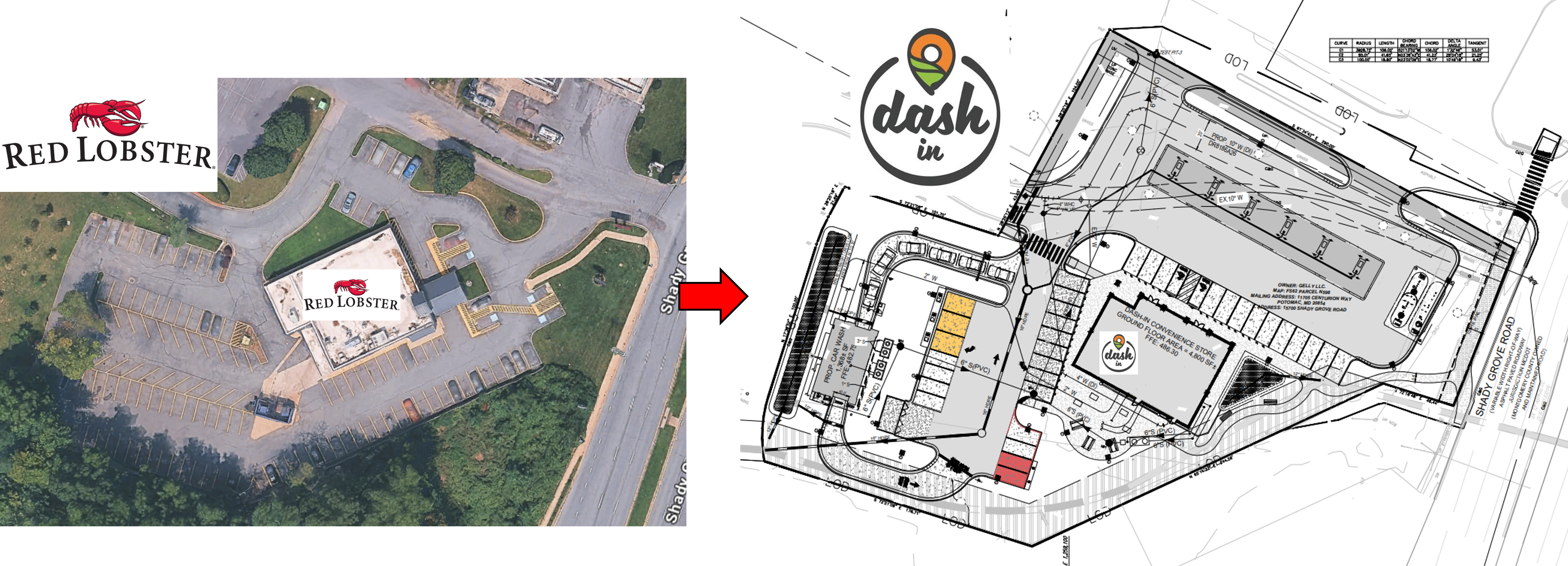
Other former Red Lobster sites that were closed following the 2024 bankruptcy have already been redeveloped as c-stores and fueling stations.
A former Red Lobster building in Olathe, Kansas was demolished and replaced with a ~5,000 square foot QuikTrip c-store and a 6 pump gas canopy.
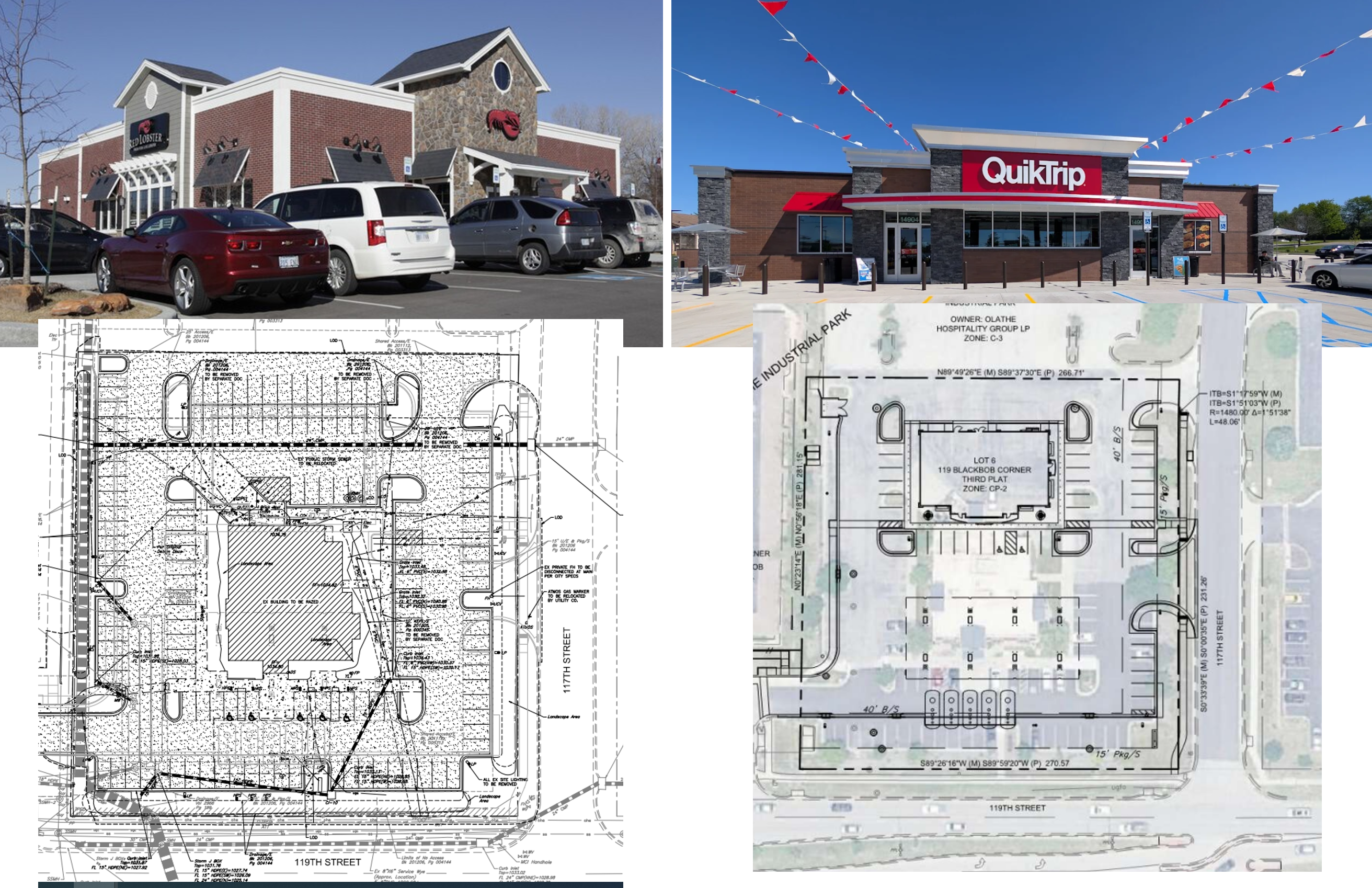
QuikTrip is also finishing up the redevelopment of another former Red Lobster site in Longview, Texas.
However not all communities have been willing to approve a c-store use at a former Red Lobster site.
Millcreek Township, Pennsylvania officials denied the request by Sheetz for a zoning variance that would have permitted the Pennsylvania-based c-store chain to demolish a former Red Lobster building located at the entrance to the Millcreek Mall.
The site’s C-2 zoning prohibits large convenience stores so Sheetz sought to re-zone the property, raze the building and construct a new c-store, car wash and fuel pumps.
However community officials denied the rezoning request since they did not find the site to be an “appropriate location” for a c-store and fueling station use.
Even the Original Red Lobster Has Been Repurposed
Several other Red Lobster restaurants that closed in the years—or decades—prior to its bankruptcy have also been repurposed.
Even the building that housed the very first Red Lobster restaurant.
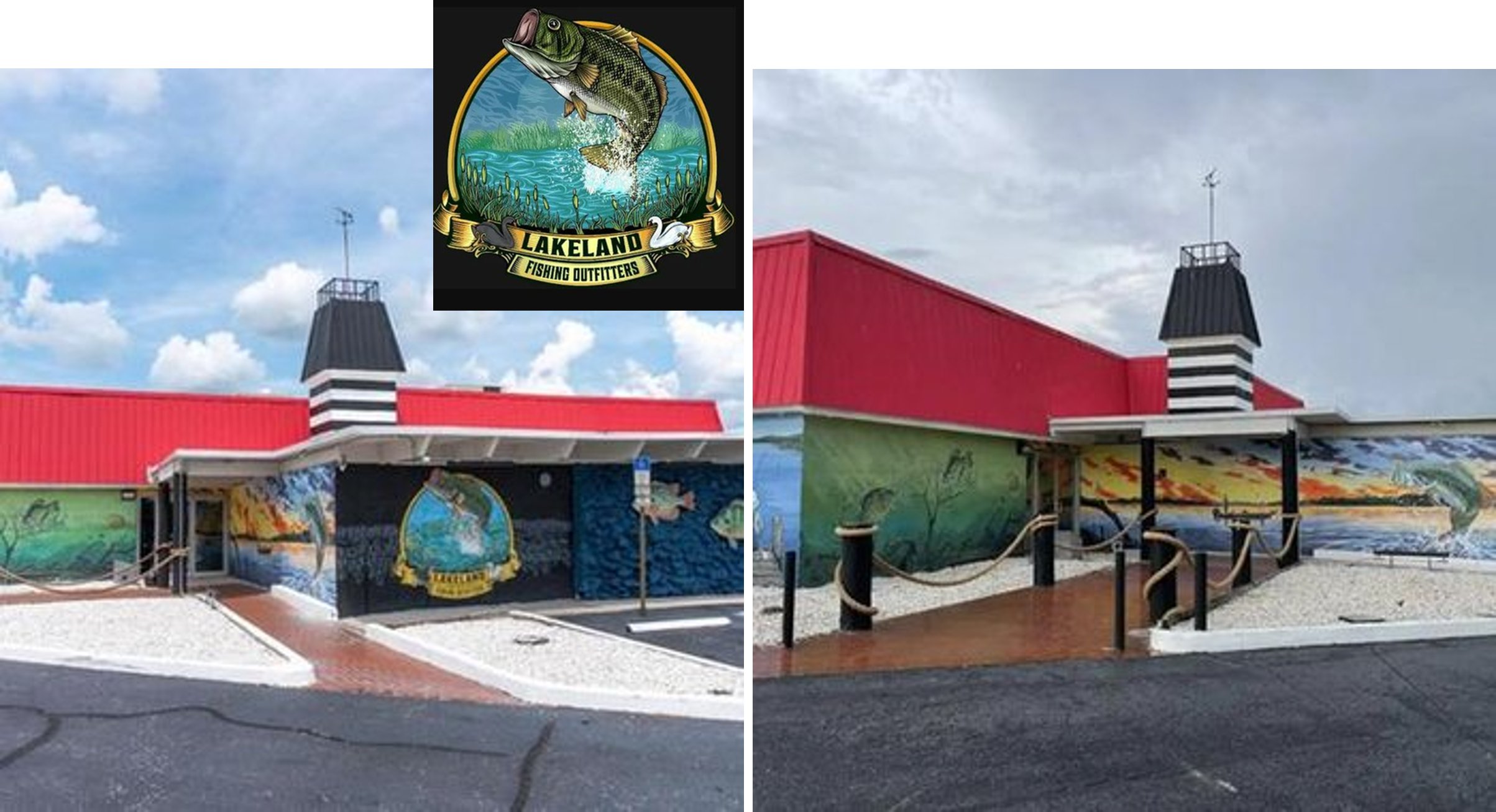
The original Red Lobster restaurant opened in 1968 in a newly constructed building along the shores of Lake Parker in Lakeland, Florida.
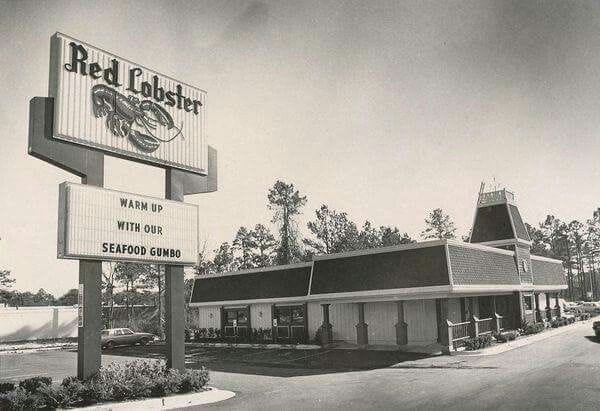
Red Lobster relocated to a different area site in 1996 but its original restaurant building still stands.
It had been occupied on and off by other restaurant concepts over the years but was sold in 2020 to a Company that planned to put the building to a new use and leverage its unique location on the shores of Lake Parker:
The Lakeland Fishing Outfitters Tackle Shop.
Lakeland Fishing Outfitters spent more than two years to renovate the original Red Lobster building into perhaps the largest fishing tackle store in Central Florida.
The tackle shop—with over 5,000 square foot of selling space dedicated to all things fishing—opened for business in 2022.