
It’s been just over a year since Silverio Villegas González was killed by a U.S. Immigration and Customs Enforcement (ICE) officer in Franklin Park on September 12, 2025. The tragic incident happened early in the chaotic, violent run of Operation Midway Blitz, when hundreds of masked and armed federal agents from the Department of Homeland Security swept the city, arresting people and often detaining them in the nearby immigration processing facility in Broadview, Illinois.
Nearly every part of that operation broke precedent and the rules governing detention. Villegas González’s death was an early sign of what the operation would become—a reign of terror that, by earlier this year, had extended to Minneapolis and Saint Paul. Federal prosecutors ultimately declined to charge the officer who fired the fatal shots, the Chicago Sun-Times reported. In May, the Illinois State Police opened an investigation. Villegas González’s family is working with lawyers to explore legal action against the federal government and gain legal custody of his two children, ages four and eight, who are still in foster care, according to the Chicago Tribune.
Little was known about Villegas González at first, only that he was a cook, on his way to Tom & Jerry’s, a Greek gyro spot in Portage Park, that morning, after dropping his children off at school.
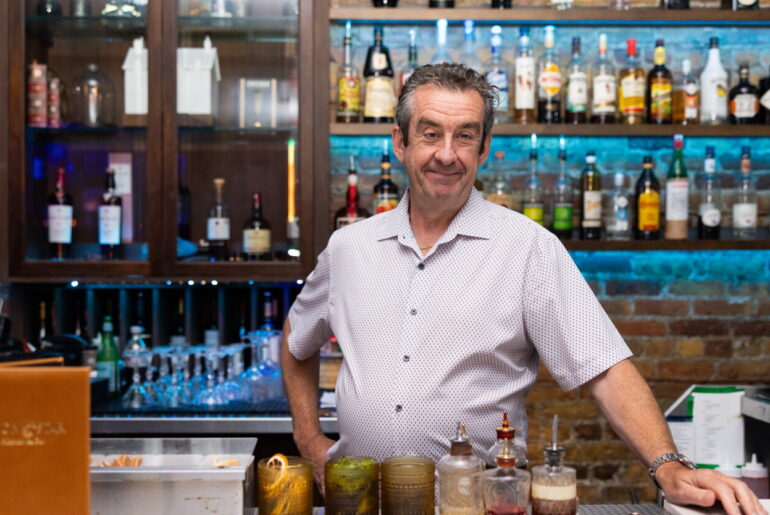
For his former boss, Juan Acuna, Villegas González was irreplaceable. A year later, Acuna’s voice still breaks and his eyes still well up when he talks about what his friend meant to him. He remembers the quiet, 38-year-old father from Mexico as the best kind of coworker anyone could ask for—hardworking, occasionally funny, and warm. Villegas González crosses his mind almost every day. Time has moved on, but that day hasn’t.
This interview was edited for length and clarity.
Silverio was always on the fry side—the middle of the station, where the grill is, making the French fries, holding the order, making sure it was right. He did a little bit of everything. He was everything you want in a person on your team, as a worker.
He was so quiet about his personal life. He never talked much. But sometimes he’d ask me for advice, or he’d say, “Hey, can you read this to me? I don’t understand some of the parts.” So I’d read his English paperwork to him in Spanish. At the time, he was fighting to get custody of the kids.
That last night, for some reason, he left his hat and his Red Bull at the restaurant. He always drank Red Bull at work. The last thing he told me was, “I’m gonna leave my Red Bull. I’ll drink it tomorrow.” I still have it at the restaurant. That’s what kills me.
He died on a Friday. He never showed up to the restaurant. It was supposed to be just me, my other cook, and Silverio that day. I called him, texted him. No answer, nothing. Then his girlfriend called the restaurant. “Hey, do you know anything about Silverio?” she asked. “No,” I said. “I texted him, I called him; he didn’t answer his phone.” She called back and said she’d found a video on Facebook where Silverio had been kidnapped by ICE and he got in an accident. “What do you mean?” I said. “You have to see the video,” she said. So she sent it to me. Then she sent another one, from when they took him out of the car.
I saw blood on his chest. Then they put him on the ground. I knew it was Silverio—he had his Tom & Jerry’s shirt on.
I didn’t even know what to do. I was in shock, crying, and disappointed. And we got so busy at the restaurant that day. How do you keep it running without him? There’s just no way.
I thought, “I’ve got to close early.” Then, “What just happened?” This wasn’t something he was going to be OK from. He wasn’t coming back, not in a week, not never. You lose a person like that, you can’t replace him. It got so bad that I sat down with my wife and told her, “If it was just you and me, I would just go back to Mexico.” I thought about closing the restaurant, selling it, and leaving the U.S. I was so sad. Losing Silverio really hit me hard.
I kept coming into the restaurant every morning, doing the same thing every day. When you expect someone every day, and you know he’s never gonna come back, how do you accept that?
The day he died, we closed at 4 PM, and just left.
To this day, I still can’t believe he’s gone. I have to remember him—it’s easy to forget how good people are. There are a lot of good people out there. But there are still a lot of bad ones, too.
I’m a U.S. citizen now, so seeing my people get hurt, beaten, and kidnapped is painful. You don’t know where they’ll take you. I think that’s what hurts most. But I’m going to keep fighting for justice for Silverio, and everyone else who’s been killed. You kill your own people, and nothing happens. That’s how bad it is.
I believe justice may come one day. But today, we have to live day by day because nothing is promised.
More in FOOD & DRINK
Take a bite out of Chicago’s delicious food scene.

Still think anti-immigrant policies only impact immigrant communities? Your stomach would like a word.
October 7, 2026October 7, 2026

For Colombian, Puerto Rican, Mexican, Venezuelan, and Cuban cooks, the fruit allows the memory of home to live on.
October 7, 2026October 7, 2026

Through festivals, gardens, and groceries, this southeast Asian community in exile weaves itself into Chicago’s food fabric.
October 7, 2026October 8, 2026

Chicago comics fuel and refuel on raw bagels, spinach deep dish, and tuna pouches.
September 2, 2026September 2, 2026

Cooking in Maximum Security reveals the ingenuity of incarcerated Italians’ efforts to cook on the inside.
August 7, 2026August 7, 2026

Purchasing West Bank oil enables Palestinian Americans to support friends and relatives, but also to maintain intangible connections to home.
July 6, 2026September 24, 2026