
Chef Daniel Humm—the Swiss chef and owner behind Wine Spectator Grand Award winner Eleven Madison Park—has traded elevated tasting menus for more casual fare with his latest restaurant, Humm. The new spot opened in New York City’s West Village—in the former En Japanese Brasserie space—on Oct. 10.
The wine program, led by wine director Michael Duffy, features more than 1,500 labels, with a focus on Champagne, Burgundy and smaller regions across France such as the Jura, Beaujolais, Alsace and Loire. Other wines from across the globe—Australia, South Africa, Spain—are also well-represented.
When Wine Spectator spoke to Duffy, something fabulous presided over the conversation: a large poster of Prince, decked out in a pink feather boa and shredding on a guitar. “He’s a musical inspiration for the restaurant,” says Duffy. “Miles Davis is a musical inspiration for Eleven Madison Park—there are 11 adjectives that describe how he innovated and that apply to the ethos of the restaurant. Here, Prince was the inspiration.”

The new spot is chef Daniel Humm’s first solo project in the United States. (Adrian Gaut)
Touches of Prince’s eccentric style can be seen across the restaurant, most notably in the design. The interior was a collaboration with French architect and designer Pierre Yovanovitch and Italian painter Francesco Clemente. The space is marked by oxblood red carpets and velvet booths, moody candlelight and modernist candelabras, and ceilings handpainted by Clemente (with stars, tiles, bricks, trains and more). “You walk in and you think, I’m in a dream,” says Duffy.
The opening dining menu is focused and showcases Humm’s distinctive style from Eleven Madison Park. (Notably, no red meat will be served at Humm, in an echo of the period when only plant-based foods were served at Eleven Madison Park.) Described by Humm as “modern American,” the menu pulls together many cuisines; dishes range from wood-fired focaccia studded with cherry tomatoes to Hokkaido sea urchin toasts. Rigatoni pomodoro, eggplant Milanese and bronzed roast chicken are among the mains on the opening menu.

Italian painter Francesco Clemente painted the ceilings of Humm. (Jonah Rosenberg)
Developing an international wine program was a welcome challenge for Duffy, who came from the Italian-centric programs at Best of Award of Excellence winner Rezdôra Osteria Emiliana and Massara. Duffy—who in a previous life was a biology teacher and environmental policy student—sought out wines that had perspective but were gastronomic. Looking at the Burgundy section, Duffy highlights producers such as Simon Bize & Fils, Domaine Fourrier and Hubert Lignier as representative of his approach. “They’re not overly formal—they can age, but they’re good whenever you open them,” says Duffy. “They’re producers that really move me and that I think are perfect for this food, which is very accessible and joyful.”
Duffy chatted with Wine Spectator about his pick on the by-the-glass list, his dream wine order and Prince’s influence on the cellar.
Prince is an inspiration and a “patron saint” for the restaurant—how does that translate to the wine list?
I think it actually kind of gets to the dilemma of writing a list like this. My previous wine lists were entirely Italian—they had a built-in mission to them. The intimidation with this list was: How do I achieve comprehensiveness? How do I write a list that’s impressive but not showy, and in all of that, still have a voice and perspective?
I think that it’s reasonable to say that Prince is a classic, but also was incredibly cool and a renegade. He was always at the forefront and always pursuing reinvention. Whether it’s intentional or not, that was the guiding ethos behind writing the program. I wanted some of the greatest hits and I wanted the list to make an impact. I wanted producers that I thought had a lot of soul, producers that had a really good story, and that really spanned the price range as well.

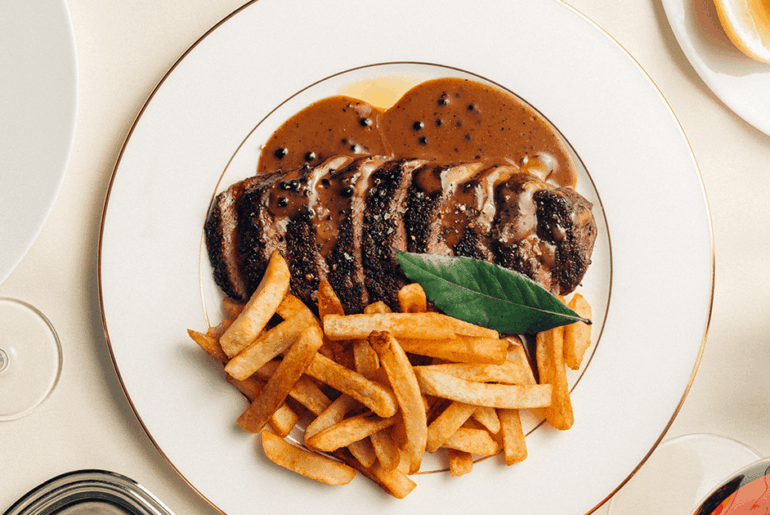
The menu at Humm avoids red meat in favor of poultry, including duck breast, and seafood. (Jovanni Demetrie)
What are some standouts on the by-the-glass menu for you?
With a by-the-glass list, I want there to be something stylistically for everyone. I’m really excited about a couple of whites. I’m pouring a François Cazin Cour-Cheverny 2022, which is a Romorantin [a sibling of Chardonnay] from the Loire. It’s a tiny region that no one really talks about and a grape that no one’s ever heard of, but it has all this amazing texture. It has a lot of presence. It is very capable of aging, but it has incredible acidity. It’s a wonderful food wine. It also is our least expensive wine by the glass! That’s a trick of mine—to invite people to drink things that are really exciting without it feeling overpriced. I think the best way to turn people on to good wine is just to put it in a glass for them.
If you were to get a table at Humm tonight, which wines would you order for yourself?
I would probably start with Champagne. There’s a producer that’s relatively new to the market called Legrand-Latour. They’re very much in the style that I think a lot more Champagne is moving in—they’re farmed well, the dosage is low. The producer was a paleontologist, and so the cellars are full of the ammonites and sea creatures that were fossilized in these soils. It’s unbelievably beautiful. Very worth Googling!
Then I’d move to one of those textural whites—maybe I do a little Château Simone with age? There is a vertical of Clos Cibonne going back to 2011. I love rosé, and I think that’s a super food-oriented rosé. So that would be a great midway bottle. Another nerdy opinion that I’ve had forever with wine is that Beaujolais is the best! Why aren’t we drinking more Beaujolais? If I could do a Morgon like 2018 or 2016, that would be kind of the perfect way to round out the meal.
Keep up with the latest restaurant news from our award winners: Subscribe to our free Private Guide to Dining newsletter!