


October 14, 2026 at 6:00 a.m. EDTToday at 6:00 a.m. EDT
Where should you eat tonight, for lunch tomorrow, on your birthday or for a big anniversary? In short, what’s good? This list of the 40 best restaurants in the D.C. area is my answer to your most practical and pressing questions. But seeing as this is my first year wearing the critic’s bib and my first living in this city, I’ve also been chewing over a question of my own: What is our region’s culinary identity? What makes Washington, well, Washington?
To find out, I ate at 189 restaurants over the course of 10 months, with meals ranging from a $9.99 plate of soul-reviving bread and chickpeas at Chaatwala in Herndon, Virginia (it made the list, at No. 36), to an eye-popping $739 dinner for one at Jônt (No. 14). You’ll find restaurants at every price point and for maximum usefulness — and, let’s be honest, fun — I’ve ranked them, rearranging sticky notes on my living room wall until a portrait of D.C. took shape. Passionately agree or disagree with my rankings? Let me know. We’ll talk.
Lessons learned along the way: Though some misguided outsiders still — still! — caricature Washington as a one-trick steakhouse town, we know the truth. Ours is one of the richest regions in the United States for Laotian, Palestinian and Ethiopian cuisine, among others. We have a booming farm-to-table scene, too, powered by the growers, winemakers and brewers whose land surrounds us, and the talented chefs and sommeliers obsessed with putting it all on the table. If D.C.’s restaurants ever fit neatly in a box, they surely don’t now.
And for all the talk of Washington as a transient city of comers and goers, our longest-standing restaurants tell a different story. In a church basement in Mount Vernon Square (No. 23 Saints Paradise Cafeteria) and a lovingly refurbished rowhouse in Dupont Circle (No. 18 Obelisk), to name two of the many old-timers on this list, you will find the collective memory of our city, plus food and hospitality that haven’t faltered over decades of service. We’re a loyal bunch, and we take care of ours.
Save retaurants you’ve tried and ones you want to explore.
As you scroll, be sure to mark restaurants you’ve visited and ones you want to try. We’ll save your progress as you go. At the end, you can share your list.
At the risk of sending you off without a satisfying sound bite, this year of breakneck eating didn’t result in one epiphany but many. And what a relief! We contain multitudes, stretching from a venerable 120-year-old steakhouse steps from the White House (steak is just one of the things we do well) to the constellation of Vietnamese and Korean and Indian restaurants that fill the bountiful suburbs and cities beyond D.C. May this list feed you well, pique your curiosity and send you in search of your own answers.
Want more restaurant reviews and dining out advice? Sign up for my new newsletter, For The Table, debuting soon on Substack.
 (Scott Suchman/For The Washington Post)
View on map
The tiffin at Cane reveals itself like a bewitched nesting doll. The silver skyscraper of metal containers is unstacked by a server, smiling at first, then laughing as the dishes come down one by one, crowding your table, then overflowing such that plates are jostled to the far corners and still, there is not enough room. The display is a fittingly abundant expression of Trinidadian food and culture, offered by restaurateur Jeanine Prime here and at sister restaurant St. James across town. My preference is Cane, where the plating and the vibe are a little more relaxed but the flavors sit up just as straight.
Doubles, a staple of Trinidad and Tobago, are sluiced with chickpeas and chutney, the stretchy flatbread best folded over and eaten expeditiously before the spicy-sweet fillings travel down your wrists. Jerk chicken wings assert the full power of their marinade, smoky, tangy and spicy enough to make you cough between bites. In the compartments of the deconstructed tiffin, you’ll find fork-tender potatoes and a spread of meat and vegetable curries that never seems to shrink, no matter how much paratha you go through.
Dining experienceMains $21 to $34, with more costly sharable tiffin boxesLunch and dinner dailySound check: Must speak with raised voiceAccessibility: No barriers to entry; restroom is ADA-accessible (Scott Suchman/For The Washington Post)
View on map
Is Cana a bar? A restaurant? The two friends who opened the Adams Morgan space in 2024 were inspired by botecos, the no-frills boozing and snacking hangouts of Brazil, to create an in-between space where people would want to gather. And gather they do. Late on weekends, Cana fills with young bar-hoppers who put back more than a few caipirinhas muddled with passion fruit or coconut, grateful for a restaurant open past 1 a.m. — with a DJ booth spinning vinyl, no less. Radovan Jankovic, one of the owners, told me back in February that sales were split evenly between food and drink, suggesting good business but also that some tipsy diners are missing out on the sharp Brazilian cooking that makes Cana more than just a fun night out.
A coil of Brazilian sausage sourced from a specialty butcher in Wheaton, Maryland, is piled high with pickled onions and farofa, a coarse toasted cassava flour that gives nutty depth. Beautifully juicy shrimp and generous portions of properly cooked Black Angus picanha come to life over Japanese charcoal in the open kitchen, accompanied by sweet gusts of smoke that remind you to eat while you drink. Wherever the night is going, a bit of protein won’t hurt.
Dining experienceMains $21 to $35Brunch Saturday, dinner Tuesday to SaturdaySound check: Must speak with raised voiceAccessibility: Several steps to entrance, no wheelchair ramp (Rey Lopez /For The Washington Post)
View on map
A Japanese hand roll is defined by simplicity — fish, rice, seaweed — which makes the first one you taste at Maru San somewhat confusing. There’s a buttery parmesan sauce capping sweet scallops, and a plucky mixture of scallion, ginger and aji amarillo tucked in with lobster. There’s nothing simple about these rolls, amped up with an arsenal of sauces and textural accoutrements. What else would you expect from Carlos Delgado? The high-flying chef spent years showing D.C. the promise of Peruvian food and culture at his restaurants Causa and Amazonia before opening this sliver of a walk-in-only chef’s counter near Eastern Market with chef-partner Simon Lam. Here, the duo homes in on the unique melding of Japanese and Peruvian ingredients and techniques known as Nikkei cuisine.
Most of their big ideas are contained within rolls, but there are several small dishes worth your attention, particularly morsels of octopus robed in an earthy olive sauce and served with a packet of soda crackers for scooping. Delgado, always building, balances his casual counter with a 15-course tasting menu that requires a coveted reservation and is served to only four diners each night at one end of the bar. He says it’s proof of concept for something bigger, a taste of what comes next.
Dining experienceMost hand rolls $7 to $13Lunch Friday to Sunday, dinner dailySound check: Must speak with raised voiceAccessibility: Two ADA-accessible seats are available at an adjusted counter height; ADA-accessible restroom
$ is less than $60
$$ is $61-$100
$$$ is more than $100
Prices reflect dinner for two, not including drinks, dessert or tip.
 (Rey Lopez/For The Washington Post)
View on map
Kevin Tien packs his cooking at Moon Rabbit with a sense of purpose that turns a good meal into a meaningful one. The chef, whose family is from Vietnam and who grew up in Louisiana, deconstructs a muffuletta, that most New Orleanian of sandwiches, and rebuilds it as a spin on banh uot, a rice noodle salad shingled with Vietnamese “mortadella” and olive tapenade. A crown of puff pastry splits open to reveal supple rabbit sausage, a well-baked reminder of the colonial past that informs Vietnamese cuisine. Even a loaf of milk bread, stained purple with ube and accompanied by three regionally specific Vietnamese spice mixes for dipping, has a clear point of view.
Tien achieves a delicate balance between the sort of culinary storytelling that excites food nerds and approachable dishes that satisfy those who care only about what’s in front of them. Come dessert, pastry chef Susan Bae picks up gracefully where Tien leaves off, serving a striking mousse that tastes purely of durian, the floral rush of tropical fruit perfuming the air as plates are cleared.
Dining experienceMains $22 to $43Dinner Monday to SaturdaySound check: Must speak with raised voiceAccessibility: No barriers to entry; restroom is ADA-accessible (Rey Lopez/For The Washington Post)
View on map
Your choice of Indian restaurant in the area surrounding Dulles International Airport is so abundant that seeing all the dots light up on Google Maps might elicit helplessness. It’s in the spirit of taking a load off that I direct you to Chaatwala. The restaurant’s sole focus is Indian street foods, a dizzying range of portable dishes modest enough to put back in a few bites and substantial enough to hold you over until the next meal.
Take note of the restaurant’s name and order some form of chaat, the endlessly riffable combination of crunch, freshness and sweet-sour chutney that serves as fuel for about a billion busy diners on the daily. Dahi bhalla has my vote, three weighty lentil dumplings served on a paper plate with thin yogurt and a swirl of sweet and puckery chutneys floating dangerously near the rim. A more fortifying option is chole bhature. Pieces of the not-so-flat bread are fried masterfully so that their cheeks puff with air and their bubbly exteriors haven’t the faintest sheen of grease. A scoop of chickpeas served on the side is a marvel in its own right, tenderly cooked and redolent of warm spices. Jaisimha Jaithirth, the restaurant’s genial owner, has aspirations to franchise and go big. I’m rooting for him, if it means a Chaatwala for every weary traveler.
Dining experienceMains $8 to $11All day, Tuesday to Sunday Sound check: Conversation is easyAccessibility: No barriers to entry; restroom is ADA-accessible (Scott Suchman/For The Washington Post)
View on map
Until the opening of Chef Tan, Hunanese locals sometimes drove as far as New York for a taste of home. The drought ended decisively last July as platters of springy, chile-pricked river snails and bundles of rice noodles in heady cinnamon-anise broth filled tables at this restaurant in a Vienna, Virginia, strip mall. Those unfamiliar with the food of Hunan, a southern province boasting one of China’s most significant culinary traditions, might jump at the sight of red and green chiles garnishing dishes by the fistful. There is heat to be had here, for sure, but it is not as unrelenting as the tongue-vibrating variety of Sichuan, balanced by the ample use of pickled vegetables and peppers to provide relief and brightness.
Though Chef Tan is new to the area, owner Kevin Tan has spent the better part of two decades building a network of Hunan restaurants across the East Coast, and a rotating cast of seasoned cooks move between his kitchens. If you’re new to the food of Hunan, a server will gladly offer recommendations, which might include strips of lamb stir-fried with cilantro and tame red peppers, or a hypnotizing mash of velvety eggplant and “century” eggs. My best advice is to take theirs. This crew knows exactly what they’re doing.
Dining experienceMains $15.99 to $45.99Lunch and dinner dailyTakeout and delivery availableSound check: Must speak with raised voiceAccessibility: No barriers to entry; restroom is ADA-accessible (Deb Lindsey/For The Washington Post)
View on map
There are few surprises at Caruso’s Grocery, where the chicken parm comes with a sidecar of spaghetti, and the gnocchi bathed in pesto is exactly how you remember it. To cook the classics and cook them well enough to trigger — and honor — nostalgia is an art form, mastered by chef Matt Adler at his aggressively by-the-books Italian American restaurant in Hill East (with a second location in North Bethesda, Maryland).
Despite the team’s best efforts to plaster the walls with family portraits and set the scene with comfy leather booths, there’s no fully masking the chilliness of the new-build dining room. But never mind the space, which Adler more than makes up for in the sincerity of his cooking. With one of the better Caesar salads in town and a slab of tiramisu rich enough to wield as a weapon, Caruso’s Grocery is a portal to all the red-sauce joints you’ve loved before.
Dining experienceMains $24.25 to $33.25Dinner Tuesday to SundaySound check: Must speak with raised voiceAccessibility: No barriers at the entrance, but wheelchair users might need assistance with the two front doors; ADA-compliant restrooms (Rey Lopez /For The Washington Post)
View on map
Steakhouses are so rarely the domain of fresh ideas, nor do we ask that of them. They offer comfort in their relative sameness and nostalgia in their staid opulence. Isla manages to check all of the required boxes while breaking free of the mold. Chef Lonie Murdock, who also owns the Caribbean restaurant Miss Likklemore’s in Toronto, is of Jamaican descent and has built a menu that grounds itself in the familiar playbook — something chilled, something starchy, something grilled — but uses a broad pantry of Caribbean ingredients to position each element in a new light.
Start with lamb tartare, plucky with green seasoning and tempered by sweet potato crema. Then on to oxtail patties, a worthy intermission every steakhouse should take as inspiration, before tucking into a pork chop shimmering in a pool of jus made with the Trinidadian green mango condiment kuchela. The Midtown Center dining room completes the effect, with leather booths that recall every other steakhouse in town and an enormous pink glass chandelier that definitely does not.
Dining experienceMains $39 to $120 (rib-eye)Dinner Monday to SaturdaySound check: Extremely loudAccessibility: No barriers to entry; restroom is ADA-accessible
I never book under my own name — I pay for all meals using four credit card aliases.
 (Deb Lindsey/For The Washington Post)
View on map
After all these years — 25 to be exact — the dining room at 2 Amys still gets so busy that you have to chart a route from your table to the restroom. Instead of chasing trends, Peter Pastan has found longevity by following the seasons like a flowing river, serving dishes that feel less like they were created than simply discovered. Lush, bitter rapini with a shake of olive oil and a drizzle of reduced grape syrup, or a tangle of filet beans and pecorino, are pure, natural elements made a little better. Gorgeous, spotty Neapolitan pizzas from the wood oven appear similarly simple, though in reality, they often feature meats cured by Pastan himself. It takes confidence to put in such effort and risk that it will go unnoticed, but 2 Amys isn’t in the business of self-importance — just full-hearted service.
It is in this spirit that a printed note is dropped off with your menu, explaining with a hint of sorrow that inflation and economic uncertainty have increased prices. “We can’t begin to thank you for all of the kindness and support you have showed us over these many years,” it reads. I can’t help but think it’s us who should be grateful.
Dining experiencePizza $16.75 to $24.50Dinner daily, lunch Saturday and SundaySound check: Extremely loudAccessibility: A ramp leads to the entrance; one restroom is ADA-compliant (Deb Lindsey/For The Washington Post)
View on map
Tapori is one of the best restaurants in D.C. on the strength of its dosa alone. The bronzed triangle could be AI-generated, its shading is so precise, its corners so sharp, its potato filling so well calibrated between salt and spice. Thank goodness for real-life human talent, which comes to us here in the form of Suresh Sundas, the restaurant’s Nepal-born chef, and cocktail pro Dante Datta, who opened this H Street dining room last year following the success of their nearby Daru.
Tapori continues a national trend of ever-improving regional South Asian cooking, focusing on street foods from across the region. An assembly of battered and fried lotus root topped with tamarind and sweet yogurt is riotous, and Sundas’s tender momo bathed in a potent broth makes me wish the menu further explored his home country. There’s still time. South Asian street food is a big beat, and Tapori is just getting going.
Dining experienceMains $20 to $38Dinner Wednesday to MondaySound check: Must speak with raised voiceAccessibility: No barriers to entry; ADA-compliant restroom (Scott Suchman/For The Washington Post)
View on map
Navigating the menu at My Little Chamomile can be a bit tricky if you don’t speak Turkish. Will you have the kabak cicegi dolmasi or the girit ezmesi? The pancar labne or the tekmil fava? Dish names are written in chef Cagla Onal-Urel’s native tongue, with a spare list of ingredients below each one. The first time I came to dinner at the homey restaurant hidden in the bend of a Georgetown alleyway, I feigned confidence and ended up with a table almost exclusively of dips. But it didn’t matter, as Onal-Urel cooks with such clarity and sharpness that even the most texturally similar dishes are otherwise happy strangers.
Girit ezmesi brought feta, labneh and goat cheese together for a world of brine. Hunkar begendi took lamb, cooked until each little morsel was caramelized, and heaped it onto a butter-smooth eggplant whip. In a neighborhood overrun with high-net-worth steakhouses, My Little Chamomile is a breath of fresh air, a shining monument of less is more.
Dining experienceAssorted small dishes and mains $14 to $65Brunch Sunday, dinner Wednesday to SaturdaySound check: Must speak with raised voiceAccessibility: Low steps and lips on doorways to dining room; restroom reached via steps (Rey Lopez /For The Washington Post)
View on map
At Menya Hosaki, you can have ramen, and that’s about it. That’s all you really need at the slim Petworth shop, where chef Eric Yoo’s singular obsession is channeled into springy homemade noodles, tenderly poached and roasted meats to top each bowl, and a tight assortment of broths that I continually cycle through as I try to pick a favorite. At least for now, mine is the tantan, whose creamy sesame base hides under a shimmering slick of red oil.
The utilitarian restaurant has little in the way of ambiance, but one of the best shows in town plays out at a counter seat, from which you can watch Yoo and his equally obsessed band of cooks turn out bowl after bowl with the precision and efficiency of a fine-dining kitchen. If you find yourself needing a bite of something solid, Yoo serves karaage, the only offering that doesn’t come with a spoon. Craggy and salty-sweet in every nook and cranny, the fried chicken has, of course, been perfected.
Dining experienceAll ramen $21Lunch Tuesday, dinner Wednesday to FridaySound check: Must speak with raised voiceAccessibility: No barriers to entry; restroom is ADA-accessible (Rey Lopez /For The Washington Post)
View on map
Sometimes the best way to follow up a smash hit is to try something completely different. (Just ask makeup tycoon Rihanna.) Such is the path taken by Jon Sybert and Jill Tyler, the married pair who captivated Washington — and Michelin inspectors — with their fine-dining restaurant, Tail Up Goat. A decade after opening its doors in 2016, they closed them to make way for something new in the same Adams Morgan space: Rye Bunny.
Some things are indeed very different, like an experimental service model that cuts costs by having customers wait in line to order. This wait, which often lasts the respectable duration of one stand-and-sip cocktail but has increased with the restaurant’s early success, might give you pause. Soldier on and you’ll find that familiarity kicks in at the table. Sybert’s food is a little less complicated to make these days, perhaps a touch less heady on the plate, but his love for the most seasonal produce is very much intact. In summer, he took to corn with frantic enthusiasm, tucking it into butter, salads and pastas, making sure we didn’t miss a moment of the sweetest months. One can only imagine the stick-to-your ribs satisfaction winter will bring. Tyler remains equally devoted to her dining room, her team’s tableside hospitality so exuberant and attentive that the long wait to get here is the last thing on your mind.
Dining experienceMains $25 to $49Dinner dailySound check: Extremely loudAccessibility: No barriers to entry; restroom is ADA-accessible
My busiest day of research included three lunches.
 (Scott Suchman/For The Washington Post)
View on map
If a restaurant’s menu is more than a tight two pages, your best chance for success is usually to rifle through the obvious blockbusters to identify the chef’s true specialties. Most restaurants, however, are not run by Peter Chang. At Mama Chang, my favorite in the legendary chef’s constellation of restaurants, the real challenge is finding a dish that doesn’t live up to his mythic reputation.
Lion’s head meatballs are a supple emulsion of meat and fat, sauced in a subtly spiced brown gravy. A dish whose modest English name is “seafood with crispy rice” is in fact a banquet-ready seafood stew. It arrives in an enormous lotus-flower-shaped bowl, and at its center sits a dome of crispy rice meant to be shattered into the milky broth. Surrounding this are chewy, glutinous rice dumplings filled with sweet bursts of scallop. My only real advice, based on personal experience, is to plan date night elsewhere and come with as many friends as you can muster. Mama Chang is too much for two diners to possibly digest.
Dining experienceMains $18 to $80 (whole Peking duck)Lunch and dinner dailySound check: Must speak with raised voiceAccessibility: No barriers to entry, ADA-compliant restroom (Deb Lindsey/For The Washington Post)
View on map
Like any barbecue restaurant worth its dry rub, 2Fifty Texas BBQ starts selling out well before its 7 p.m. close. Do your best to arrive at the Riverdale Park, Maryland, restaurant (there is also a D.C. location in Mount Vernon Triangle, but the original is the one to beat) around the lunch hour, and you won’t have to endure the heartbreak of “Sorry, we’re out of spicy cheddar sausage.”
Fernando González, who owns 2Fifty with his wife, restaurateur Debby González, serves Central Texas-style, wood-smoked barbecue by way of his native El Salvador. This combination proves harmonious. Trays are loaded with hulking pepper-crusted beef ribs, custardy tamales filled with brisket and, if you time the daily specials right, Sunday-only pupusas. The last time Tim Carman, my colleague and an intrepid barbecue scout, went in search of our region’s best smoked meat was 2022. Four years later, 2Fifty still holds the crown.
Dining experienceMost meat priced by poundAll day, Wednesday to Monday Sound check: Must speak with raised voiceAccessibility: No barriers to entry, ADA-compliant restrooms (Deb Lindsey/For The Washington Post)
View on map
Leave it to Michael Rafidi to take fast-casual, the least-inspired restaurant genre in America, and turn it into something not just grab-and-go-worthy but revelatory. Yellow, his cafe with locations in Georgetown and Union Market, is best enjoyed mid-week, when it is not frustratingly full of denizens who share your cravings. Mine typically call for pita, split open and stuffed to bursting with chicken and the mango pickle amba, or a refreshingly substantial vegetarian combination of cauliflower and shatta-spiked yogurt.
In typical Rafidi fashion, the chef goes beyond what is expected of such a casual concept, cooking much of the restaurant’s food over coal (at the Union Market location) and in a wood-powered oven (at both). Offerings between the two locations vary slightly, but both promise excellent pastries (a labneh-filled za’atar croissant is a good way to start the day) and fun drinks. For a too-short spell, the Georgetown location turned into a buzzy and very good pizza restaurant by night, but the chef recently retired dinner service as he gears up to open a full-blown Levantine pizzeria nearby. Keep it coming, chef, and the fans will follow.
Dining experiencePita and sandwiches $11 to $22Breakfast and lunch daily, open until 8 p.m. Tuesday to SaturdaySound check: Must speak with raised voiceAccessibility: No barriers to entry at either location, both have ADA-compliant restrooms (Scott Suchman/For The Washington Post)
View on map
The mere presence of guacamole on a menu can hold unadventurous eaters back from exploring the full range of offerings, but at Pascual, the oft-forgettable dish is a mandatory starting point. It’s dusted in a powder of charred avocado leaves and encircled by three salsas in varying levels of smoke and scorch, a lemony crema good enough to tilt back, and assorted pickles and candied fruits. If you need convincing, this is how Isabel Coss, who runs the restaurant with her chef husband, Matt Conroy, warms you up for what’s to come.
It shouldn’t take much to give yourself over to the culinary power couple, who utilize an impressive live-fire hearth, a stocked pantry of chiles ranging from fruity to pure fire, and plenty of whatever is in season to create beautiful dishes that would fit right in at the trendiest restaurants in Coss’s native Mexico City. I always encounter something new to me at Pascual, whether a pale but powerful white mole I scraped up with the side of my fork after finishing off the accompanying charred leeks, or nicuatole, a pre-Hispanic Oaxacan corn pudding that tasted more essentially of corn than perhaps any dish I had eaten before.
Dining experienceMains $26 to $46Brunch Sunday, dinner Wednesday to SundaySound check: Must speak with raised voiceAccessibility: A small ramp can be used for the step at the door, but the dining room is compact and restrooms are down a flight of narrow stairs (Marvin Joseph/For The Washington Post)
View on map
Saints Paradise Cafeteria is open every day, 8 a.m. to 5 p.m., but Fridays are my favorite. That’s when Alicia Guy, the church cafeteria’s manager, makes her crab cakes. They’re big and round, with crisp, golden exteriors giving way to sweet meat and not too much filler. Others come for the spaghetti (Wednesday) and fillets of striped pangasius (Thursday), each dish a contribution from a congregant who, like Guy, has built their life around this community and staffs the cafeteria.
Known to regulars as Daddy Grace, Saints Paradise stands in the enormous shadow of the United House of Prayer for All People and has fed members of the towering gold-domed church in Mount Vernon Square since the 1960s. In the early 1980s, around when Guy began working here, the cafeteria opened to the greater community. Plenty of the diners have been coming here ever since. You sense it in the line to order, where old friends rehash the happenings of their week, and at the steam table, where longtime staff treat one another and their customers with a combination of exasperation and pure love that is earned in years, not weeks. If this is your first time here, don’t stress too much about what to order when you reach the front of the line. Enormous ribs glazed in tangy barbecue sauce, candied yams with the right amount of warm spice, greens cooked until just so, turkey wings that fall off the bone when you look at them. Every dish stands the test of time.
Dining experienceMost meals less than $15All-day daily until 5 p.m.Sound check: Conversation is easyAccessibility: Side entrance is accessible via short flight of stairs; entrance on M Street NW is accessible via ramp. Restroom is ADA accessible.
Driving between restaurants, this guide took me 6,620 miles.
 (Rey Lopez/For The Washington Post)
View on map
You’re here for tofu stew. It comes boiling furiously in a stone pot, but its effect is serene, filling the restaurant with steam and sending all who eat it into a happy stupor. Since 2002, when Paul Shin opened Lighthouse Tofu on a stretch of Annandale highway and wallpapered the wood dining room to look like a traditional Korean home, his sundubu-jjigae has been rivaled by few. Its broth is delicate but assertively peppery, powered by a spice blend Shin whips up in the secrecy of his home. The tofu that floats beneath its surface, made to spec by a producer at Washington’s wholesale Florida Avenue Market, is so soft that a tap of the spoon sends shards floating off like the edges of an iceberg.
Very little has changed about Lighthouse Tofu in its two decades of service. As long as Shin, now in his mid-70s, decides to keep the stone pots bubbling, I hope nothing does.
Dining experienceMains $17.99 to $39.99. (Lunch prices are lower.)Open all day dailySound check: Conversation is easyAccessibility: No barriers to entry, ADA-compliant restrooms (Deb Lindsey/For The Washington Post)
View on map
Manifest Bread, the bakery, probably needs no introduction. Since opening in Riverdale Park, Maryland, in 2023, its ovens have consistently produced outstanding sourdough, sending loaves off to Maison Bar à Vins and Rye Bunny among other of Washington’s best restaurants. (Rule: If you see Manifest Bread on the menu, you order it.) Fewer people know Manifest Bread, the sit-down restaurant, which opened in mid-2025 following an expansion of the space.
Four nights a week, go to the source for a dinner that begins, yes, with a big hunk of bread and a pat of cheeselike cultured butter, but goes on to prove how much more this kitchen is capable of. Burrata over a messy pool of grated heirloom tomatoes was a highlight of early summer. A roasted half-chicken baked over a slab of sourdough bread provided comfort as the season drew on. It should come as no surprise that pizza is a strong point, a little sturdier and more generous in portion than the barely-there Neapolitan pies that are so of the moment. Come early, if you can, before the space fills with locals here to enjoy their neighborhood’s best-kept secret.
Dining experienceMains and pizzas $22 to $36Pastries and lunch Tuesday to Sunday, dinner Wednesday to SaturdaySound check: Extremely loudAccessibility: No barriers to entry; ADA-compliant restroom (Scott Suchman/For The Washington Post)
View on map
Yes, yes, you’ve heard about the burger. It is tall and juicy, and your friend once waited three hours on a Saturday night to eat it, but why? Maybe a more direct question is in order: Has everyone lost their minds? The burger, I can attest after something like a dozen visits to the Shaw bar, is outstanding, about as big as a lightly compressed tennis ball and cooked until a thick crust forms. And yes, I do suppose we’ve lost our minds.
Since the bar opened late last year, there’s been something hard to pinpoint about its relentless success. Absolutely, the crowd that fills the front and back rooms (and the new patio), then spills onto the street and waits patiently for hours, is here for the food. It’s very good, the simple but exquisitely balanced double-decker club sandwich, and the mozzarella sticks that never seize up with a sidecar of sweet marinara for dunking. But if they’re anything like me, they’re here as much for owner Emily Brown, who stops at every table and remembers every face, and for one another, a bunch of buzzed, happy strangers who are intent on making the most of a few undeniably strange, sometimes funny, often dark years here in Washington. A great neighborhood bar can’t fix the world, but it’s not a bad place to start.
Dining experienceMains $19 to $25Lunch Saturday and Sunday, dinner dailySound check: Extremely loudAccessibility: No barriers to entry; ADA-compliant restroom; exceptions to the no-reservation policy are made for diners who need special accommodations and reach out in advance (Scott Suchman/For The Washington Post)
View on map
If you spend a lot of time at the kind of sushi counters where the chef utters just a few solemn words over the course of a meal that costs a few hundred dollars, you’re in for a surprise at Omakase @ Barracks Row. As chef Yi “Ricky” Wang prepares 20-odd courses of raw fish and delicate bites from behind a long, sleek counter, each is delivered with narration from Minibar alum Gabriel Enjamio, an emcee of sorts who offers notes on sourcing, technique and the inner workings of Wang’s mind to a rapt audience.
You learn that the octopus in an early dish of daikon and springy seaweed is the largest the restaurant has ever sourced. And that a gorgeously braided piece of nigiri has been prepared in this way not just for wow factor (it really is stunning), but so that the fragile bones of the gizzard shad fold in on themselves and become imperceptible. It’s true, you realize as the fish and rice dissolve on your tongue. No bones. Pure briny marvel. If you’re looking for somewhere quieter and less interrupted to wine and dine a prospective client or propose to a lover, there are plenty of other omakases to choose from. Some of them are good. A few are great. None hold a candle to Omakase @ Barracks Row.
Dining experienceOmakase $210Dinner Tuesday to SaturdaySound check: Conversation is easyAccessibility: Second-story dining room is accessible only by stairs
I ate dinners that started as early as 4 p.m… and went as late as 2 a.m.
 (Deb Lindsey/For The Washington Post)
View on map
Thirty-nine years in, Obelisk does not concern itself with hotness and newness, matters best left to the kids. Well into middle age, the restaurant has set its sights on something rarer: timelessness. To take in the dramatic display of fresh-cut flowers in a grand vase at the center of the dining room, to be met with a basket of chopstick-thin breadsticks at your table, to have all of your needs tended to by a capital-s Server exuding quiet confidence, is to remember what getting all dressed up and going to a nice restaurant once felt like. Elsewhere, dinner has become more hurried, the promise of free bread and patient service gone. Not here.
Esther Lee, who bought the restaurant from founder Peter Pastan of 2 Amy’s fame in 2016 after years working alongside him, cooks a five-course prix fixe with the same self-assuredness that fills her dining room. There’s no preciousness to Lee’s almost ruggedly rustic cooking, whether a crisped fillet of branzino with a tangle of agretti kissed with bottarga, or a bowl of stuffed pasta in a creamy walnut emulsion. Everything just is what it is, simple and honest enough to make you wonder why all restaurants can’t feel this good.
Dining experienceFive-course dinner $135Dinner Thursday to SaturdaySound check: Conversation is easyAccessibility: The entrance is reached via steep stairs (Deb Lindsey/For The Washington Post)
View on map
Naming a favorite Ethiopian restaurant in Washington feels a lot like crowning the best slice of pizza in New York. Too many options, too much pressure. I love Beteseb in Silver Spring for its careful treatment of vegetarian classics, Tsehay in Adams Morgan for welcoming non-Ethiopians like myself to experience the beauty of holiday celebrations and Heat Da Spot in Park View for a soulful breakfast. But for the full package, my mind goes to Eatopia, which opened on U Street NW in 2024.
On Monday nights there’s live jazz, and a full bar mixes cocktails that show off the unique muskiness of tej, or honey wine. The meat and vegetable stews and stir-fries that complete a typical feast come correct, and, more tellingly, so does the doro wat, a chicken stew so labor-intensive and hard to pull off in a restaurant setting that a few places in town don’t have it on their menus at all. It is deep and dusky, its base of onions and berbere cooked slowly until the two elements become one, just as they’re meant to do. A subtle flex for those who know.
Dining experienceMains $21.85 to $59.85 (two-person sharing platter)Lunch and dinner dailySound check: Extremely loudAccessibility: No barriers to entry; restroom is ADA-accessible (Scott Suchman/For The Washington Post)
View on map
I can’t think of another chef who’s spent more of the last decade working toward a definition of Washington cuisine than Jeremiah Langhorne. At the Dabney, his low-slung restaurant built around a jaw-dropping live-fire hearth, Langhorne and chef de cuisine Tim Buell take you through such an embarrassment of local meat, seafood, produce and wine that you might feel duped at the end of the night to find yourself not on a verdant patch of farmland but back in the very city-like surrounds of Shaw’s Blagden Alley.
Check Langhorne’s sources, and you’ll find Chesapeake catfish larb, clams from Cape Charles, Virginia, and sausages made with beef from Maryland’s Roseda Farm. Nowadays, this sort of on-menu citation is par for the course, and you’ll find some of the same producers mentioned at other restaurants around town. When you spark a movement, as Langhorne did, progress eventually catches up with you. But the Dabney’s still here, and the fire’s still lit.
Dining experienceMains $22 to $52, with more costly shareable dishes; five-course prix-fixe $145Dinner Tuesday to SaturdaySound check: Must speak with raised voiceAccessibility: No barriers to entry; restroom is ADA-accessible (Scott Suchman/For The Washington Post)
View on map
For every need, Michael Rafidi has a restaurant. Yellow (also on this list) for casual but soulful breakfast and lunch, Albi (ditto) for the most momentous occasions and, since 2024, La’ Shukran (which means “No, thank you” in Arabic) for letting loose in life’s in-betweens. Down a grubby Union Market alley and up a steep flight of stairs, blink twice and reappear in a world that moves to the swirling rhythms of Levantine funk. The desire to dance is strong, but the space is small, so to drink and eat will have to do. A glass of natural wine from Lebanon pulsing with its own intense funk is a fitting place to begin, or a cloudy cocktail with the anise sting of arak.
Albi prizes subtlety. La’ Shukran wallops you with flavor. A skewer of rabbit glossed in saffron honey and set on Rafidi’s outstanding hummus might be followed by a whole fried quail painted with chili oil and served with a chilled coupe of tahini ranch. If you want to test the limits of your tiny bistro table, there are larger dishes, such as a shatta-covered lamb T-bone, and the promise of more arak. Yes, please.
Dining experienceMains $51 to $87Dinner Thursday to MondaySound check: Extremely loudAccessibility: Stairs to second floor, with no elevator
Along the way, I spotted crudo on 41 menus.
 (Rey Lopez/For The Washington Post)
View on map
Jônt’s interior isn’t winning any awards for heart and soul. If you’ve eaten at another fine-dining chef’s counter, you can picture the room: bathed in white, cold, impersonal. Then the meal begins, and this great expanse of nothingness becomes the backdrop for cooking bursting with color and warmth, so ripe with big flavors and charming ideas that the room melts away just, I imagine, as chef Ryan Ratino and his team intended.
Early on might come slivers of horse mackerel arranged with carefully peeled cherry tomatoes and stark white curls of squid, a chorus of textures flitting around the palate. Seafood is a strong point, whether a delicate fillet of tilefish whose scales have been flash-fried into dozens of edible little crisps using the Japanese technique of matsukasa yaki, or a humble bowl of koshiibuki rice cooked in a donabe over live fire and spooned with maitake mushrooms, truffles and Dungeness crab. My only disappointment was a morsel of fried chicken topped with globs of caviar, a braggadocious little reminder of the fine-dining tropes that so rarely steal the spotlight at Jônt.
Dining experienceTasting menu $375, with optional supplements Dinner Wednesday to SundaySound check: Must speak with raised voiceAccessibility: Wheelchair users can access the restaurant via an elevator and dine in the pastry parlor; ADA-compliant restrooms (Rey Lopez/For The Washington Post)
View on map
In the 10 months since I first reviewed this chairless restaurant where you wait in line to order and then eat dinner standing up, hundreds of readers have made perfectly clear that they’re about as excited to dine on their feet as they are to go to the dentist. To which I say: Put on your comfy shoes. Gemini is worth it. (The restaurant does arrange seating for those who can’t stand or accommodates them on the seated patio.)
Chef Johnny Monis has taken the space that once housed his Greek-accented fine-dining restaurant, Komi, and turned it into a culinary concept shop of sorts, with esoteric bottles of natural wine that you can drink or take home, courtesy of wine director extraordinaire Eric Moorer, and a mind-bendingly good selection of ice creams churned by former Komi sous chef Ben Brunner. For his part, Monis serves as many as 10 homemade pasta shapes at a time and has a profound way with vegetables, resulting in my favorite sweet potato in memory and some very good meatless eggplant meatballs. If ever there were a reason to leave your comfort zone, this is it.
Dining experience202-596-1509 (text only)Pizza and pasta $18 to $30Lunch Friday and Saturday, dinner Tuesday to SaturdaySound check: Extremely loudAccessibility: Diners encounter a steep staircase to the front door. Apart from a small bench, there is no indoor seating. The outdoor patio has seats. (Scott Suchman/For The Washington Post)
View on map
The bifongo at Qui Qui is a thing of beauty, a mash of green and yellow plantains formed into an irresistible ball of starch and seasoned with a truckload of garlic. In a Park View dining room decorated with Puerto Rican flags and rows of rum bottles, the island’s food culture is rendered in vivid detail. Ismael Mendez, who opened the restaurant in 2025, and André Gaspar, his executive chef, work with local farms to source produce and meat that they transform into faithful interpretations of the classics. Their cooking — that bifongo, served with a comforting mix of pigeon peas and sweet pumpkin; hearty stews of Gulf shrimp and Maryland crab or arroz con pollo — brought Puerto Rico to a city that was sorely lacking in its vital flavors. In the dining room, Mendez goes further, hosting workshops, watch parties and jazz nights, offering his restaurant as a place not just to eat but to be nourished.
Dining experienceMains $19 to $48Dinner Thursday to Sunday, brunch Saturday and SundaySound check: Extremely loudAccessibility: No barriers to entry; ADA-compliant restroom (Deb Lindsey/For The Washington Post)
View on map
Since opening in Georgetown in 2020, Lutèce has become a favorite for precious-but-not-too-precious French food and fun-but-not-too-wild natural wine. The love is understandable. Chef-partner Matt Conroy’s unexpected flavors and sharp presentations are some of the most interesting in a neighborhood of so many choices. It’s unfortunate, too, seeing as Lutèce is about as roomy as a storage unit.
Once inside — however you manage to secure a table — the tightness becomes a virtue, giving the dining room the feel of a cozy cave à manger as you slice into a gorgeous blood sausage pithivier or spoon up steak tartare under a smoked butter foam so light that it seems to float above the dish. The wine is great, the ever-changing menu is as sharp as always, and okay, yes, it does feel good to sit here rubbing elbows with the lucky few who made the cut.
Dining experienceMains $32 to $65Dinner dailySound check: Extremely loudAccessibility: Step leads to very narrow dining room (Deb Lindsey/For The Washington Post)
View on map
When I drive by a car with an “Eden Center is Pho Lovers” bumper sticker, I know I’m in good company. There is no strip mall in our region more miraculous or abundant than this indoor-outdoor maze of Vietnamese restaurants, bakeries, flower shops and, if you listen closely from inside the complex, what sounds like more than a few karaoke joints. To name a “best” restaurant at the Falls Church, Virginia, development is to close yourself off to the very real possibility that on your next visit, you will discover a new bowl of soup or platter of grilled meat that changes your life. But my personal favorite is Truong Tien, a small restaurant inside one of the indoor malls serving the delicate Hue cuisine of Vietnam’s last imperial dynasty.
A tray of banh beo, gently steamed rice cakes dotted with salt-charged dried shrimp is a good place to start. Really, though, you’ve come for soup. The restaurant’s great achievement is a bowl of bun bo Hue, its cloudy, lemongrass-sweet broth loaded with beef shank and collagenous pork hock. In a sign of its broad appeal, Truong Tien recently expanded to a second location at a Hanover, Maryland, casino. It’s good news for gamblers, but I’m all-in on the Eden Center.
Dining experienceMains $14.95 to $20.95All day Monday to SundaySound check: Conversation is easyAccessibility: No barriers to entry, restrooms shared with other businesses are ADA-compliant
My silliest splurge was a $40 slice of melon at Jônt.
 (Deb Lindsey/For The Washington Post)
View on map
At Z&Z Manoushe, opened by a Palestinian-Jordanian family in 2021 after they built a fierce following at local farmers markets, the line between pizza and manoushe is blurred. The crust is a little chewier than the typical Levantine flatbread, its puff and char recalling Naples as much as Ramallah. Then comes the hummus, as soft as satin, and comparison is futile. It goes well with the air-filled poof of pita at its side, but even better with the crusts that have accumulated on your plate. As the table fills with manakish — za’atar and olive oil, sujuk (spiced sausage) and Aleppo-pepper-jolted honey, a swoosh of labneh and a garden of herbs — lunch becomes an ecstatic frenzy. A bite of manoushe, a dip of hummus, the light-bulb-ding realization that a dollop of fiery shatta or a slick of toum screaming with garlic will electrocute flavor receptors no pizza has ever touched before.
Dining experienceManoushe $9 to $17All-day service, Wednesday to SundaySound check: Must speak with raised voiceAccessibility: No barriers to entry but dining room is very narrow; restroom is not ADA-accessible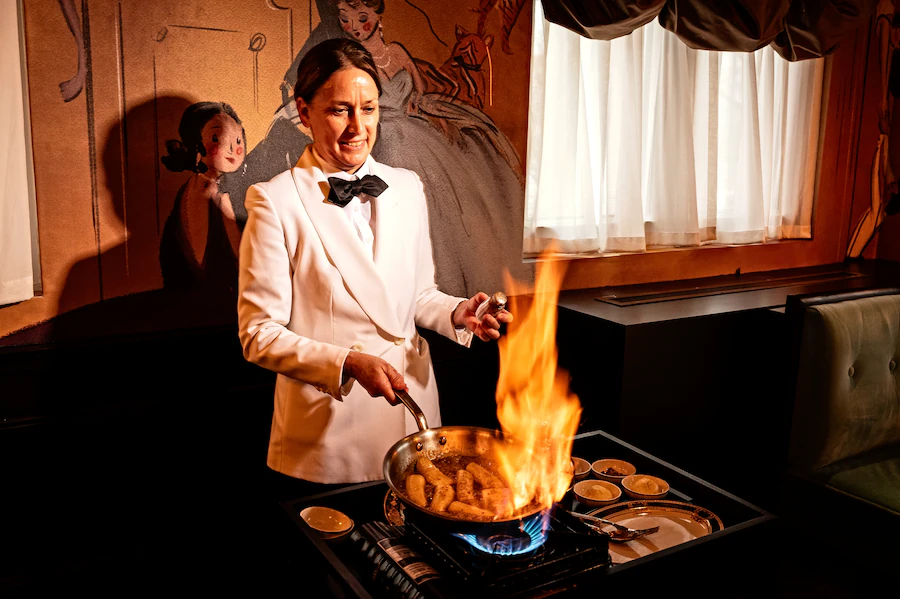 (Scott Suchman/For The Washington Post)
View on map
What year is it? Who’s living in the big white house around the corner? For an hour or two, as tuxedoed waiters steer past with trays of prime rib and bananas Foster, the Occidental invites you to put questions of time — and political divide — aside. Stephen Starr, one of our country’s most prolific vibe-curators, has done some of his best work in the revival of this legendary D.C. steakhouse that first opened its doors 120 years ago. He has freshened without — God forbid — making any part of the restaurant feel too new or too shiny. The walls are still decorated with portraits of presidents and celebrities who have called the restaurant home over the decades, and the lights are still suggestively dim. Not so dim that you can’t admire the pink blush of your prime rib or the snowfall of horseradish dramatically delivered tableside.
Some dishes benefit from a touch of modernity in their presentation and sharp seasoning, like cubes of raw tuna over creamy remoulade and oysters goosed with beurre blanc and caviar, while others, like herring under a fur coat and Chinese chicken salad, are winkingly vintage. On New Year’s Day, when I first came for dinner, the room was decorated with enormous balloon garlands from the night before. I could only imagine all the parties that I’d missed.
Dining experienceMains $31 to $152 (porterhouse)Lunch and dinner daily, brunch Saturday and SundaySound check: Must speak with raised voiceAccessibility: Ramps and elevators throughout the restaurant allow wheelchairs to navigate different levels and the ADA-compliant restrooms (Deb Lindsey/For The Washington Post)
View on map
Few chefs have done so much for their cuisines as Seng Luangrath. In 2010, she took over a Thai restaurant in Falls Church, Virginia, and began adding Laotian dishes to her menu, effectively hiding them so as not to scare off customers who came for the more familiar flavors of Thailand. Time and patience paid off, as she helped usher in a golden age for Laotian cuisine in our region, anchored by her own restaurants Thip Khao and Padaek. Now Luangrath has Baan Mae, a restaurant whose boundless creativity is possible only because of the path she paved 16 years ago.
Here, she expresses the amalgam of her interests, pulling from Cambodia, China and Thailand along with her native country, and sourcing tasty but invasive species whenever possible. A particularly poignant example of her newfound freedom to experiment comes in the Fi-Lao O’Fish, a sandwich made with fried blue catfish (invasive in the Chesapeake Bay) and whipped tofu mayonnaise, whose source material is Luangrath’s arrival from a refugee camp in Thailand and the comfort she found in American fast food. Its flavors are intense and punchy, and as American as they are Laotian. At Baan Mae, Luangrath hides nothing.
Dining experienceMains: $21 to $37Dinner Wednesday to Monday, lunch Saturday and SundaySound check: Must speak with raised voiceAccessibility: No barriers to entry, ADA-compliant restrooms (Scott Suchman/For The Washington Post)
View on map
Some restaurants simply exist in their neighborhood, while others live and breathe their surroundings. Cielo Rojo, in Takoma Park, Maryland, one of America’s crunchiest little communities, is the latter. This is most apparent during weekend brunch, as you stare down the savory waffle. Its batter is made with heirloom corn — blue one day, sunny yellow the next — that gives a nutritionally virtuous air to the crisp-chewy base, which is then piled high with smoked ham, melty cheese and an entire salad of watercress and avocado. Chef David Perez, who runs the restaurant with his wife, Carolina McCandless, spent time cooking at Gracias Madre, San Francisco’s erstwhile home for plant-based Mexican, and though Cielo Rojo doesn’t shy away from meat, it’s the chef’s unabashed love for fresh produce and superb masa that makes this my pick for the best Mexican restaurant in the region.
At dinner, there are enchiladas striped with orange, green and brick-red moles, each showing off a personality of its own, and quesadillas whose colors melt like sunset from yellow to dusky blue. Down the block, the couple also runs San Pancho, a tiny restaurant dedicated to San Francisco’s famous Mission-style burritos, but I prefer Cielo Rojo, which doesn’t remind me of anywhere else but here.
Dining experienceMains $22 to $45Dinner nightly, lunch Thursday to Sunday, brunch Saturday and SundaySound check: Must speak with raised voice.Accessibility: No barriers to entry; restroom is ADA-accessible (Scott Suchman/For The Washington Post)
View on map
The warm light at Oyster Oyster comes from very expensive chandeliers made from a mycelium-hemp pulp that, a server explained to me with a grin, is very slowly decomposing in the heat of the dining room, as a mushroom lamp is wont to do. At the center of the table you’ll find an oyster shell, filled with beeswax and turned into a candle that emanates a sweet, comforting aroma. You’ve entered the weird, funky, inspired world of chef Rob Rubba, a man religiously devoted to extolling the virtues of vegetables (and the occasional oyster, a protein source that benefits the environment and lacks a central nervous system to register pain, hence its place on the plates of some vegetarians).
 (Scott Suchman/For The Washington Post)
 (Scott Suchman/For The Washington Post)
Over the course of a $135, seasonally evolving tasting menu at his ambitious and heartfelt vegetarian restaurant might come a messy tumble of fried celery root filled with smoky celery root puree, sugary Japanese eggplant roasted and stuffed with lion’s mane mushroom, and a heavenly little loaf of bread accompanied by a swirl of sunflower seed and marigold butter. Rubba never attempts to mimic the taste and appearance of meat or placate the reluctant omnivores dragged along by their vegetarian dates. He lets vegetables, in all their glory, do the talking.
Dining experienceVegan or vegetarian tasting menu $135Dinner Wednesday to SaturdaySound check: Must speak with raised voice.Accessibility: Because of a step at the entrance, wheelchair users should enter via a door to the left of the storefront; ADA-compliant restroom
The best $7 bargain I found? A crab cake at Saints Paradise Cafeteria.
 (Deb Lindsey/For The Washington Post)
View on map
A knack for tasteful subtlety clearly runs in the family. Oliver Pastan, son of 2 Amys chef Peter Pastan, has built a restaurant where fresh produce — from nearby farms as well as the restaurant’s own backyard — is never bogged down with too much seasoning or superfluous garnish. The menu is succinct and free of missteps, and dinner unfurls with blissful predictability.
 (Deb Lindsey/For The Washington Post)
 (Deb Lindsey/For The Washington Post)
You’ll eat a salad, whose leaves are crisp and sweet and dressed in a bracing anchovy vinaigrette. You’ll use your teeth to pull apart arrosticini, slender skewers of lamb from an animal Pastan breaks down himself and treats with nothing but salt and fire. You will have a pizza from the wood oven, bejeweled with chanterelles or green tomatoes, and a glass of wine that screams of summer or coaxes you gently into fall. You will leave giddy, full, marveling at life’s simplest pleasures.
Dining experienceMains $19 to $29Dinner Thursday to MondaySound check: Must speak with raised voice.Accessibility: No barriers to entry, ADA-compliant restroom, stairs to enter back garden (Scott Suchman/For The Washington Post)
View on map
For 14 years, Hiroshi and Cizuka Seki have run Washington’s most heartfelt Japanese restaurant with as little pretension as you’ll find at the chili dog stalwart around the corner. Some dishes have barely changed since the father-daughter duo swung open their doors in 2012, like sumptuous braised pork belly contrasted with smooth silken tofu or morsels of ruby-red tuna in a sauce of hot mustard and miso that burns and cools in equal measure. In a world obsessed with moving on, don’t mistake consistency for complacency. No D.C. restaurant, young or old, is more alive.
 (Scott Suchman/For The Washington Post)
 (Scott Suchman/For The Washington Post)
Hiroshi, who is nearing his 80th birthday, quietly adjusts his cooking with an intuitive sense for the seasons, and Cizuka hand-writes and illustrates menus packed with such an embarrassment of grilled skewers, small composed dishes and delicate noodles that one begins to wonder if there is a production kitchen hiding behind the impossibly narrow chef’s counter visible from the dining room. (There is not.) While Cizuka oversees the hot portion of events and curates a fantastic natural wine list, raw seafood is Hiroshi’s domain, showing off an appreciation for chew, bounce and other pleasantly challenging textures that have been lost to the fatty-tuna-sameness of spendy modern omakases. Should you put yourself in his hands, and you should, Hiroshi will arrange a glimmering platter of cuttlefish, surf clam and whatever else he fancies, each bite another revelation in a meal already so full of them.
Dining experienceMains $18.50 to $40Dinner Wednesday to SundaySound check: Must speak with raised voiceAccessibility: Several steps to front door; counter seating in first-floor dining room; ADA-compliant restroom (Deb Lindsey/For The Washington Post)
View on map
Maison Bar à Vins self-identifies as a wine bar, which is both laughable and cruel to the competition. At this Adams Morgan “wine bar,” snails are scooped from their shells, sealed under a pastry dome and spritzed with yellow chartreuse as they leave the kitchen. Chicken breast, the perennial snooze-fest of restaurant entrees, is stuffed with brioche and rotated in and out of the oven in careful shifts until its meat weeps juice and its skin is so crisp it resembles a croissant. Basque cheesecake, the fixation du jour of Washington chefs, is almost unrecognizable in the hands of chef Matt Conroy, who drenches each gooey slice in vin jaune and wildflower honey.
 (Deb Lindsey/For The Washington Post)
 (Deb Lindsey/For The Washington Post)
Though Conroy does his best to pass the restaurant off as a cazh place to snack and drink, his cooking here — like at Lutèce and Pascual — conveys a maddening attention to detail and a profound understanding of how to draw new life out of the classics. When it opened last September, Maison Bar à Vins was already thrillingly good, with the occasional misstep expected from such a young kitchen — an oddly sweet pasta here, a whatever fillet of fish there. Conroy and chef de cuisine Jason Chavenson have spent their first year obsessively editing, trimming and polishing until finding imperfection at Maison Bar à Vins is as hard as getting a prime-time table.
Dining experienceMains $24 to $48Dinner Wednesday to SundaySound check: Must speak with raised voiceAccessibility: Steep stairway to entrance, steep flight of stairs to basement-level bathroom (Scott Suchman/For The Washington Post)
View on map
First, an acknowledgement: At Albi, the barrier to entry is high. And with every top spot notched on a big new list, the restaurant becomes a little harder to get into. (Sorry about that!) Your best bet is to set up a string of notifications and plan weeks in advance, or humble yourself and show up 30 minutes before opening for a chance at a bar seat. It’s an undeniable pain. But once you achieve access, the unpleasant chilliness of exclusivity gives way to a warmth and electricity found at only the rarest of fine-dining restaurants: those that have something genuinely important to say.
Albi, the crown jewel in chef Michael Rafidi’s growing treasure chest of D.C. restaurants, presents Palestinian food and culture with a sense of dignity and care that feels at once urgent and timeless. The menu is not particularly long, but it plays out over several pages taken up by photos of serene alleyways, generous piles of dried fruits and expansive natural landscapes. This is the Palestinian homeland Rafidi wants you to know, untouched by destruction — or, at least, precious and beautiful despite it. While some fine-dining restaurants prize antiseptic levels of formality, Rafidi’s cooking bathes you in the intimate light of optimism.
 (Scott Suchman/For The Washington Post)
 (Scott Suchman/For The Washington Post)
Begin with kibbeh naya, a fine tartare speckled with puffed bulgur and tasting of cinnamon. In the dead of winter, Rafidi might make it using lamb, but by late July, two ruby-toned versions featured tuna and smoked tomato, with bundles of lettuce and herbs for assembly. The chef has a way with hummus, whose toppings are a bellwether of the seasons — sticky-sweet lamb in winter, blue crab and charred corn from the restaurant’s live fire in summer. Equally astounding is his pita, which arrives at the table as puffy as a volleyball before sending a dramatic plume of bready steam shooting into the earth-toned dining room.
As you eat, ask. The restaurant’s staff is extensively knowledgeable on everything from an impressive collection of Middle Eastern wines — I was particularly taken with a glass from Cremisan, a winery opened outside of Bethlehem by Salesian monks in 1885, made with an indigenous grape tasting brightly of pineapple — to the symbolism of the colorful patterns embroidered onto their aprons. Known as tatreez, these are hyper-specific symbols of time and place, each representing the history of its maker and the Palestinian town or city where they built their life. How lucky we are that Rafidi chose to build his here.
Dining experienceMains $60 to $125Dinner Tuesday through SaturdaySound check: Must speak with raised voiceAccessibility: No barriers to entry, ADA-compliant restroom
About this story
Sontag visited each restaurant unannounced or with a reservation under one of multiple aliases. The Washington Post pays for all of his meals.
Editing by Matt Brooks and Becky Krystal. Photo editing by Toni L. Sandys. Design by Katty Huertas. Development by Aadit Tambe. Design editing by Christine Ashack and Matthew Callahan. Copy editing by Jennifer Morehead and Leah Brennan.


