
Bitter: ⭐⭐✰✰✰
Salty: ⭐⭐⭐⭐⭐
Sour/Tangy: ⭐✰✰✰✰
Sweet: ⭐✰✰✰✰
Umami: ⭐⭐⭐⭐✰
Heat: ⭐✰✰✰✰✰✰✰✰✰
Quick Flavor Notes: Soy Sauce, Umami, Fruity, Funky
Recommended: Yes
Texture: Very thin, some small bits
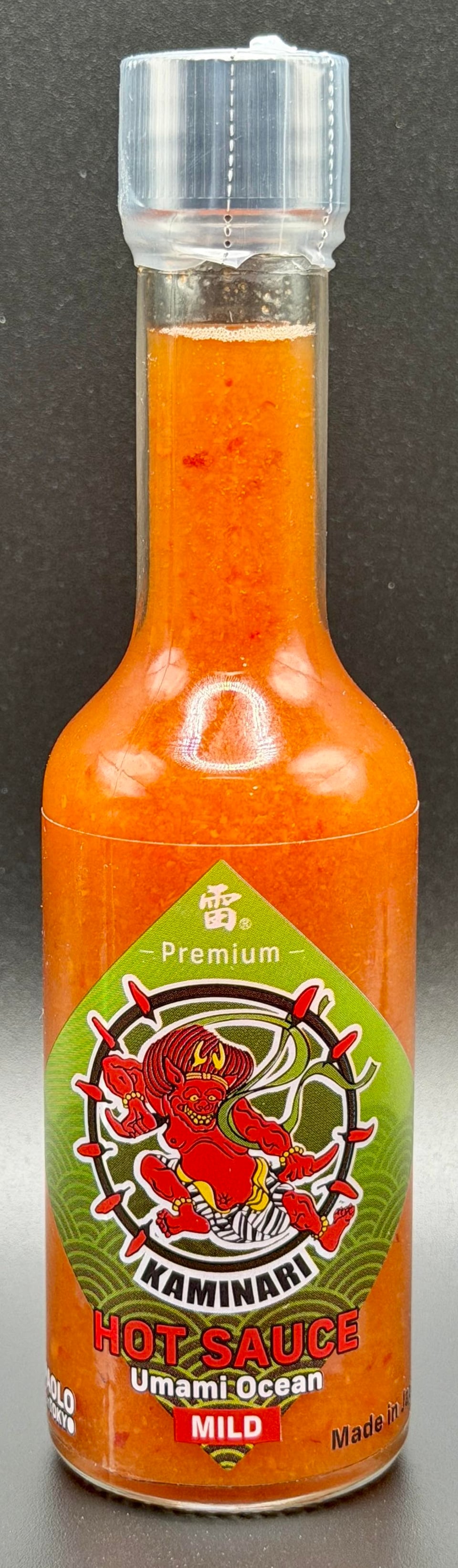
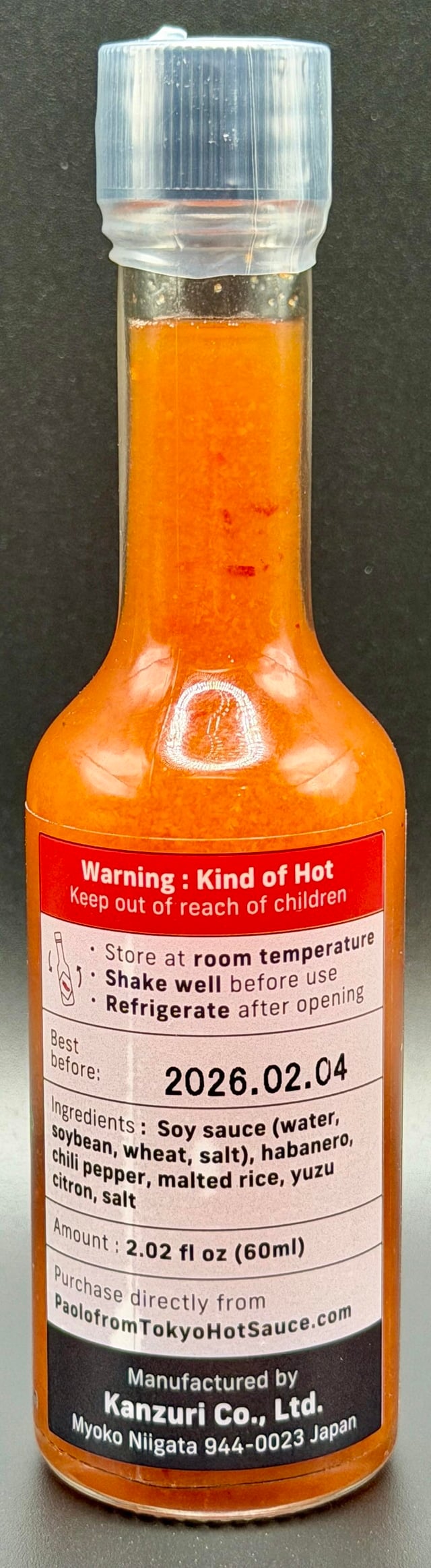
Ingredients: Soy sauce (water, soybean, wheat, salt), habanero, chili pepper, malted rice, yuzu citron, salt
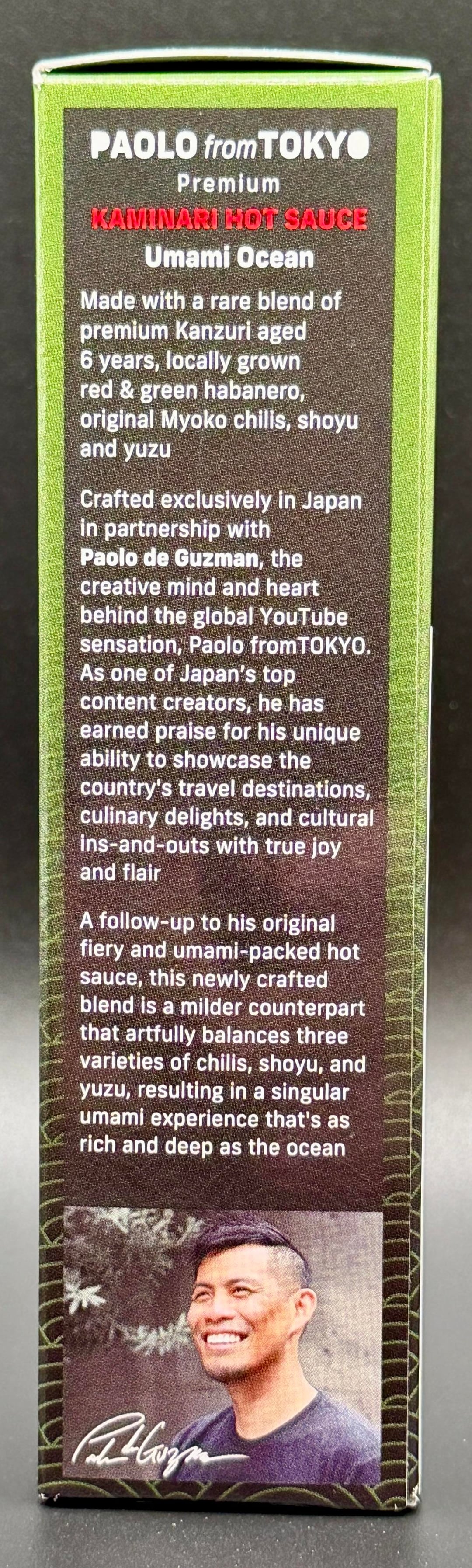
Japanese cuisine isn’t known for being especially fiery (with some notable specialty ramen shops excepted) so Japan may not be the first place you’d think of when it comes to hot sauce. This sauce is ‘created’ (more on that later) and marketed by Paolo de Guzman, also known as Paolo from Tokyo, a Filipino-American YouTube content creator who has been living in Tokyo for over 20 years. I’ve enjoyed many of Paolo’s videos, he has a particularly positive upbeat and wholesome personality on this channel, so decided I’d like to try his sauces. He currently sells two, an Original which includes Carolina Reaper and this one, Umami Ocean, which is habanero based, though both also feature Kanzuri. Still having a few super-hots I haven’t finished I decided to go with the milder of the two first.
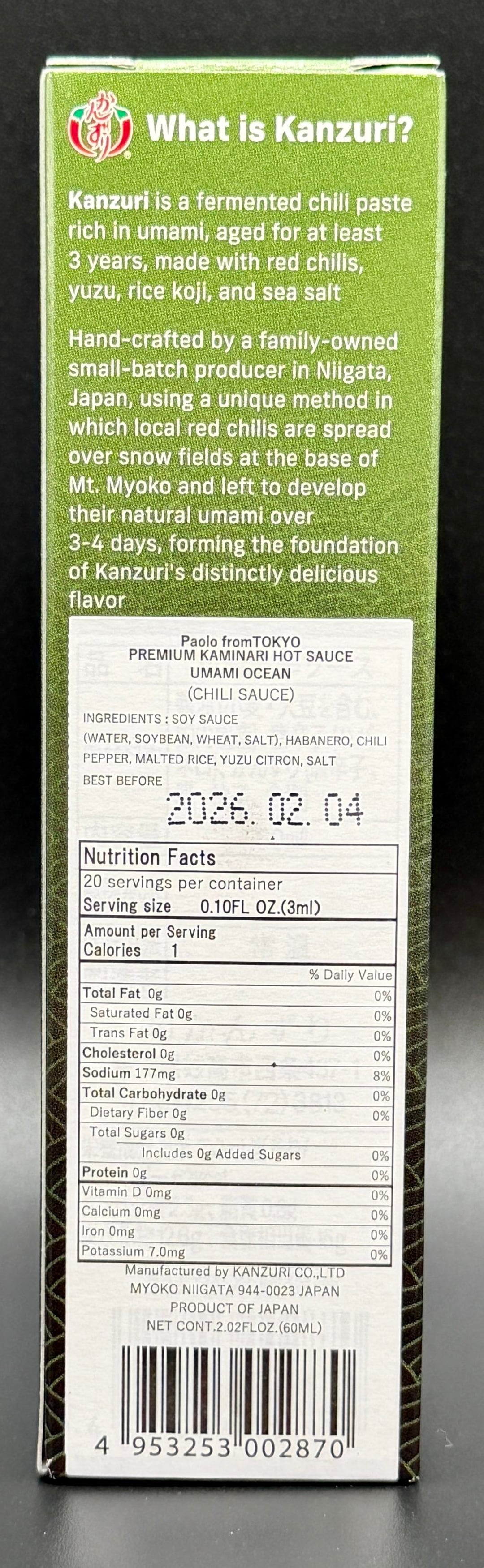
The first ingredient in this hot sauce is soy sauce, something that confused me a bit on reading the label as I would have expected soy sauce to make this a darker color. There is a type of soy sauce in Japan known as Shiro Shoyu, or white soy sauce, that’s made predominantly from wheat with just a bit of soy, though the parenthetical ingredients for the one in this sauce show more soybeans than wheat. Next comes habanero, always a popular ingredient in any soy sauce. The “chili peppers” listed without further comment are the special chiles from Niigata used in the Kanzuri base. Niigata Prefecture is known for getting a tremendous amount of snow in the winter and is home to several renowned ski resorts. In the small town of Myoko the chiles are harvested in the fall and then packed in salt to begin fermented for three months. After that they’re laid out on freshly fallen show where the snow will leach out some of the salt and the cold will change the flavor of the pepper. After more snow has fallen and covered the peppers they’re dug up and packed in barrels for three to six years with yuzu (a Japanese citrus) and Koji (a Japanese mold, usually grown on rice, used in the production of sake, miso, soy sauce, and more). This creates the product known as Kanzuri. In fact I believe the malted rice (the Koji substrate) and yuzu citron listed on the ingredients in this sauce are all just the other parts of the Kanzuri.
What’s interesting is what this sauces doesn’t have – any vinegar or other strong acids. Instead it has a very high amount of salt. Looking at the label it shows 177mg of sodium per serving, but if you look closer you’ll see the serving size is 3ml. Almost universally in hot sauces sold in the USA the service size is listed as 1 tsp (5ml) or more (Torchbearer for instance uses tablespoons for serving sizes). Adjusting that serving size to the US-standard 5ml this sauce actually contains 294mg of sodium per 1 tsp, the highest by far I’ve seen in a hot sauce. The texture of Umami Ocean is very similar to Tabasco sauce – it’s extremely thin and runny, though you can see more individual pepper bits floating around in this. The soy comes through along with the peppers in the aroma.
Paolo From Tokyo’s Umami Ocean does have a soy-forward flavor. You know this is a soy-sauce based hot sauce from the first taste but that flavor blends surprisingly well with the fruity bright habanero flavor. The Kanzuri is really doing the magic here as this sauce as it blends the pepper flavor from the habaneros with the salty-umami of the soy sauce with a common background. I mentioned before that the consistency is similar to Tabasco sauce, but this also has a similar fermented rich complexity to Tabasco sauce just without the strong vinegar flavor. I didn’t pick up a strong yuzu taste from this sauce, though it’s possible that the citrus element is just blending with the habanero flavor and making it taste fruitier than it would without the yuzu present. The lack of vinegar or acid does make this sauce read differently from traditional hot sauces, more rich and meaty instead of zingy and tangy, and though this is quite salty the peppers do make it taste a bit less salty than a pure soy sauce, and the salty flavors blend well with the savory umami nature of the sauce. As Paolo mentions on the box this sauce is rather mild, I’d say a step below original Tabasco since I keep bringing that up as a point of comparison.
Despite the unique flavor profile in this sauce I did find some places where it really excelled. My first thought was that this could actually be a great hot sauce to go with sushi so I ordered some of my favorites (escolar, tuna, and mackerel) and found it was a great match – the soy element tastes just like adding soy sauce to sushi, and though the capsaicin heat is different from wasabi heat it still clicks (although combining both Umami Ocean and Wasabi on the same pieces was the best of both worlds). This is also excellent on fried chicken. Typically I’d go with a more vinegary sauce for chicken, but soy sauce and chicken go well together (it’s a common sauce base for Korean fried chicken) and obviously so do habaneros. What this lacks in acidity it more than made up for in extra umami goodness on the chicken.
Now, as to the point I made in the first paragraph about this sauce being created by Paolo from Tokyo. From what I can tell these are just relabels of sauces made by Kanzuri Co Ltd of Japan. In fact I found sauces with essentially the same labels and with the same ingredients on sale on Nihon Ichiban. Now, Nihon Ichiban sells the sauces for between $4 and $7 each, while on Paolo From Tokyo’s site they’re $20 for the Carolina Reaper version, $18 for Umami Ocean, or both for $36. On first glance it looks like Paolo’s sauces are way marked up from Nihon Ichiban, but when you include shipping into the equation they come out to within a dollar of each other, about $45 for the two sauces from either, so Paolo must be subsidizing shipping some with his higher prices. If you do happen to have a large Japanese or Asian grocery store in your area that carries these you may be able to find them for much less than ordering online, but I have thus far not seem them for sale anywhere locally.
While this sauce is indeed expensive no matter where you buy it from (at approximately $45 with shipping for two 2.2oz bottles) I do recommend it because it’s so unique, and how often do you get to try a hot sauce from Japan? This sauce is also all natural with no artificial preservatives, colors, flavors, or thickeners.
by MagnusAlbusPater
1 Comment
Bitter: ⭐⭐✰✰✰
Salty: ⭐⭐⭐⭐⭐
Sour/Tangy: ⭐✰✰✰✰
Sweet: ⭐✰✰✰✰
Umami: ⭐⭐⭐⭐✰
Heat: ⭐✰✰✰✰✰✰✰✰✰
Quick Flavor Notes: Soy Sauce, Umami, Fruity, Funky
Recommended: Yes
Texture: Very thin, some small bits
Ingredients: Soy sauce (water, soybean, wheat, salt), habanero, chili pepper, malted rice, yuzu citron, salt
Japanese cuisine isn’t known for being especially fiery (with some notable specialty ramen shops excepted) so Japan may not be the first place you’d think of when it comes to hot sauce. This sauce is ‘created’ (more on that later) and marketed by Paolo de Guzman, also known as Paolo from Tokyo, a Filipino-American YouTube content creator who has been living in Tokyo for over 20 years. I’ve enjoyed many of Paolo’s videos, he has a particularly positive upbeat and wholesome personality on this channel, so decided I’d like to try his sauces. He currently sells two, an Original which includes Carolina Reaper and this one, Umami Ocean, which is habanero based, though both also feature Kanzuri. Still having a few super-hots I haven’t finished I decided to go with the milder of the two first.
The first ingredient in this hot sauce is soy sauce, something that confused me a bit on reading the label as I would have expected soy sauce to make this a darker color. There is a type of soy sauce in Japan known as Shiro Shoyu, or white soy sauce, that’s made predominantly from wheat with just a bit of soy, though the parenthetical ingredients for the one in this sauce show more soybeans than wheat. Next comes habanero, always a popular ingredient in any soy sauce. The “chili peppers” listed without further comment are the special chiles from Niigata used in the Kanzuri base. Niigata Prefecture is known for getting a tremendous amount of snow in the winter and is home to several renowned ski resorts. In the small town of Myoko the chiles are harvested in the fall and then packed in salt to begin fermented for three months. After that they’re laid out on freshly fallen show where the snow will leach out some of the salt and the cold will change the flavor of the pepper. After more snow has fallen and covered the peppers they’re dug up and packed in barrels for three to six years with yuzu (a Japanese citrus) and Koji (a Japanese mold, usually grown on rice, used in the production of sake, miso, soy sauce, and more). This creates the product known as Kanzuri. In fact I believe the malted rice (the Koji substrate) and yuzu citron listed on the ingredients in this sauce are all just the other parts of the Kanzuri.
What’s interesting is what this sauces doesn’t have – any vinegar or other strong acids. Instead it has a very high amount of salt. Looking at the label it shows 177mg of sodium per serving, but if you look closer you’ll see the serving size is 3ml. Almost universally in hot sauces sold in the USA the service size is listed as 1 tsp (5ml) or more (Torchbearer for instance uses tablespoons for serving sizes). Adjusting that serving size to the US-standard 5ml this sauce actually contains 294mg of sodium per 1 tsp, the highest by far I’ve seen in a hot sauce. The texture of Umami Ocean is very similar to Tabasco sauce – it’s extremely thin and runny, though you can see more individual pepper bits floating around in this. The soy comes through along with the peppers in the aroma.
Paolo From Tokyo’s Umami Ocean does have a soy-forward flavor. You know this is a soy-sauce based hot sauce from the first taste but that flavor blends surprisingly well with the fruity bright habanero flavor. The Kanzuri is really doing the magic here as this sauce as it blends the pepper flavor from the habaneros with the salty-umami of the soy sauce with a common background. I mentioned before that the consistency is similar to Tabasco sauce, but this also has a similar fermented rich complexity to Tabasco sauce just without the strong vinegar flavor. I didn’t pick up a strong yuzu taste from this sauce, though it’s possible that the citrus element is just blending with the habanero flavor and making it taste fruitier than it would without the yuzu present. The lack of vinegar or acid does make this sauce read differently from traditional hot sauces, more rich and meaty instead of zingy and tangy, and though this is quite salty the peppers do make it taste a bit less salty than a pure soy sauce, and the salty flavors blend well with the savory umami nature of the sauce. As Paolo mentions on the box this sauce is rather mild, I’d say a step below original Tabasco since I keep bringing that up as a point of comparison.
Despite the unique flavor profile in this sauce I did find some places where it really excelled. My first thought was that this could actually be a great hot sauce to go with sushi so I ordered some of my favorites (escolar, tuna, and mackerel) and found it was a great match – the soy element tastes just like adding soy sauce to sushi, and though the capsaicin heat is different from wasabi heat it still clicks (although combining both Umami Ocean and Wasabi on the same pieces was the best of both worlds). This is also excellent on fried chicken. Typically I’d go with a more vinegary sauce for chicken, but soy sauce and chicken go well together (it’s a common sauce base for Korean fried chicken) and obviously so do habaneros. What this lacks in acidity it more than made up for in extra umami goodness on the chicken.
Now, as to the point I made in the first paragraph about this sauce being created by Paolo from Tokyo. From what I can tell these are just relabels of sauces made by Kanzuri Co Ltd of Japan. In fact I found sauces with essentially the same labels and with the same ingredients on sale on Nihon Ichiban. Now, Nihon Ichiban sells the sauces for between $4 and $7 each, while on Paolo From Tokyo’s site they’re $20 for the Carolina Reaper version, $18 for Umami Ocean, or both for $36. On first glance it looks like Paolo’s sauces are way marked up from Nihon Ichiban, but when you include shipping into the equation they come out to within a dollar of each other, about $45 for the two sauces from either, so Paolo must be subsidizing shipping some with his higher prices. If you do happen to have a large Japanese or Asian grocery store in your area that carries these you may be able to find them for much less than ordering online, but I have thus far not seem them for sale anywhere locally.
While this sauce is indeed expensive no matter where you buy it from (at approximately $45 with shipping for two 2.2oz bottles) I do recommend it because it’s so unique, and how often do you get to try a hot sauce from Japan? This sauce is also all natural with no artificial preservatives, colors, flavors, or thickeners.