There are different test you can do, there isn’t any concrete way to tell from a picture.
Elmer_Omero_
Add water. If the water soaks into it it’s concrete if it forms a pool of water it’s volcanic rock and real
Stepheninblack
Some of them are made of softer lava for display and some are sold by unscrupulous shit heads to people who want to use them
exgaysurvivordan
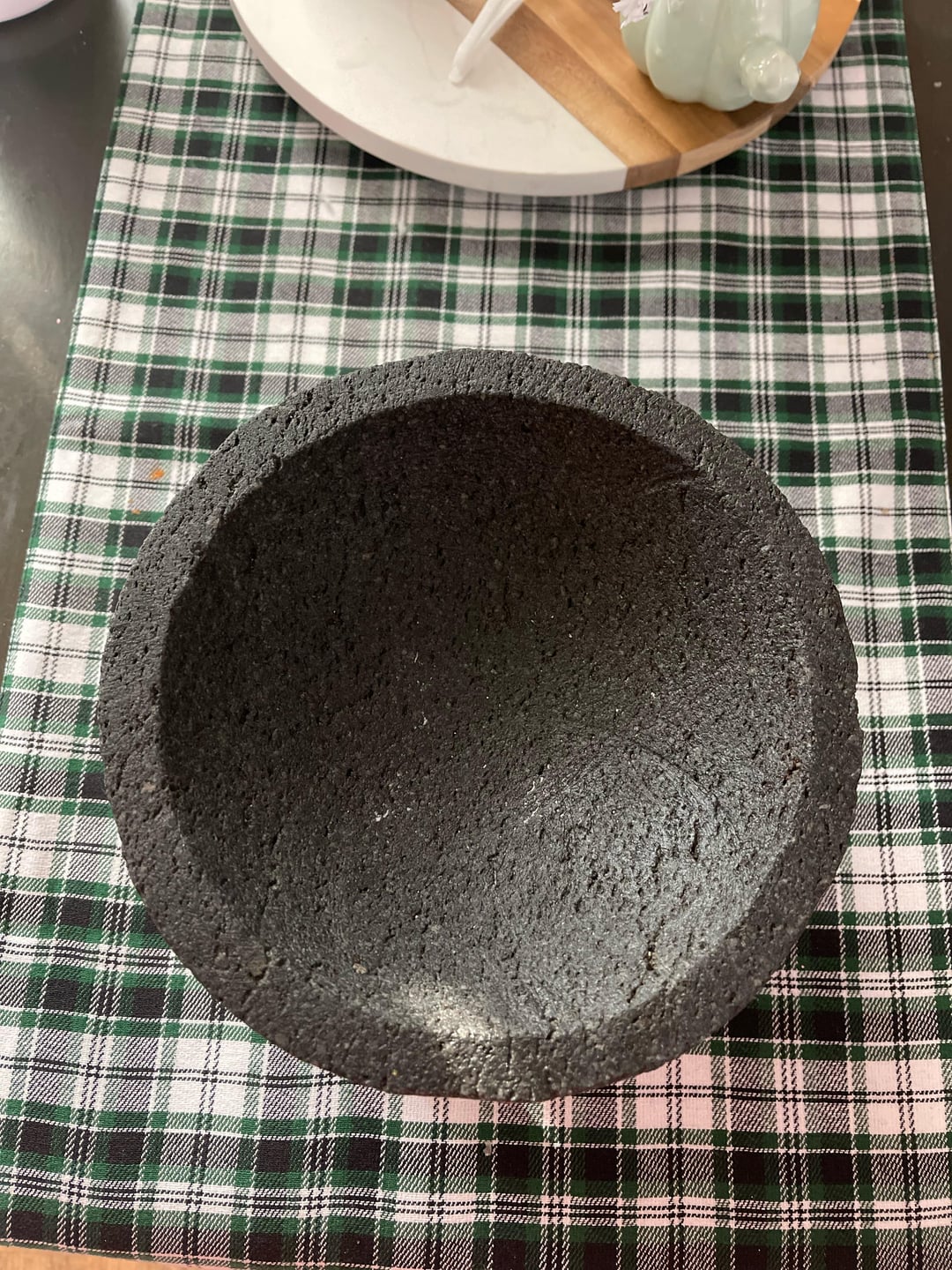
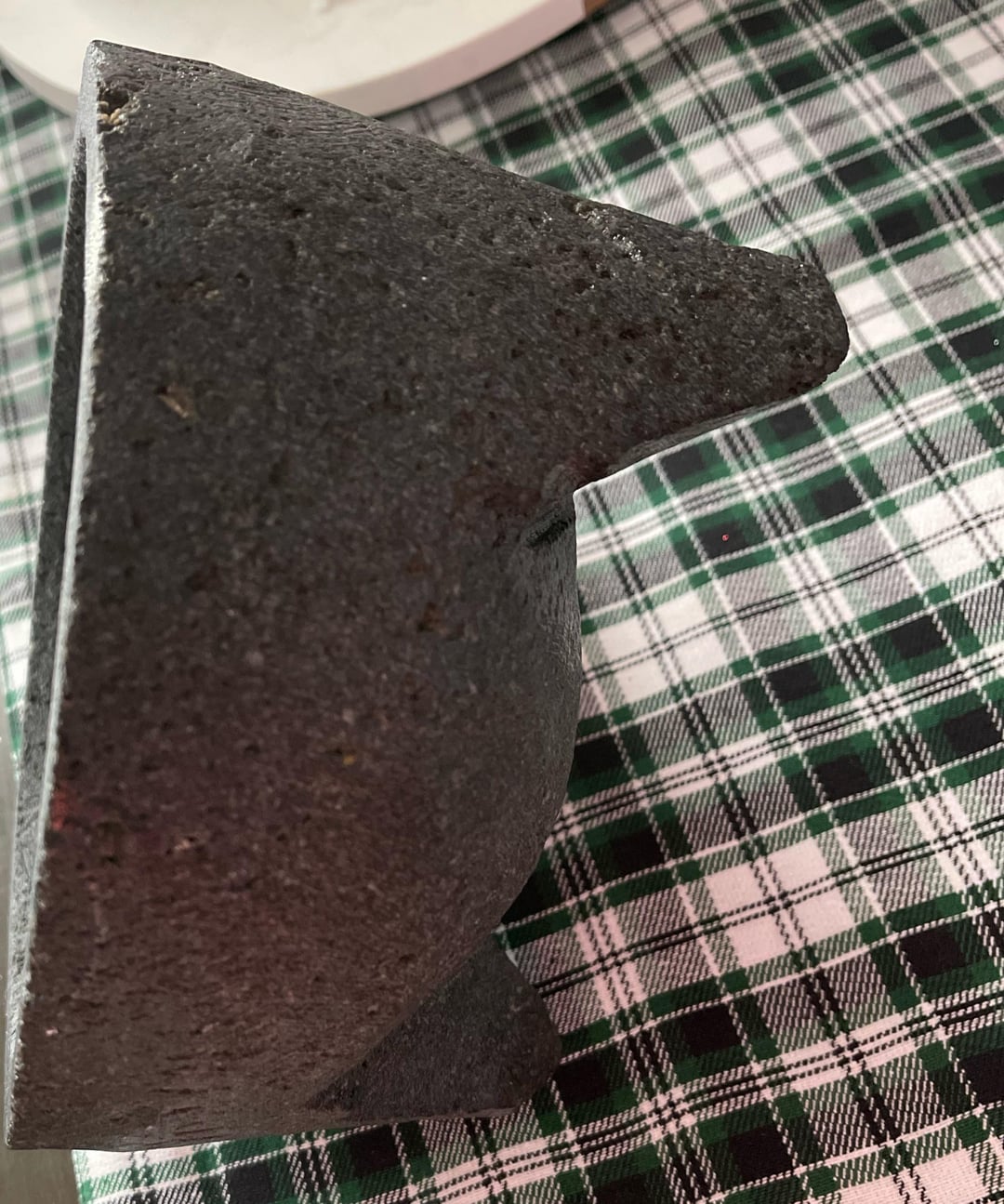
Based on looks alone my guess is concrete, from the tooling/forming markings in it, lack of lava-like air pockets, uniform coloration, and presence of aggregate (small rocks and sand that are part of a concrete mix).
That said I’m an architect not a geologist so my bias is towards concrete.
targetteammemember
Update: I did the water test and it did hold water.
ernimal
To me, it looks like concrete based on the tooling marks I’m seeing. Should have a strong odor of sulfur if it’s real
RonMexicosPetEmporim
Looks like Jeb’s famous guac bowl
targetteammemember
Update: Looking at the comments I believe it’s also now concrete, it does not have a sulfur smell. Thanks everyone for the help!
xBaronSamedi
I am curious and I tried looking for pictures of confirmed concrete molcajetes, and I can’t find any obvious ones. Concrete looks way less porous than even some of the finer pored molcajetes. Is there really money in selling fake molcajetes, or is this an urban legend? I would be interested to find out if anyone has any leads on the topic.
Edit: here’s an article on artificially aging concrete statues. They don’t remove any material, just use a charcoal wash to highlight the surface texture. Look at the photo of the face. Even though it looks porous, it only looks “skin deep,” the holes don’t go anywhere. Maybe it’s not a fair comparison though, I don’t know much about concrete.
* It looks commercially made. But that doesn’t make it concrete. There is a reason the newer commercially made molcajete’s look smoother. The old ones are hand made. * The concrete ones, IMO, smell like wet concrete when you get them wet. They also change the taste of salsa for the worse, and you’ll be able to tell. * The color looks ok. Try this. Go pour a glass of water on the sidewalk. Look at the color. It doesn’t turn that shade of black. It has its own unique color. And it goes back the the original color when it dries. A real Molcajete has the weird ability to permanently maintain that color. Even permanently change color after getting wet.
If you can find out if it came from a reputable company , that might be able to be a way to confirm it. William Sonoma makes real ones. And they look very similar. They just look smooth and different because it’s mass produced, and not hand made.
Here is my Molcajete. It’s also commercially made and looks smoother than the old handmade ones. But it’s authentic. It’s old, but still maintained that color after years. And it’s nowhere near its original color. Forgive me . I need to give it a good cleaning.
Ignis_Vespa
It does look weird, but it doesn’t seem like concrete. Regarding the marks, those are common marks because of the tools artisans use to craft the molcajetes
Well damn – this has me wondering about mine now. I didn’t know fake ones were a thing.
danny17402
Hey op. Geologist here. Maybe I’m a little late to the party, but hopefully you’ll still see this.
Doesn’t look too suspicious to me, to be honest. It could easily be a basalt or basaltic andesite. The pictures are a bit too out of focus for me to say for sure.
Try this: get some acid. If you have a pool, then you might have some muriatic acid lying around. If you don’t have that, then vinegar will work, but vinegar is not as strong so you’ll need to warm up the vinegar in the microwave until it is hot. (doesn’t need to be boiling or anything, just the warmer the better).
Place some of the acid in the molcajete. If it’s concrete or cement, then you will see bubbles of gas forming as the acid reacts with the cement. If it’s a natural volcanic rock then you will not see bubbles.
Noteful
A lot of these highly up voted comments are wrong. This is very likely a volcanic rock molcajete.
Molcajetes don’t have to smell like sulfur. Mine is authentic and could be 100 years old for all I know. No sulfur smells.
Tool marks don’t indicate a concrete molcajete. They indicate that a tool was used.
Grinding the molcajete in hopes of finding a white concrete powder is no use as color could be integral.
An authentic volcanic rock molcajete could be smooth. Not all basalt is the same and molcajetes made in different regions will look different.
I’ve researched molcajetes a lot. It’s tough finding a good, genuine one online.

19 Comments
Break a leg and find out
Does it smell like sulfur? Try adding water.
There are different test you can do, there isn’t any concrete way to tell from a picture.
Add water. If the water soaks into it it’s concrete if it forms a pool of water it’s volcanic rock and real
Some of them are made of softer lava for display and some are sold by unscrupulous shit heads to people who want to use them
Based on looks alone my guess is concrete, from the tooling/forming markings in it, lack of lava-like air pockets, uniform coloration, and presence of aggregate (small rocks and sand that are part of a concrete mix).
That said I’m an architect not a geologist so my bias is towards concrete.
Update: I did the water test and it did hold water.
To me, it looks like concrete based on the tooling marks I’m seeing. Should have a strong odor of sulfur if it’s real
Looks like Jeb’s famous guac bowl
Update: Looking at the comments I believe it’s also now concrete, it does not have a sulfur smell. Thanks everyone for the help!
I am curious and I tried looking for pictures of confirmed concrete molcajetes, and I can’t find any obvious ones. Concrete looks way less porous than even some of the finer pored molcajetes. Is there really money in selling fake molcajetes, or is this an urban legend? I would be interested to find out if anyone has any leads on the topic.
Edit: here’s an article on artificially aging concrete statues. They don’t remove any material, just use a charcoal wash to highlight the surface texture. Look at the photo of the face. Even though it looks porous, it only looks “skin deep,” the holes don’t go anywhere. Maybe it’s not a fair comparison though, I don’t know much about concrete.
https://www.agardenforthehouse.com/the-easy-way-to-age-a-new-cement-statue/
I’m no expert, but it looks fake
* It looks commercially made. But that doesn’t make it concrete. There is a reason the newer commercially made molcajete’s look smoother. The old ones are hand made.
* The concrete ones, IMO, smell like wet concrete when you get them wet. They also change the taste of salsa for the worse, and you’ll be able to tell.
* The color looks ok. Try this. Go pour a glass of water on the sidewalk. Look at the color. It doesn’t turn that shade of black. It has its own unique color. And it goes back the the original color when it dries. A real Molcajete has the weird ability to permanently maintain that color. Even permanently change color after getting wet.
If you can find out if it came from a reputable company , that might be able to be a way to confirm it. William Sonoma makes real ones. And they look very similar. They just look smooth and different because it’s mass produced, and not hand made.
https://preview.redd.it/6xa705wdnn4a1.jpeg?width=4032&format=pjpg&auto=webp&v=enabled&s=d64c93e6ecb5220db63c27e154053fc32675f879
Here is my Molcajete. It’s also commercially made and looks smoother than the old handmade ones. But it’s authentic. It’s old, but still maintained that color after years. And it’s nowhere near its original color. Forgive me . I need to give it a good cleaning.
It does look weird, but it doesn’t seem like concrete. Regarding the marks, those are common marks because of the tools artisans use to craft the molcajetes
https://preview.redd.it/c2knvlhnbn4a1.png?width=1080&format=pjpg&auto=webp&v=enabled&s=fa033ca6fc36908bb8a2274bc6b814e8b366feb0
Its real. Its a nice one too.
Well damn – this has me wondering about mine now. I didn’t know fake ones were a thing.
Hey op. Geologist here. Maybe I’m a little late to the party, but hopefully you’ll still see this.
Doesn’t look too suspicious to me, to be honest. It could easily be a basalt or basaltic andesite. The pictures are a bit too out of focus for me to say for sure.
Try this: get some acid. If you have a pool, then you might have some muriatic acid lying around. If you don’t have that, then vinegar will work, but vinegar is not as strong so you’ll need to warm up the vinegar in the microwave until it is hot. (doesn’t need to be boiling or anything, just the warmer the better).
Place some of the acid in the molcajete. If it’s concrete or cement, then you will see bubbles of gas forming as the acid reacts with the cement. If it’s a natural volcanic rock then you will not see bubbles.
A lot of these highly up voted comments are wrong. This is very likely a volcanic rock molcajete.
Molcajetes don’t have to smell like sulfur. Mine is authentic and could be 100 years old for all I know. No sulfur smells.
Tool marks don’t indicate a concrete molcajete. They indicate that a tool was used.
Grinding the molcajete in hopes of finding a white concrete powder is no use as color could be integral.
An authentic volcanic rock molcajete could be smooth. Not all basalt is the same and molcajetes made in different regions will look different.
I’ve researched molcajetes a lot. It’s tough finding a good, genuine one online.