
As the tongue twister tells us, Peter Piper once picked a peck of pickled peppers. But what’s Peter to do with his plethora of pepper pickings? One Lowell company might have a solution.
Named after the Irish word meaning “good times” or “good company,” Craic Sauce recently launched a new line of hot sauces made from local farms’ surplus produce, which help generate profits for the farms that grew them, and are catching on with Boston-area restaurants.
Since founding in 2017, Craic has sourced all its ingredients from New England farms. This April, it introduced five limited-edition flavors at the New York City Hot Sauce Expo. Each recipe is single-sourced from a different Massachusetts farm, including Clark Farm in Carlisle, Farmer Dave’s in Dracut, Strawberry Dog Farm in Oxford, Skinny Dip Farm in Westport, and Hutchins Farm in Concord.
The project began in 2022 when Clark Farm had about 300 pounds of produce, including beets, kohlrabi, and garlic, leftover from the season, and asked Craic owner and founder Brian Ruhlmann if he wanted to purchase them. Ruhlmann didn’t have the cash to buy the goods, so he proposed another idea: a barter system.
Get Food & Dining Headlines
The Globe’s most recent food stories, delivered to your inbox every Wednesday.
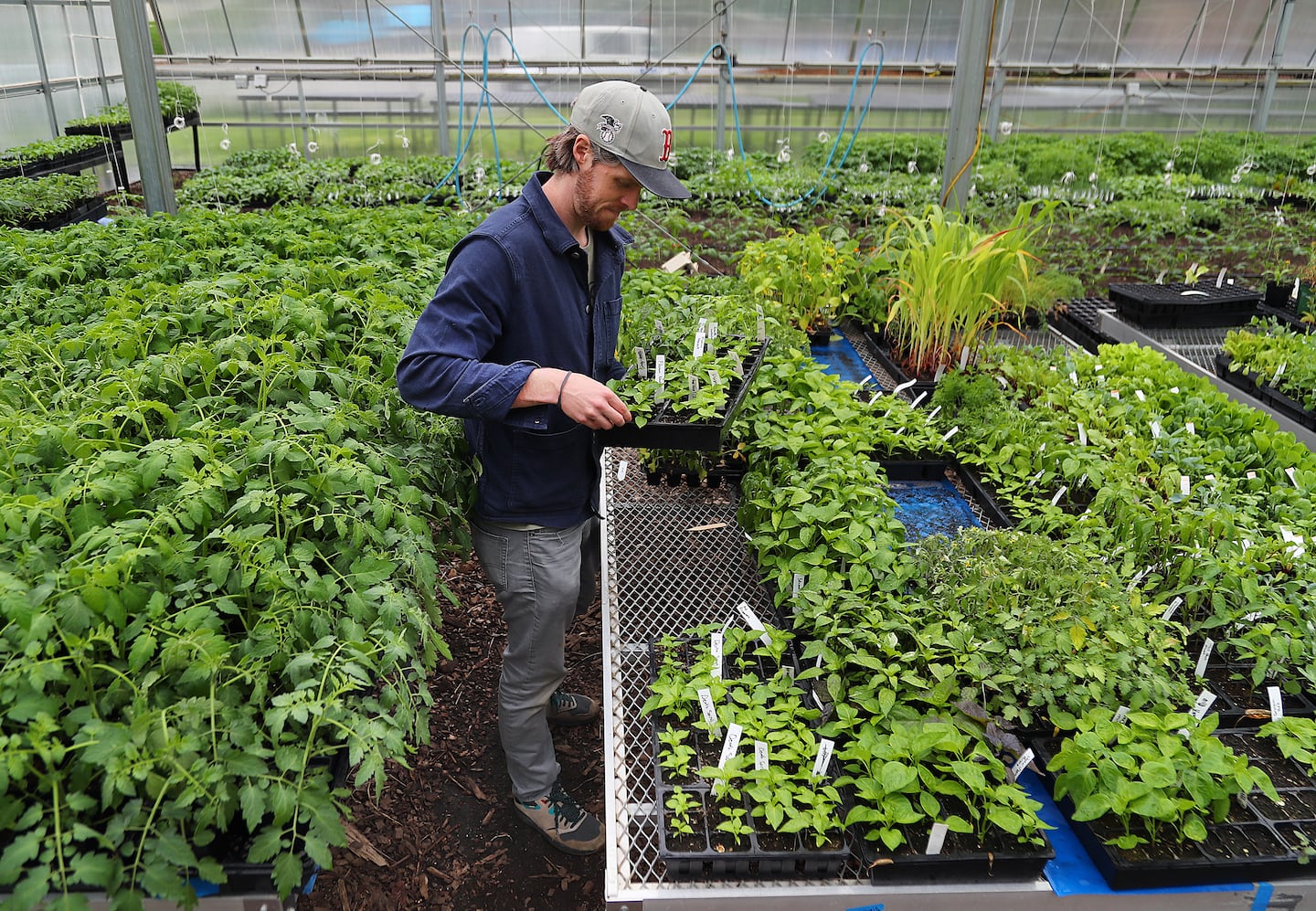 Brian Ruhlmann checks on the progress of pepper plants before they are moved from the greenhouse and planted on the farm.John Tlumacki/Globe Staff
Instead of purchasing these ingredients, Ruhlmann took the produce and, in 2023, created a specialty hot sauce for Clark Farm, which it distributed as part of its community-supported agriculture program.
“Anytime you have value-added processing, it’s a huge win for our farm,” said Andrew Rodgers, head farmer at Clark. “He’s taking something highly perishable [and] making it more stable.”
To create the products, Craic Sauce employees shred and mash vegetables, salt them, and put them into airtight buckets, where they ferment for at least six months.
During this process, the sauce “converts into a more shelf-stable product, and something that has more of an umami, tangy flavor, instead of something that’s more fresh and sweet,” Ruhlmann described.
The company also makes its own vinegars, which are incorporated into the sauces.
For Ruhlman, the constraints of using only surplus ingredients enabled him to get creative in the kitchen.
 Dave Proulx pours one of five containers of pepper pulp into a cooker in the kitchen.John Tlumacki/Globe Staff
“Our team gets really excited because we have a challenge of what do we do with 50 pounds of kohlrabi and beets? And we try a lot of new things,” Ruhlmann said.
Craic’s new collection features flavors like a cherry bomb and aji dulce pepper sauce made with a vinegar composed of apple, pear, and husk cherry; and a black and daikon radish sauce made with butternut squash and a variety of peppers. The heat levels are manageable: They range from a 3/10 to 6/10 on Craic’s spice level scale.
“As somebody that personally cooks at my house very seasonally by working at farmers markets,” Ruhlmann said, “it’s always fun to lean into the seasons and brings a lot of extra joy and creativity.”
 Five of the Craic hot sauces.John Tlumacki/Globe Staff
The Craic Sauce kitchen is located at UTEC, or United Teen Equality Center, a social nonprofit in Lowell. The business also has its own farm plot at the nearby Mill City Grows, an urban-justice food organization.
Ruhlmann and his team are currently working with Boston University Dining to create another surplus sauce, where they will work with a network of farms to create 200 gallons of product for the dining halls and other campus facilities.
“I want to support local farms, because there’s so many headwinds, and I see… the good that these farms are doing for their local communities and keeping farmland farmland,” said Ruhlmann. “Food [that] travels not as far, it’s healthier, it’s more nutritious.”
The sauces are available at the partner farms or on the company’s website, which lists each bottle’s ingredients, heat level, and suggestions of what to serve the sauce with. The individual bottles sell for $10 a piece, or customers can purchase all five in a $45 bundle.
Ruhlmann and his team have also been bringing their new sauces to local restaurants for chefs to incorporate them into their dishes, including a Cinco De Mayo pop-up at Groton’s Forge and Vine. He expects to supply hot sauce to more local restaurants soon.
“We’re nine years into this business, but I feel like we’re really finding our niche in being an acidified fermented food producer,” said Ruhlmann, “but having that close network with farms and chefs and being able to connect the two into a shelf-stable product.”
Annie Sarlin can be reached at annie.sarlin@globe.com. Follow her on Instagram @anniesarlinjournalism.