


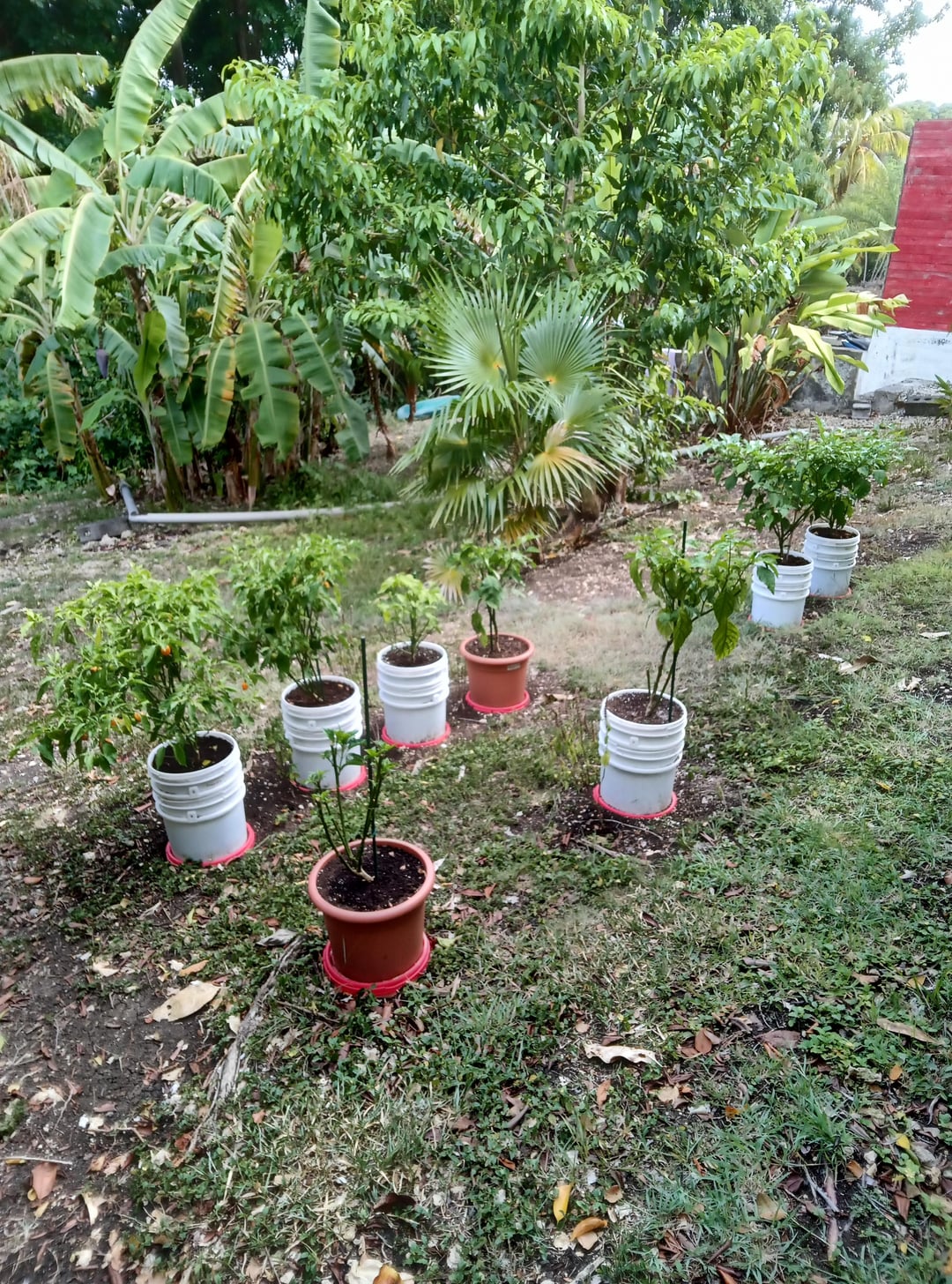
Hello everyone, I hope you are all growing well. Here, I’ll try to give you a brief overview of what it’s like to grow Capsicum chinense in Guadeloupe (F.W.I.). The place I live is actually in zone 12b (but I can't change the title of the post for some reason)
Concerning the importance of spicy food here
People here do eat spicier food than in Europe or the USA. The local hot pepper is called “Bondamanjak” (a very spicy habanero). You can find it basically everywhere, and people do use it in basically everything. (We also have a species of frutescens called “piment oiseau” / “piman zozio”) So that’s a good starting point.
But the sad thing is that these are basically the only varieties you can find. The locals eat spicy food but absolutely don’t care about peppers themselves. They are not interested in modern hybrids or fancy varieties, or even hot sauces.
I have lived here for more than three years, and I’ve been growing peppers for two. I mainly grow chinense (I’m planning on trying to grow a few baccatum), as well as a few ganja plants (which are, in a way, very similar to chillies).
Concerning the climate
It is very hot and humid all year round: 27°C (80°F) on average, with around 80% humidity. There are no huge differences between night and day. We never get crazy temperatures like 40°C (104°F), but due to the relative proximity to the equator, the sun is much more intense here than in the Northern Hemisphere: it is insane. (as I am writing this, the weather has gone from blazing sun to torrential rain in a matter of seconds, and then back to blazing sunshine)
The drawbacks
The major drawback is that I cannot grow in the ground. The soil in tropical countries is often affected by bacterial wilt, and peppers (and tomatoes) cannot withstand it. So I need to grow them in pots and be very careful: if a drop of rain carries a little soil into the pot, the plant will die within a few weeks. This problem leads to another: I need to water very frequently. There are sometimes typhoons and torrential rains, so at least I can try to get the pots inside a sheltered area.
Since the climate is hot and humid, the plants grow very fast, but so do the pests ! Pest pressure is crazy: thrips, aphids, hornworms, slugs, caterpillars, leaf-cutter ants, birds (and even iguanas sometimes), all kinds of fungus, mold, leaves diseases. Everything reproduce extremely fast, and you need to check your plants thoroughly every day. Once the plants are more than 6–8 months old, lizards tend to move into them and mitigate the problems a little bit.
The benefits
The major one is that I can grow and work in the garden every day of the year. I do not need grow lights, heat mats, or anything fancy.
The plants grow very fast, even though they don’t receive that much direct sunlight. The days are short here (12 hours year-round), and my plants get maybe 4–6 hours of sunlight, depending on the season. As I said before, the sun is scorching and can burn your plants to a crisp in no time if they are too dry.
The plants are perennials here, but I do trim them heavily (basically to a stump) after each harvest because I don’t want them to get too big. (Some locals in areas that are free of bacterial wilt do grow very nice chilli trees.)
I could go on and on forever, but I think it’s getting too long. I hope you enjoyed my overview and learned a few things. English is not my first language, so please excuse the mistakes.
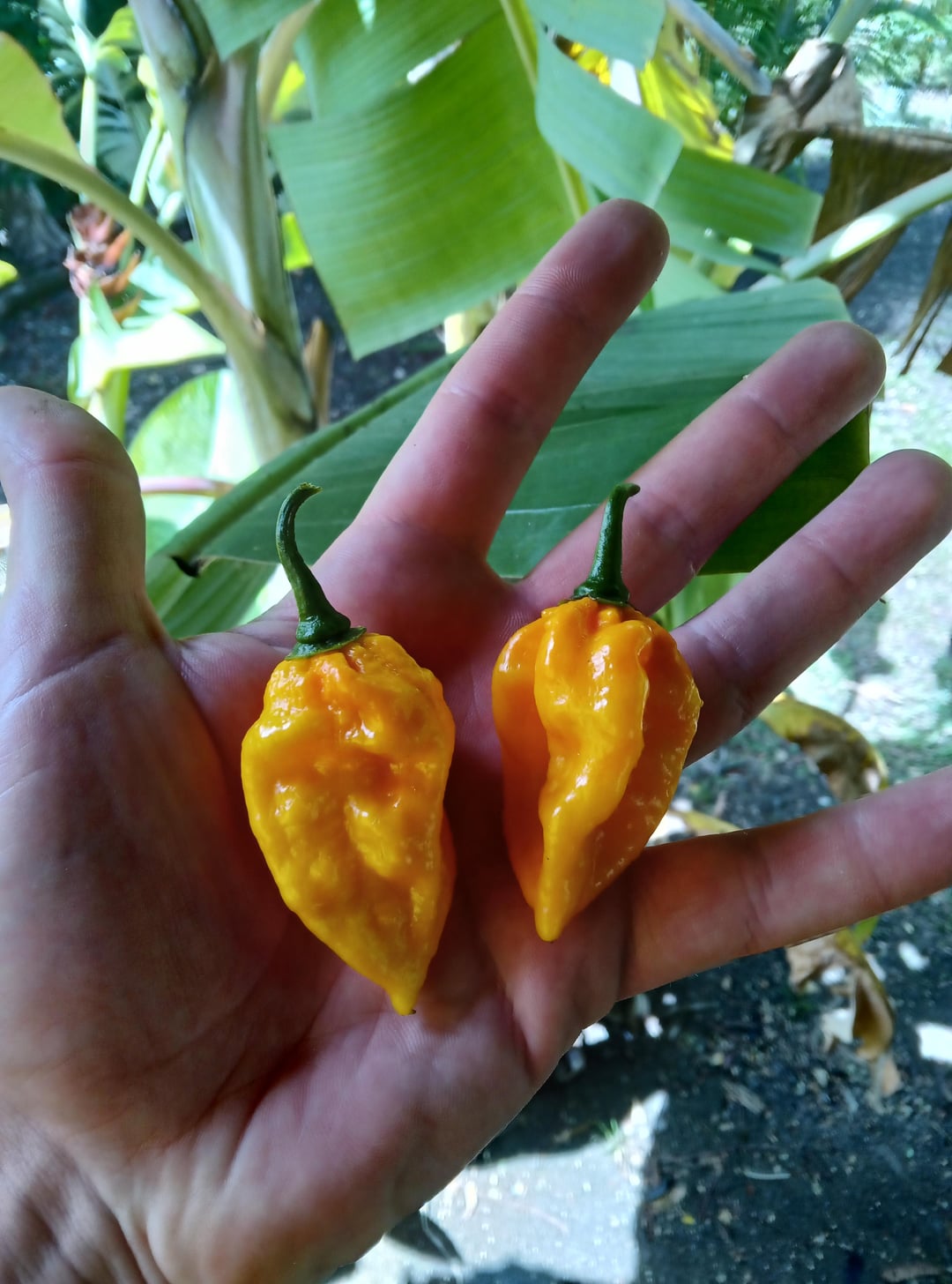
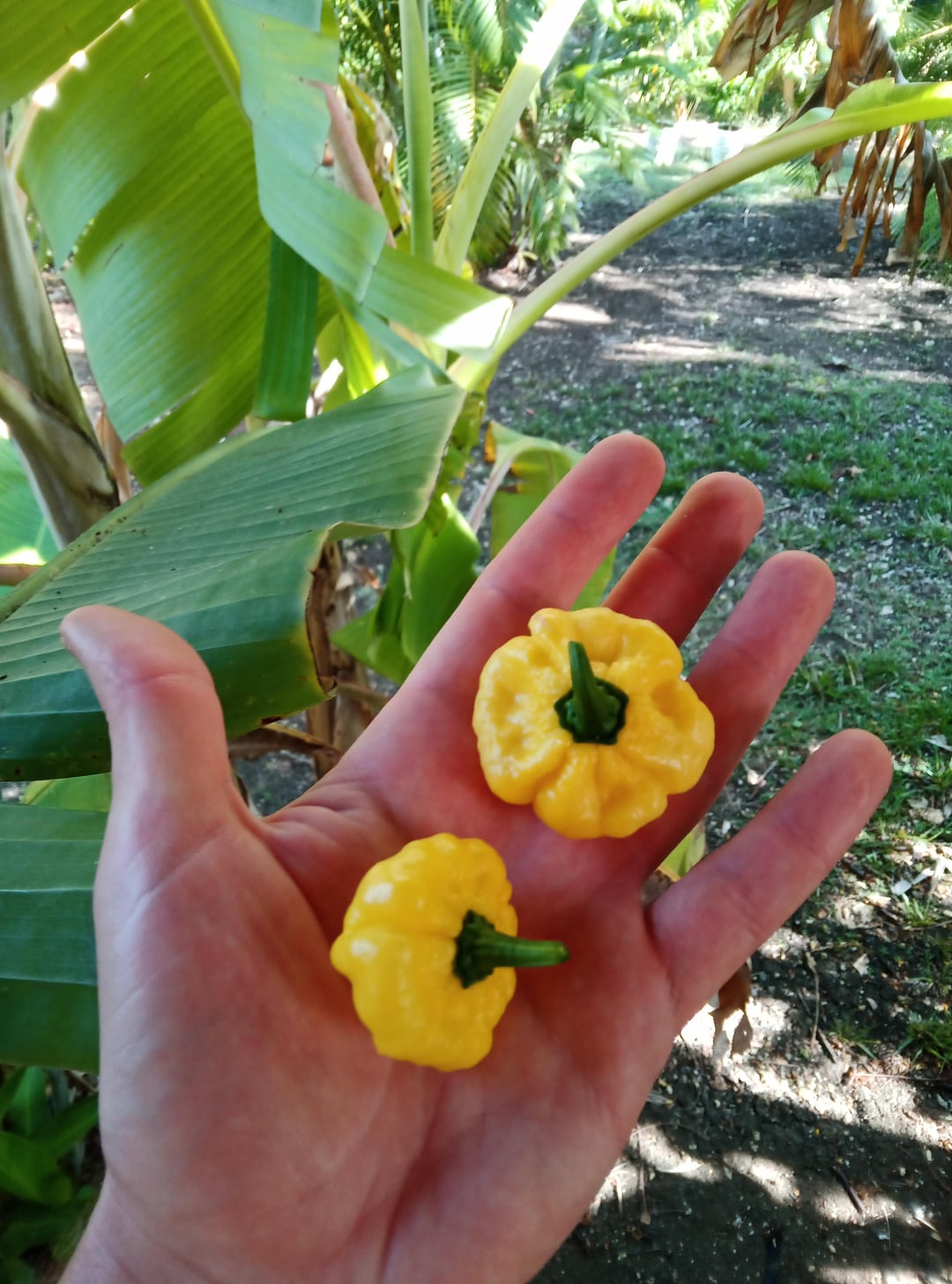
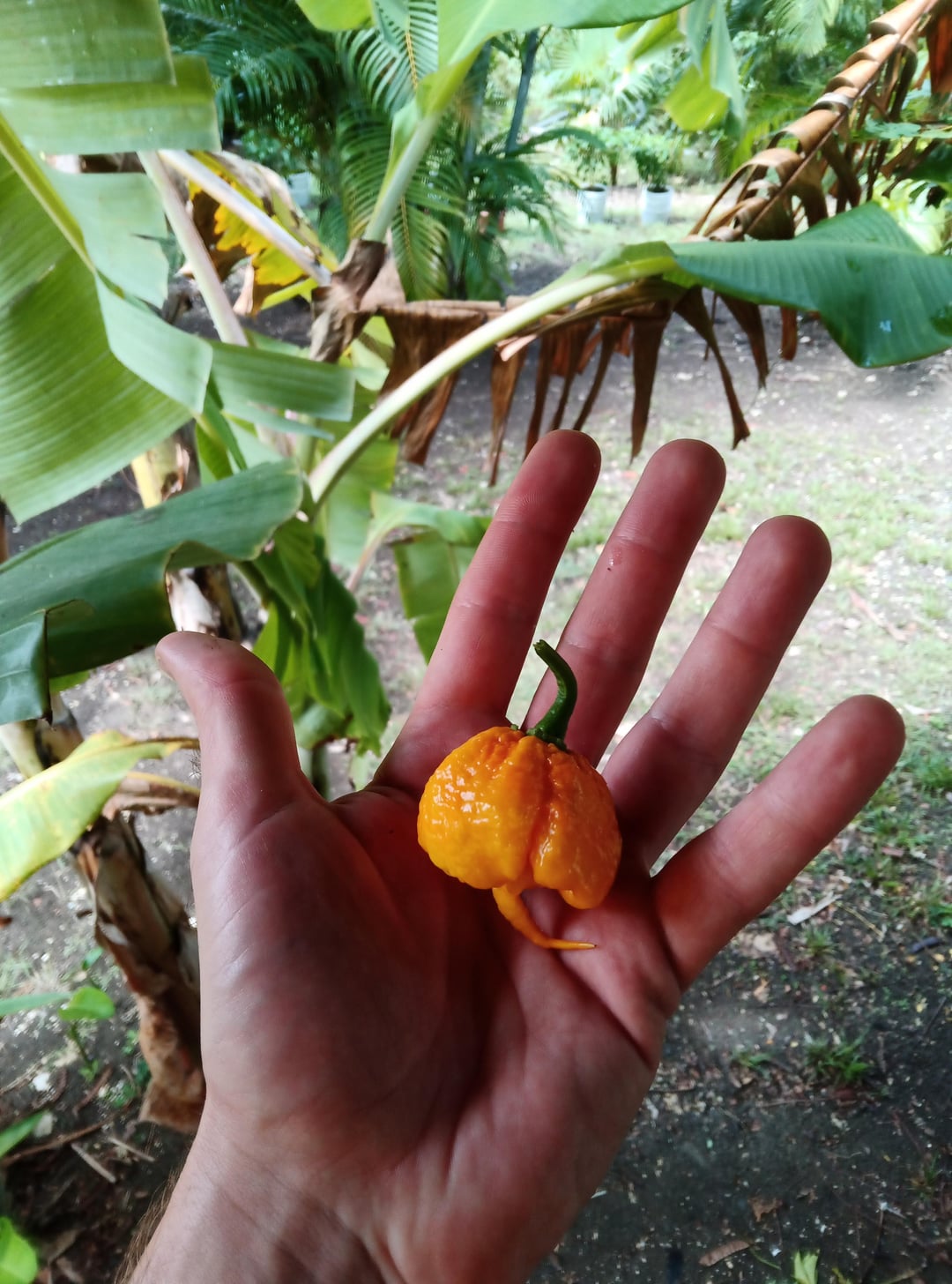
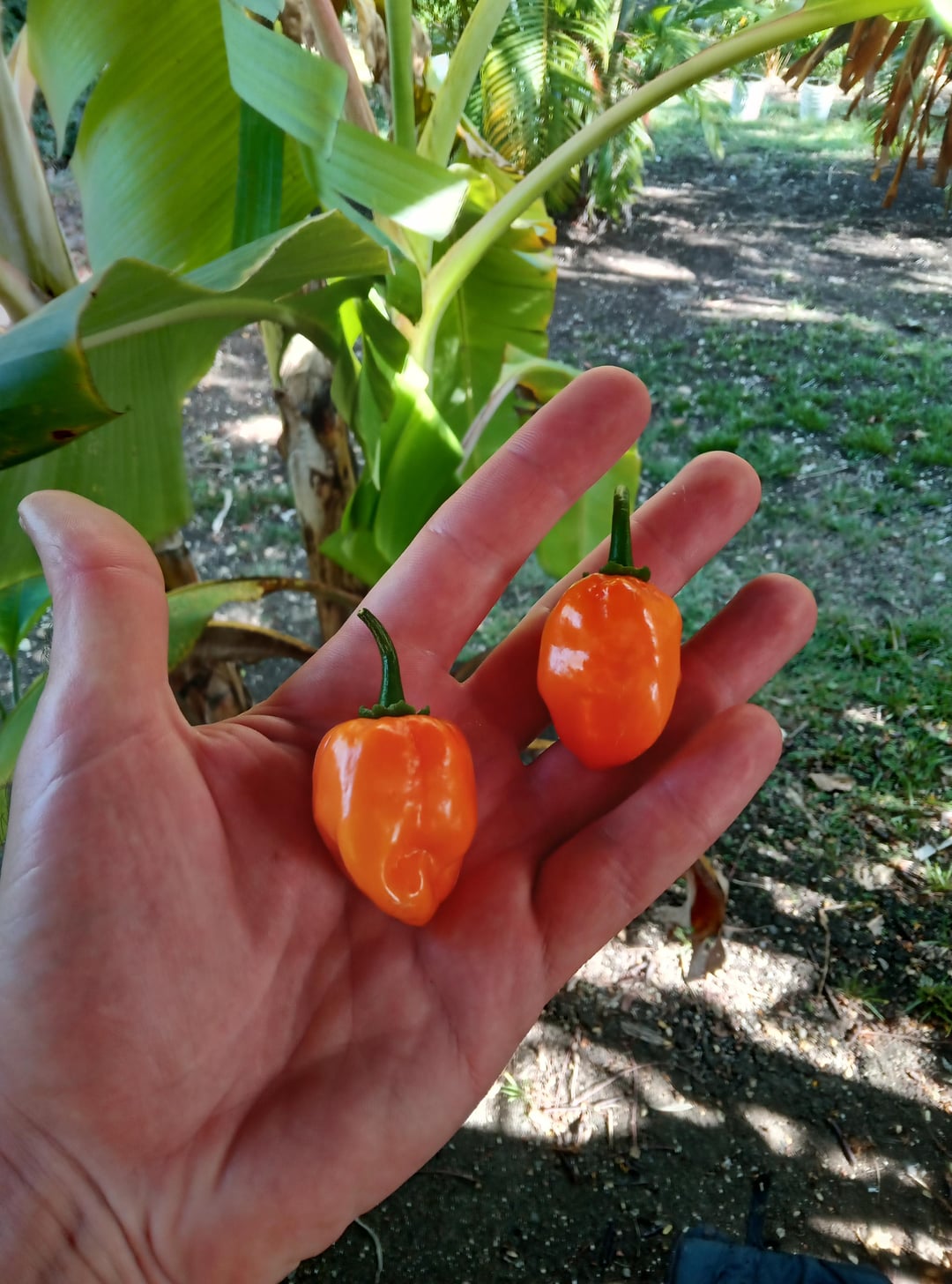
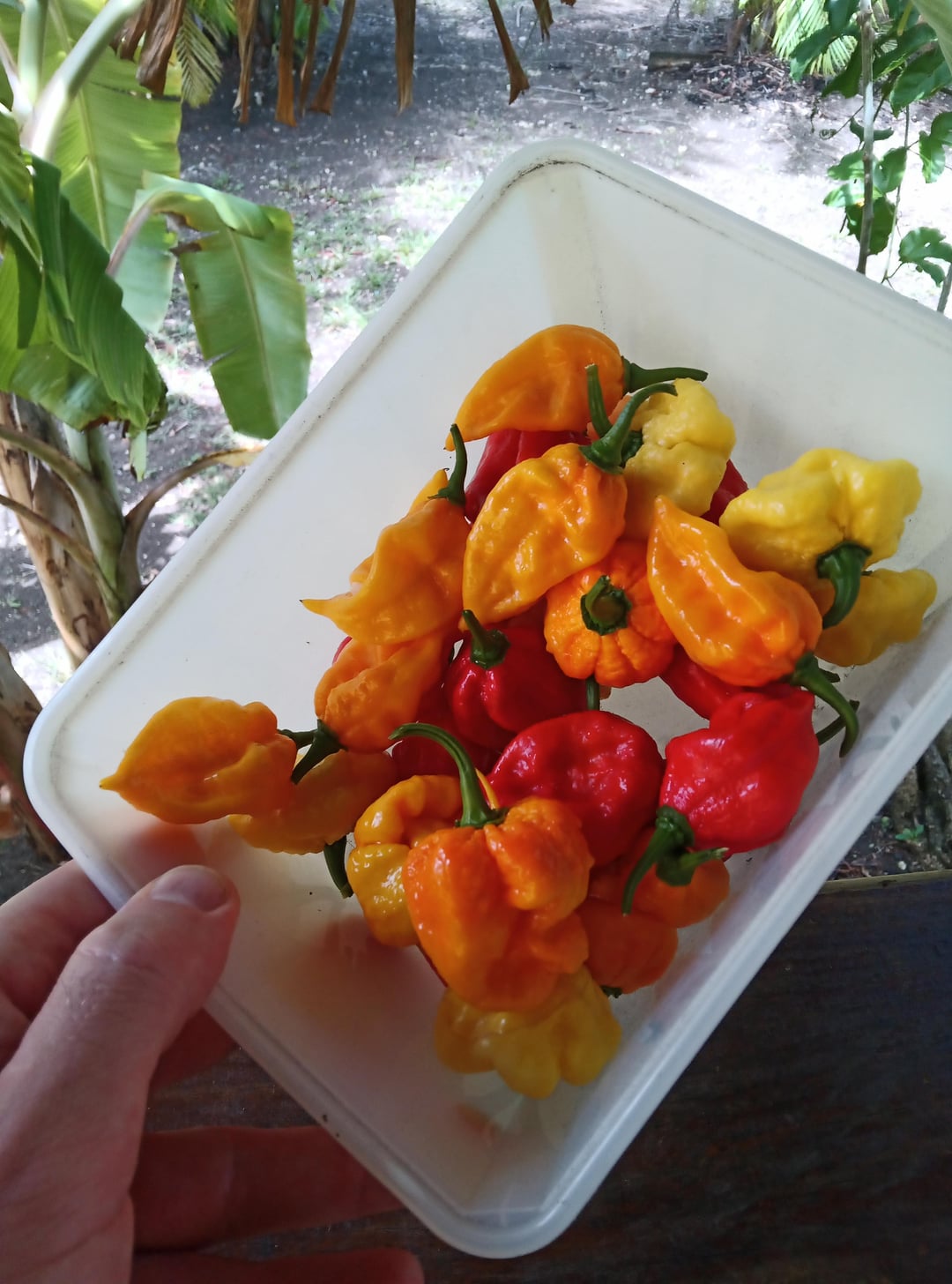
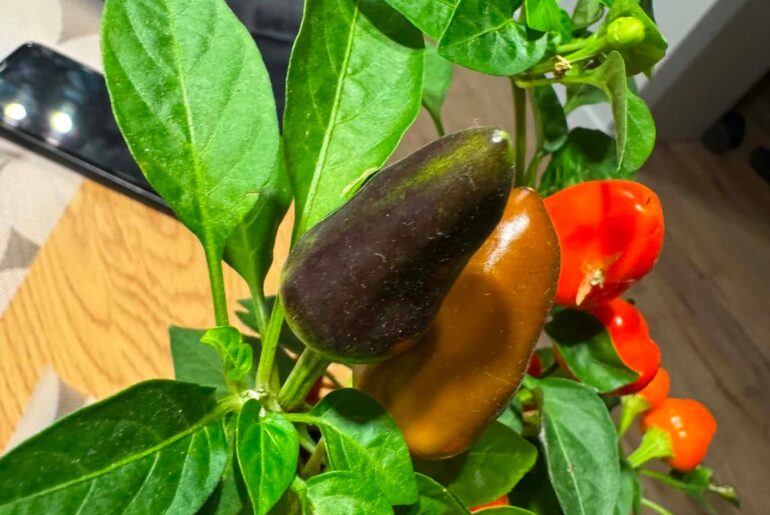
In the pictures attached, you can see some Fatalii, Naga Morich, Moruga Scorpion Yellow, Reaper Yellow, Orange Habanero, and KSLS. I also included a picture of a few plants (just after harvest, so they are heavily trimmed)
by JakeELeeVanCleef


3 Comments
Beautiful pods 👏
Beautiful peppers, thank you for posting that. I’m assuming the “Bondamanjak” is the same as what we usually see labeled “Bonda Ma Jacques”. Wonderful pepper.
Do you happen to have any pictures or links about that “piment oiseau”? I love me some Frutescens and am always looking out for obscure varieties. I couldn’t find much from searching around.
Awesome post and info! Beautiful pods.