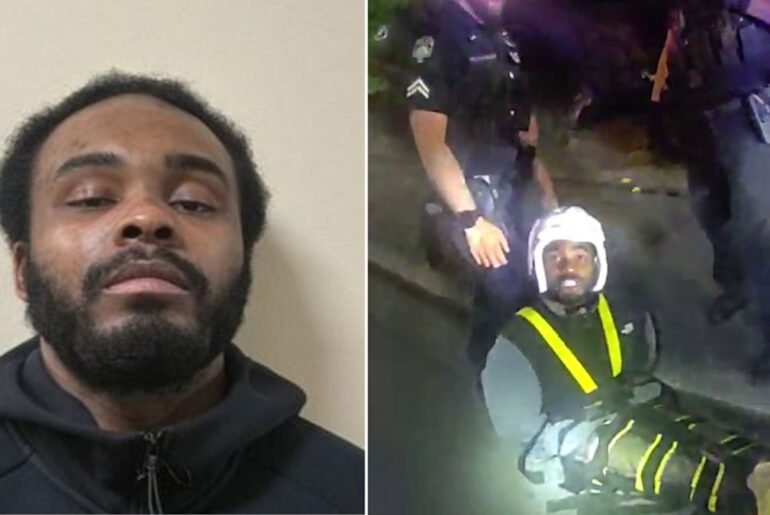

A Michigan sexual abuse survivor said she was retraumatized after learning her offender’s name was among more than 20,000 removed from the state’s sex offender registry following a Michigan Supreme Court ruling.
Sara Schmitz said she found out about the change after waking up to a Facebook post Sunday morning saying 20,000 offenders had been removed from the list. She said her offender was one of them.
“I had a panic attack, fear, same stuff I’m still going through today,” Schmitz said. “I haven’t slept. I haven’t eaten anything. I cry constantly. I don’t know what to do.”
More than 20,000 sex offenders’ names have been removed from the Michigan registry after the state Supreme Court ruled the latest law used to maintain the system is unconstitutional. The ruling means offenders who were on the registry for crimes committed before July 1, 2011, could not be forced to comply.
Schmitz said her abuse started when she was 12 and lasted until she was 17. She said she repeatedly told her story in court in an effort to hold the person who raped her accountable and believed he would remain on the registry for life.
“I did everything that I was supposed to do to get him on a list that he was supposed to be for the rest of his life for nothing I did it for nothing,” she said. “I lost everything for nothing. How is that fair?”
Schmitz is among hundreds of people who learned the registry had been updated after the Michigan Supreme Court decision found that changes made by lawmakers in 2011 and 2021 were unconstitutional.
“They deem that what the changes that happened to him were unconstitutional I’m a victim for life,” Schmitz said. “I am a victim of a crime that I did not commit for the rest of my life and there’s nothing I can do about that.”
The Michigan State Police oversees the sex offender registry. MSP Director Col. James F. Grady II said in a statement that concerns about changes to the law should be taken up with the state Legislature.
Republican state Rep. Matthew Bierlein said courts have overturned many aspects of the sex offender registry, calling this the latest decision affecting it.
“We can’t override what the court decision was, but we can revisit the law,” Bierlein said. “And I personally think that it’s time to do that. We need to sit down. We need to look at what works and what doesn’t work, what things the courts continue to attack in the registry or in the laws associated with the registry.”
Bierlein said he would be interested in working on the issue and reviewing the registry, pointing to public safety concerns.
“When you start to look at the numbers and and you do the research and you look at the research that’s already been done, you know, these crimes are crimes that have fairly high recidivism rates,” he said. “And there’s a reason that the registry was developed in the first place. There’s a reason that people wanted to know who was around their kids, who was living next to their homes.”
Schmitz said losing access to the registry has left her feeling powerless.
“People need to know what lives in our society, where they live, and what they are doing,” she said. “I look at that list all the time. I look at one person, the person that turned me into a survivor, what he drives, where he works, where he lives, and I can’t do that anymore.”
Schmitz said she has been leaning on her husband as she tries to cope with the change and said she feels like no one is listening to her as a survivor.