
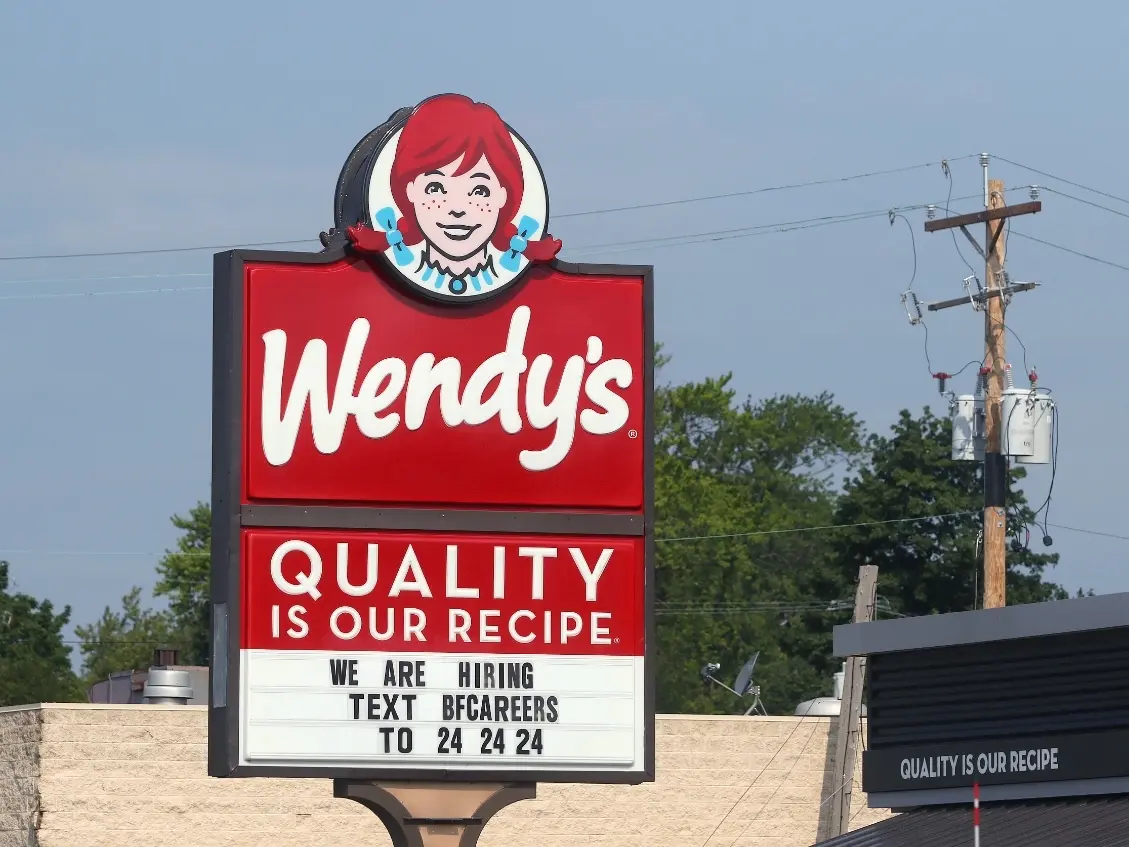
A major Wendy’s franchise operator has entered bankruptcy after years of expansion, store closures and deteriorating restaurant economics, providing a sharp example of how quickly a large U.S. fast-food franchise operation can become financially difficult to sustain.
Meritage Hospitality Group, one of Wendy’s largest U.S. franchisees, filed for Chapter 11 bankruptcy protection on Sept. 17 after operating 314 Wendy’s restaurants across 15 states. The company said it intends to keep its restaurants operating and continue paying its roughly 9,000 employees while it restructures.
The case is unfolding as Wendy’s itself cuts hundreds of restaurants. The company closed 240 U.S. locations in 2024 and announced plans in 2026 to close roughly 5% to 6% of its U.S. restaurant base, equivalent to roughly 300 to 350 locations.
Why Wendy’s franchise economics deteriorated
Meritage’s financial deterioration was unusually rapid.
Restaurant Dive reported that Meritage generated approximately $618 million of revenue in 2025, down 7.6% from roughly $669 million in 2024. Revenue declined another 14% during the first half of 2026 to $274 million from $318 million a year earlier.
The company’s same-store sales fell 7.2% in 2025 and another 8.3% during the first half of 2026. An $8 million net profit in 2024 became a nearly $32 million net loss in 2025, followed by a $23 million loss during the first half of 2026.
The deterioration also reached the restaurant-level economics of the Wendy’s stores. The Wall Street Journal reported that Meritage’s Wendy’s store-level EBITDA fell 48% in 2025, reaching its lowest restaurant-level profitability in three decades. The company cited rising beef costs, promotional strategies and management decisions among the factors affecting performance.
The franchise structure added another layer of pressure.
Wendy’s said Meritage owed $27.4 million in royalties and fees and $119.5 million in continuous-operations fees associated with restaurant closures, according to court filings cited by The Associated Press. Meritage had already closed 60 underperforming Wendy’s restaurants during its restructuring effort.
Wendy’s terminated Meritage’s franchise agreement effective Sept. 16, one day before the bankruptcy filing. Wendy’s said it had worked with the franchise organization and its lenders for more than a year to find a sustainable solution before deciding to terminate the agreement.
That combination — falling sales, declining restaurant-level profits, debt obligations and franchise-related fees — helps explain why operating hundreds of restaurants can become a financial liability even when the underlying brand remains nationally recognized.
Wendy’s has a much larger footprint than the struggling franchisee
The Meritage bankruptcy does not mean Wendy’s is closing all of its U.S. restaurants.
As of Dec. 28, 2025, Wendy’s had 5,969 restaurants in the United States. The company operated 423 itself, while 5,546 were operated by 203 franchisees. Globally, Wendy’s had 7,397 restaurants.
That structure makes franchisee economics central to the company’s performance.
Wendy’s reported second-quarter 2026 global systemwide sales of approximately $3.4 billion. U.S. same-restaurant sales declined 7.0%, while global systemwide sales fell 6.5%. Wendy’s also withdrew its 2026 outlook and reduced its dividend as new management began developing a turnaround plan.
Why fast-food franchises have become riskier
The U.S. restaurant industry is dealing with a consumer who is still spending on food away from home but is increasingly selective about price.
The National Restaurant Association reported in September that 42% of consumers said they had reduced spending at fast-food restaurants, sandwich shops, cafés or on takeout and delivery. Forty percent said they were relying more heavily on discounts and value promotions, while 36% said they had shifted toward less expensive restaurants.
Operators face the other side of the equation: expenses.
The National Restaurant Association said labor, food and other operating expenses continued to rise, while one-third of restaurant operators surveyed during the summer reported that they were not profitable during the first half of 2026.
For a franchisee, the cost structure can be particularly unforgiving. A restaurant can face payroll, occupancy, food, utilities, insurance, maintenance, technology and franchise-related expenses regardless of whether customer traffic is strong enough to support the location.
A declining store can therefore become more than a weak performer. It can consume capital that might otherwise be used to remodel successful locations or open new restaurants.
That is one reason large restaurant systems are increasingly evaluating individual locations rather than treating unit growth as an objective by itself.
McDonald’s shows a different operating picture
The current U.S. market is not uniformly weak.
McDonald’s remained the largest U.S. fast-food chain by 2025 systemwide sales, generating approximately $55.1 billion, according to QSR Magazine’s 2026 QSR 50. It had 13,706 U.S. restaurants, including 13,062 franchised or licensed locations.
In the second quarter of 2026, McDonald’s U.S. comparable sales increased 0.8%, while global systemwide sales increased 5% to $37 billion. The company also reported that sales to loyalty members across 70 markets had risen more than 20% over the preceding 12 months.
Taco Bell is benefiting from value-oriented demand
Taco Bell has also posted stronger recent operating figures.
Yum! Brands reported that Taco Bell’s same-store sales increased 7% in the second quarter of 2026. Yum said digital system sales, excluding Pizza Hut, exceeded 60% of sales.
The brand’s 2025 U.S. systemwide sales reached approximately $17.25 billion, with 7,784 total U.S. restaurants, according to QSR Magazine. The chain added 180 units during the year.
Taco Bell also faced a temporary food-safety disruption in July after a Cyclospora outbreak. Reuters reported that the outbreak caused a sharp temporary traffic decline before sales began recovering.
Chick-fil-A and Raising Cane’s demonstrate the strength of chicken
Chicken remains one of the strongest categories in the U.S. quick-service restaurant market.
Chick-fil-A generated approximately $23.9 billion in U.S. systemwide sales in 2025 and added 178 locations, according to QSR Magazine’s 2026 data. Its average sales per U.S. unit were approximately $7.7 million.
Raising Cane’s generated approximately $5.49 billion in U.S. systemwide sales and added 92 locations during 2025, reaching 913 restaurants, according to the same QSR data.
Wingstop added 382 units during 2025, reaching 2,586 restaurants, while generating approximately $5.34 billion in U.S. systemwide sales.
These figures do not mean every chicken franchise is profitable or that the category is immune to oversupply. They show that certain brands are still adding locations while other established chains are removing them.
The emerging brands changing the franchise map
The most aggressive growth is also coming from younger restaurant concepts.
7 Brew
Drive-through beverage chain 7 Brew has expanded at extraordinary speed. QSR Magazine reported that the company had more than 700 stands across 38 states in 2026, after reaching 602 locations at the beginning of the year.
The company added 281 net restaurants in 2025, following 141 in 2024 and 140 in 2023. Its 2026 development pipeline included 437 projected new franchised outlets plus 10 corporate openings.
For 320 locations that operated for the full year in its latest disclosed data, average annual sales were approximately $2.66 million.
Dutch Bros
Dutch Bros is another rapidly expanding drive-through concept.
The company opened 48 shops in the second quarter of 2026 and ended the quarter with 1,225 locations. Revenue increased 32.5% year over year to $550.9 million, while systemwide same-shop sales increased 5.8%.
Dutch Bros raised its 2026 guidance and projected at least 185 systemwide openings for the year.
CAVA
CAVA represents a different growth model: fast-casual Mediterranean food.
In its second quarter of fiscal 2026, CAVA revenue increased 31.3% to $365.4 million. Same-restaurant sales increased 9%, including 5.3% guest-traffic growth, and the company opened 17 net new restaurants. It ended the quarter with 476 restaurants.
CAVA’s restaurant-level profit margin was 25.7% for the quarter. The company maintained its 2026 forecast for 75 to 77 net new restaurant openings.
Dave’s Hot Chicken and Layne’s
Chicken concepts are also producing new franchise opportunities.
Dave’s Hot Chicken, founded in 2017 as a parking-lot pop-up, has expanded rapidly through franchising and attracted a majority investment from Roark Capital. Restaurant Dive reported in January that the company was positioning itself for continued growth as a fast-casual Nashville-style hot-chicken brand.
Texas-based Layne’s Chicken Fingers is another emerging chain receiving industry attention. Technomic included Layne’s in its 2026 Future 50 Growth Chains, and the company added 21 locations in 2025 while expanding into markets including Utah, Virginia and California.


