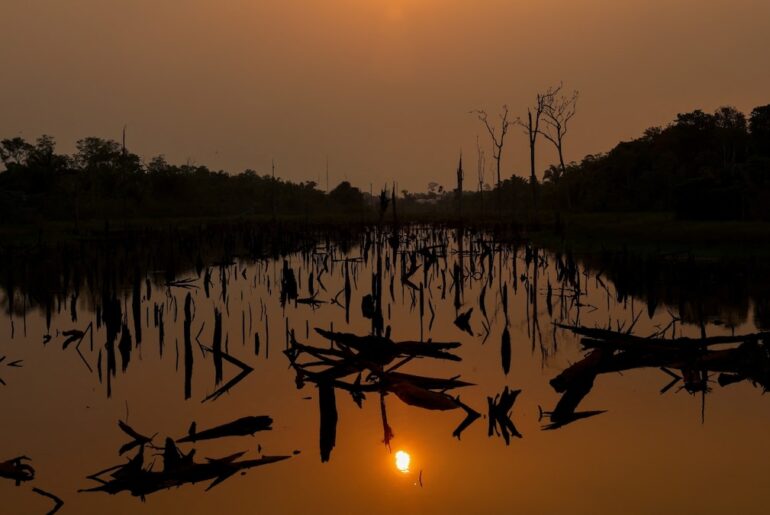

Khartoum. The ongoing war and drought caused by El Nino in the African country Sudan have increased the risk of famine.
An international body monitoring food security and crises has warned that deaths due to food shortages, malnutrition, and disease may increase in the Darfur and Kordofan regions of the country.
According to the Integrated Food Security Phase Classification (IPC), drought affected by El Nino has impacted nearly half of Sudan’s territory. The drought has further aggravated the crisis amidst increasing displacement and declining agricultural production due to the three-year-long war.
A report released by IPC on Monday stated that drought has created additional pressure on the food supply system weakened by conflict and displacement. The risk of famine has increased due to reduced food availability, rising prices, and weakened livelihoods.
In some areas of Sudan, health services are completely disrupted, and the lack of clean drinking water is also increasing. People lacking adequate nutrition are at high risk of disease and death.

IPC is an international body that assesses the state of food insecurity. It includes 21 organizations and intergovernmental bodies, including the United Nations Children’s Fund (UNICEF), the World Bank, the World Food Programme (WFP), and the World Health Organization (WHO).
Over 20 Million People in Food Crisis
According to IPC’s previous assessment, in May 2026, about 19.5 million people in Sudan, or more than 40 percent of the total population, were in a state of severe food insecurity. Of these, 135,000 people were assessed to be in the most severe, fifth phase of food insecurity. This phase includes extreme food shortages, famine, high malnutrition, and deaths due to disease or severe malnutrition.
IPC has warned that the recent drought could further worsen the situation. Farmers’ livelihoods are weakening, and the number of people requiring food assistance is increasing.
IPC has stated that food insecurity, severe malnutrition, and excess mortality may increase further in the coming days.

In the rural areas of Sudan, a large number of people depend on agriculture and animal husbandry. However, reduced rainfall, drying water sources, and declining production on arable land have affected both their income and food availability. For displaced people due to the war, returning to farming and securing regular food has become even more difficult.
Farming Affected in Darfur and Kordofan
The impact of the drought is particularly severe in the Darfur and Kordofan regions of western Sudan. According to IPC, in North Darfur, vegetation growth has weakened in nearly two-thirds of the arable land. About half of the arable land is also affected in South Darfur, West Kordofan, and South Kordofan.
Low rainfall, water scarcity, and limited opportunities to restore agricultural production have severely impacted farmers’ livelihoods.
In North Darfur, delayed rains have affected planting. Food stocks are also reported to be extremely low. West Kordofan is facing one of the most severe droughts since 2004.
Families dependent on farming are forced to buy food from the market due to insufficient production. However, rising food prices and declining income opportunities have weakened their purchasing power.
The risk of more severe consequences for displaced families, children, and those lacking adequate nutrition is increasing.
Malnutrition Increasing Among Children
Along with the food crisis, the condition of child malnutrition is also deteriorating in various parts of Sudan. IPC reports that in the Nyala region of South Darfur, the proportion of children admitted to nutrition services for severe malnutrition has increased.
In January 2026, this proportion was about five percent. By August, it had increased to 11 percent. This means the proportion of children showing severe malnutrition among those accessing nutrition services has more than doubled in eight months.

It has also been reported that the overall rate of severe malnutrition in two displaced camps in South Darfur has exceeded the threshold related to famine.
Increased severe malnutrition in children raises the risk of death even from common diseases. However, in many areas of Sudan, health services are unavailable, making it difficult for patients to receive timely treatment. The lack of clean water and food shortages further increase the risk of malnutrition and infectious diseases.
As drought and war continue simultaneously, the need for food aid, health services, and clean water is increasing. However, delivering aid is difficult due to the conflict.
Three Years of Ongoing War Have Increased the Crisis
In Sudan, the power struggle between the army and the paramilitary Rapid Support Forces (RSF) in April 2023 escalated into an open war. The fighting, which began in the capital Khartoum, has gradually spread to various parts of the country.
According to ACLED, a conflict monitoring organization, at least 150,000 people have been killed in the war. Humanitarian organizations say the actual death toll could be higher.
Reports indicate that about 13 million people have been displaced due to the war. A large number of them have been deprived of their homes, farmlands, and livelihoods.
The army has influence in the central and eastern parts of Sudan, while the RSF controls West Darfur and parts of the south. Ongoing fighting in various areas has disrupted people’s movement, food supply, and humanitarian aid delivery.
Violence has been particularly severe in the Darfur region. Attacks have occurred in displaced persons’ camps, and reports indicate a large number of people have been killed in ethnic violence.
Displaced people due to the war are also forced to seek refuge in neighboring countries. The increase in refugees in countries like Chad has also put pressure on their limited resources and food supply systems.