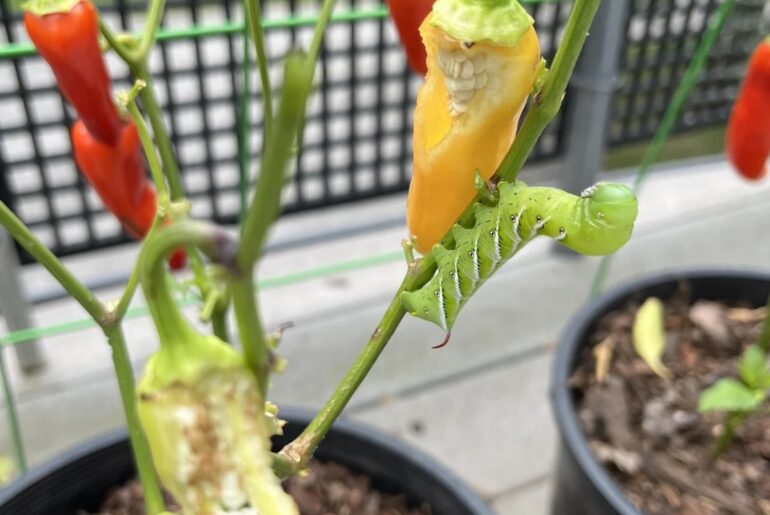

A gardener woke up to an annoying backyard scene after finding a single hornworm had practically demolished a hot pepper plant overnight, peppers and all.
An image of the plant drew sympathy, laughter, and practical advice from fellow growers.
What happened?
In a Reddit post on the site’s r/Gardening forum, the original poster shared a photo of the hefty culprit and wrote, “This little jerk nearly stripped an entire hot pepper plant overnight (peppers included).”

The gardener added that it was the “first one I’ve seen at our new property” and admitted, “Silly me thought I’d get through the season without hornworms. Sigh.”
Commenters leaned into the humor. One wrote, “He looks so proud of himself,” while another joked, “Like he took a step back to look at his work and admire it… Lol.”
A third added, “Holy crap he ATE,” and zoomed in on the destruction.
Other commenters used the post to swap tips and debate whether hot pepper heat actually affects insects, birds, or mostly mammals. One claimed, “Only mammals are affected by capsaicin,” while another added, “It doesn’t have as much of an effect on birds either I believe.”
Why does it matter?
A hornworm like this can wipe out days or weeks of effort in a matter of hours. That can be especially frustrating for gardeners trying to save money on produce, grow better-tasting vegetables, and avoid paying store prices for peppers.
Home gardening can pay off in more ways than one. Fresh-picked produce often tastes better than food that has been shipped long distances, and the work of planting, watering, and harvesting can support both physical activity and mental well-being.
Gardeners in the thread also shared several ways to respond without reaching for harsh chemicals. Among the ideas were checking plants after dark with a black light, since the caterpillars can glow and be easier to spot, planting trap crops to pull pests away from the main harvest, and relocating hornworms to sacrificial nightshade plants.
These kinds of low-chemical approaches can help protect the rest of the garden while avoiding unnecessary pesticide use around food crops.
Get TCD’s free newsletters for easy tips, smart advice, and a chance to earn $5,000 toward home upgrades. To see more stories like this one, change your Google preferences here.