

Sunrise Yoga
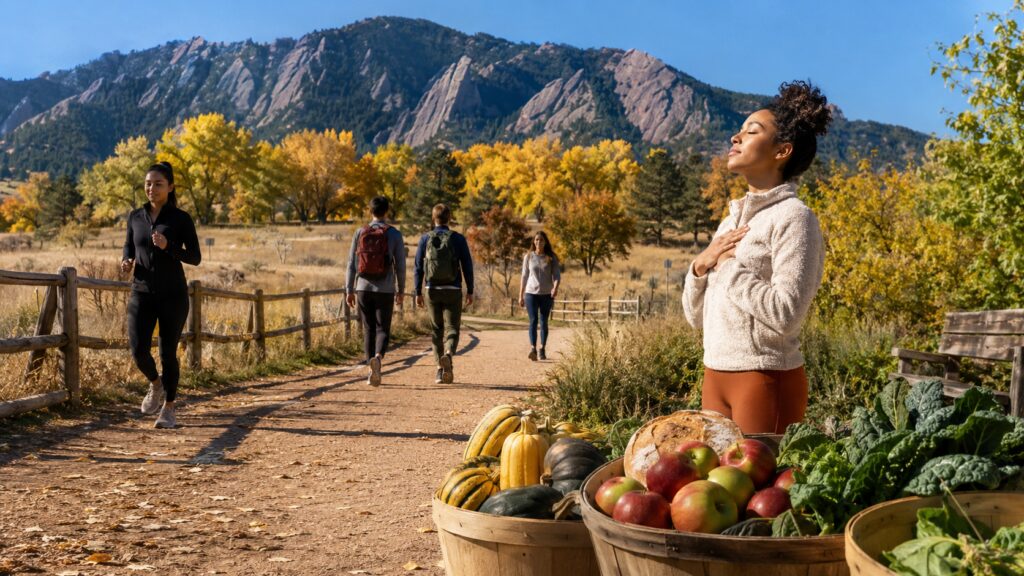
Fall wellness in Boulder does not begin with a New Year’s resolution. It starts when the first cool morning reaches the Flatirons, the farmers market tables fill with squash and apples, and the University of Colorado campus comes alive with students carrying coffee, backpacks, and plans for a fresh semester.
Summer in Boulder is intense: long days, crowded trailheads, outdoor concerts, travel, and late evenings on Pearl Street. Fall brings a different energy. The city becomes quieter and more intentional, turning its familiar culture of outdoor movement, local food, mindfulness, and recovery into routines people can actually maintain.
The Trail Becomes the Gym Again
Cooler air may be the best personal trainer in town. Hiking, walking, cycling, and trail running become more comfortable as summer heat gives way to crisp September mornings.
Higher-elevation aspens generally begin changing first, often from mid-September into early October. Boulder’s cottonwoods and urban tree canopy usually follow, extending the show deeper into the season.
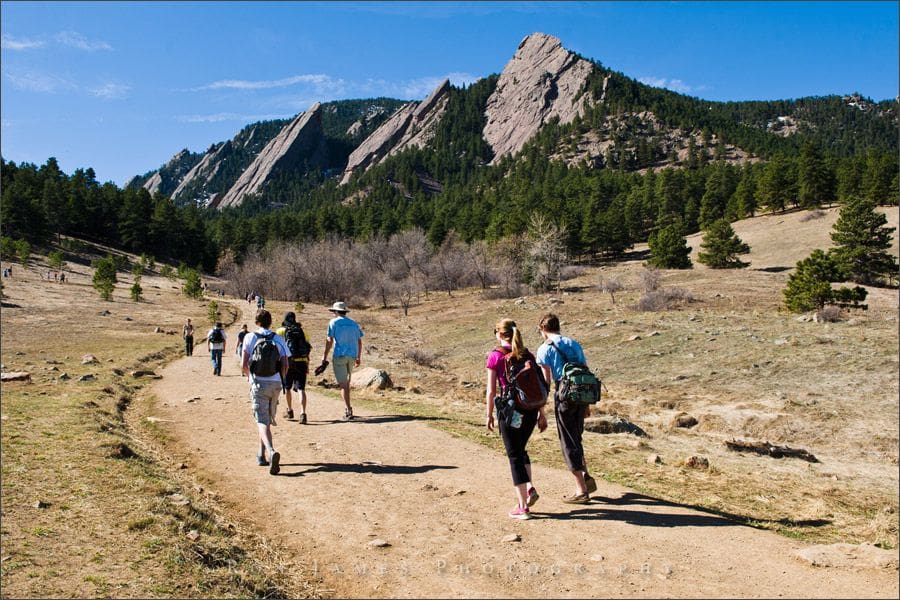
You do not need a major mountain expedition to participate. Chautauqua Meadow provides classic Flatirons views close to town. Mapleton Avenue becomes one of Colorado’s most beautiful walking routes when its mature trees change color. South Mesa and the South Boulder Creek corridor glow with cottonwoods and sumac, while Wonderland Lake offers approachable movement without requiring a summit.
The modern approach to health and wellness in Boulder is becoming less about chasing extreme mileage and more about longevity. Mobility, joint health, strength, and recovery are now part of the outdoor routine rather than afterthoughts.
Before leaving, check current trail conditions, closures, weather, and trailhead cameras. Parking can fill early during peak foliage weekends. Black bears also become especially active in late summer and early fall as they consume additional calories before winter, making responsible trash storage and wildlife awareness particularly important.
Harvest Becomes the Nutrition Plan
The Boulder Farmers Market may be the easiest fall wellness habit that does not feel like one.
According to the official Boulder County Farmers Markets schedule, the Saturday market at 13th Street and Canyon Boulevard runs from 8 a.m. to 2 p.m. through November 21, 2026. The Wednesday market continues from 3:30 to 7:30 p.m. through October 7. Pets are not permitted at either market.
September tables often capture the end of Colorado’s peach season before transitioning toward apples, winter squash, hearty greens, root vegetables, honey, bread, and other cool-weather staples.

That is the Boulder fall diet at its simplest: buy what arrived from nearby farms and cook around it. Roasted squash, vegetable soups, grain bowls, fresh greens, and Colorado apples provide an approachable alternative to complicated nutrition programs.
For CU students, a Wednesday market visit can become a healthy break from packaged campus snacks. For longtime residents, it remains one of Boulder’s most enjoyable weekly traditions.
Recovery Moves Into the Mainstream
Recovery is no longer reserved for elite athletes. Sauna sessions, cold exposure, massage, mobility work, breathwork, and sleep tracking have moved further into Boulder’s everyday fitness culture.
Contrast therapy and other recovery practices should not be treated as miracle cures, and individual responses vary. Their popularity nevertheless reflects a healthier idea: rest is part of training.
Boulder’s sober-curious movement fits naturally into that shift. Alcohol-free evenings, mocktails, and nonalcoholic beer make sense in a community that values sleep, mental clarity, and early trail time.
Technology has entered the picture as well. Next Health officially opened its Boulder location at Twenty Ninth Street in March 2026, joining a growing local market for longevity and health-optimization services. Yet Boulder’s most accessible wellness tools remain remarkably traditional: walking, sleeping, cooking, connecting, and getting outside.
CU Boulder Joins the Fall Reset
For students, the beginning of the semester can bring excitement alongside stress, disrupted sleep, new relationships, and heavier workloads.
CU Boulder offers free Peer Wellness Coaching to students seeking practical help with sleep, nutrition, movement, stress, screen time, personal goals, or semester routines. The university’s HealthyBuffs Check-In for undergraduates also carries a September 1 deadline for fall 2026.
The smartest approach for students and residents is surprisingly similar: choose two realistic anchors and protect them. That could mean a Wednesday market visit, two weekly walks, a consistent bedtime, or alcohol-free weeknights.
Fall passes quickly in Boulder. The leaves do not wait, and neither does the light. Get outside while the gold is glowing, cook what local farms are harvesting, and build a routine strong enough to last beyond the season.
Related


