

In many ways, the project is an organic one for a campus already known for its award-winning dining program, said UMass Amherst Chancellor Javier A. Reyes. But it will also build on the university’s global brain trust across disciplines because, as he put it, food “touches everything.”
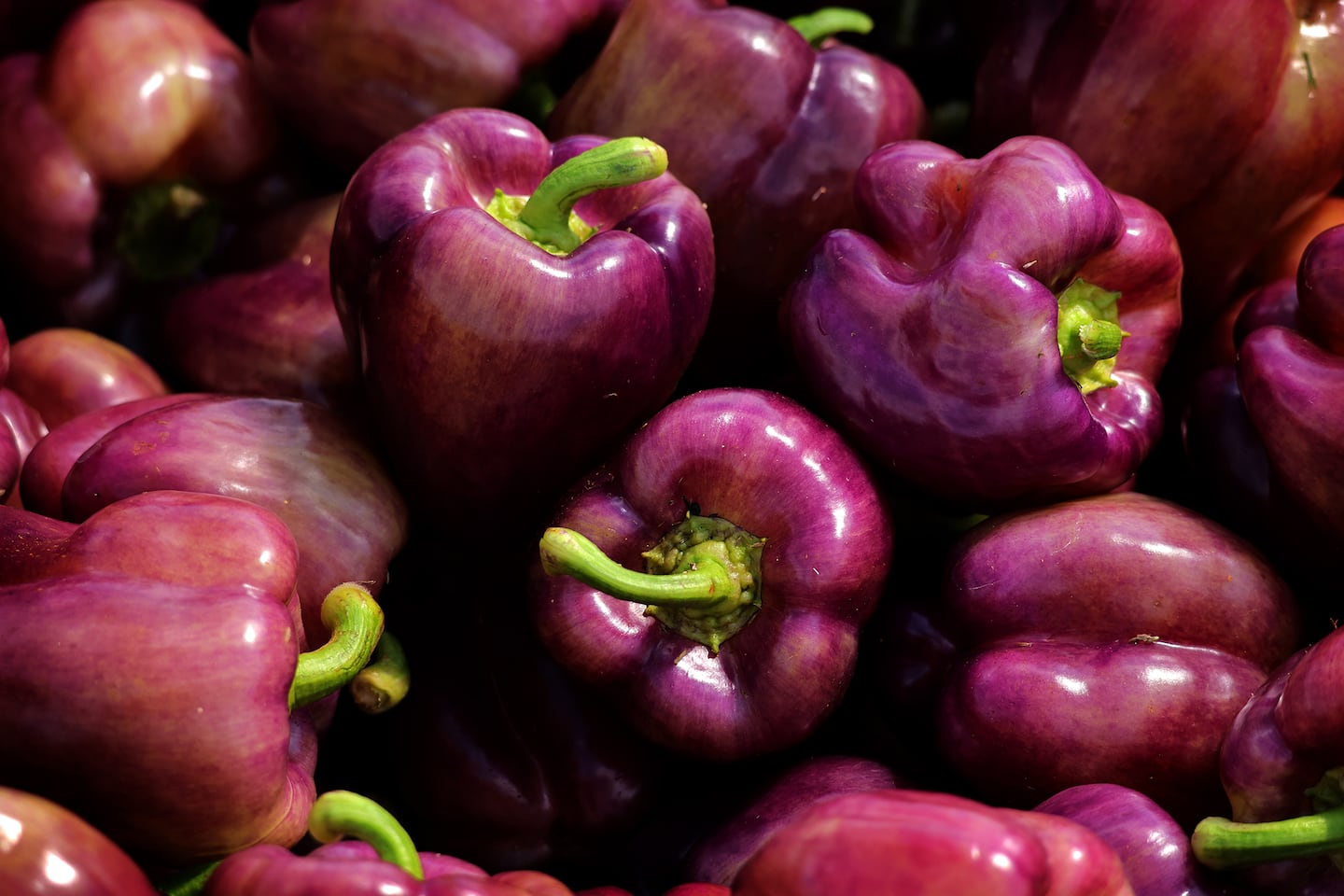 Freshly harvested purple islander peppers sat in a basket at the UMass Student Farm.Lane Turner/Globe Staff
The state-backed initiative has implications for higher education and the workforce as well. As more Americans question the value of a college degree, UMass Amherst is viewing the Future of Food as both a career pathway and an economic driver for the region and beyond. Food is now a $2.51 trillion industry nationwide, and Massachusetts has the largest food system in New England.
Researchers at the university are already growing edible protein from the air; creating healthier and tastier plant-based substitutes for meat, fish, milk, cheese, and eggs; and even printing 3D bacon with edible ink. They’re also figuring out ways to use food as medicine and fortify ultra-processed foods with nutrients at a time when conversations about what we eat and where it comes from are unfolding on the national stage, thanks to Health Secretary Robert F. Kennedy Jr.’s rallying cry to “Make America Healthy Again.”
“I don’t agree with most things Kennedy says, but one thing I agree on is we need to reformulate the food system to make people healthier,” said David Julian McClements, a UMass Amherst food science professor who has consulted for Nestlé, Kraft, and Pepsi. Just as important is building sustainability since “food is a major contributor to greenhouse gases and other forms of pollution,” he added.
 Sal Hoag (left) and Randy Brenny washed freshly picked lettuce inside the Agricultural Learning Center.Lane Turner/Globe Staff
Grace Jungmann, a 21-year-old environmental science student, put it differently: “In this country, there’s a lot of exploitation. The aim is just to get more, more, more without thinking about the people who grow the food, or the earth that gives us the food, and that’s not sustainable in any sense of the word.”
UMass Amherst’s top-rated food science program was the first in the nation when it started in 1918 to help address critical food shortages during World War I. But food and agriculture have been part of the university’s DNA since its founding in 1863, when it was called the Massachusetts Agricultural College, or Mass Aggie.
One of the country’s first land-grant colleges, it was established with the proceeds from sales of land granted to Massachusetts under the Morrill Land Grant Act, which allowed states to build public colleges focused on agriculture, among other studies.
UMass still has “an opportunity and a responsibility” to provide both education and research for the public good, said Lieutenant Governor Kim Driscoll.
“I think there’s a lot of good that will come both economically and from ensuring we can produce high-quality, sustainable food products,” Driscoll said. “Not just in Massachusetts but for the country, for the world.”
 Students studied a tomato plant in the 1930s.University of Massachusetts Amherst Libraries
Today, the flagship operates several farms in the area, including the UMass Cold Spring Orchard Research and Education Center in Belchertown. Many local farmers maintain close ties. Kitchen Garden Farm, based in Sunderland and co-owned by UMass alumni, relies on the university for soil testing. Mapleline Farm, in Hadley, distributes its milk throughout the dining commons.
Clarkdale Fruit Farms, in Deerfield, invites UMass graduate students to do research using trees in its orchard. The tradition goes back half a century, said owner Ben Clark, a fourth-generation apple farmer whose grandfather graduated from the Stockbridge School with a pomology degree. Over the years, researchers have set pyramid traps for pests like plum curculio and released pheromones to disrupt the mating habits of oriental fruit moths — yielding results the farm has adopted. “We’re reducing chemical use, which is one of our goals,” Clark said.
In addition to farmers, Western Mass is also home to Big Y, a grocery chain in partnership with the Stockbridge School, and many small-scale suppliers from craft brewers to cheese makers.
 Freshly picked radishes waited to be washed.Lane Turner/Globe Staff
“We have identified food-related industries as a place where there are lots of jobs for our trainees,” said Mike Fox, dean of the College of Natural Sciences. A key piece of the new food initiative is “growing a pipeline of talent and, hopefully, growing regional industries,” he added.
A recent report by the Western Massachusetts Economic Development Council identified food science as a sector where the Pioneer Valley is “well-positioned to compete,” noting “an emerging food-tech cluster.”
The Holyoke-based Clean Crop Technologies, which developed a seed treatment that removes pathogens, is one of dozens of companies with roots at UMass Amherst.
Food science professor Lili He and her postdoctoral student Yuzhen Zhang work in a lab testing apple juice and rice products, including infant rice cereal, for arsenic. But they also invented BactiSee, a smartphone-based technology that detects bacterial contamination on surfaces.
He said she just wishes there were more designated collaboration spaces on campus.
 Food science professor LiLi He (right) and postdoctoral student Yuzhen Zhang posed in their lab at UMass Amherst. The teacher and student invented BactiSee, a smartphone-based technology that detects bacteria contamination on surfaces. Lane Turner/Globe Staff
Enter the Paul and Diane Manning Food Innovation Hub, slated to break ground in late 2027, which will include sensory testing labs and research “collaboratories.” The funding will also establish the Center for the Future of Food and invite stakeholders to cross pollinate ideas about food and sustainability.
Everyone has a different vision. At the Stockbridge School’s UMass Student Farm, many of the student farmers see the future of food as being inextricably linked to its past.
“If we want to feed this amount of people on the earth for an extended period of time, we have to figure out ways we can heal the soil at the same time as growing food,” Jungmann said as she collected a tubful of eggplants.
Halvdan Hoegh, a senior from Norway, wants to see more data-driven, precision farming to maximize efficiency while protecting the land.
Winston McGregor’s dream is to see food deserts eliminated. Originally from Springfield and trained in social work, at 44 he is pursuing a second bachelor’s degree in sustainable food and farming because he feels he’s able to reach more people this way. “Out here,” he said, picking bell peppers, “you can save a whole city.”
As head of donations, McGregor takes whatever they don’t deliver to Big Y or CSA shareholders and gives it to the campus food pantry. Right now, that’s about 4,000 pounds of vegetables.
“That’s where my heart lies most,” he said, admiring the rainbow-hued harvest before loading it onto a truck. “Food is a human right, and everyone deserves access to it.”
 Lucy Stevens and Winston McGregor loaded a van with fresh produce. McGregor is the farm’s head of donations.Lane Turner/Globe Staff
Brooke Hauser can be reached at brooke.hauser@globe.com. Follow her @brookehauser.


