
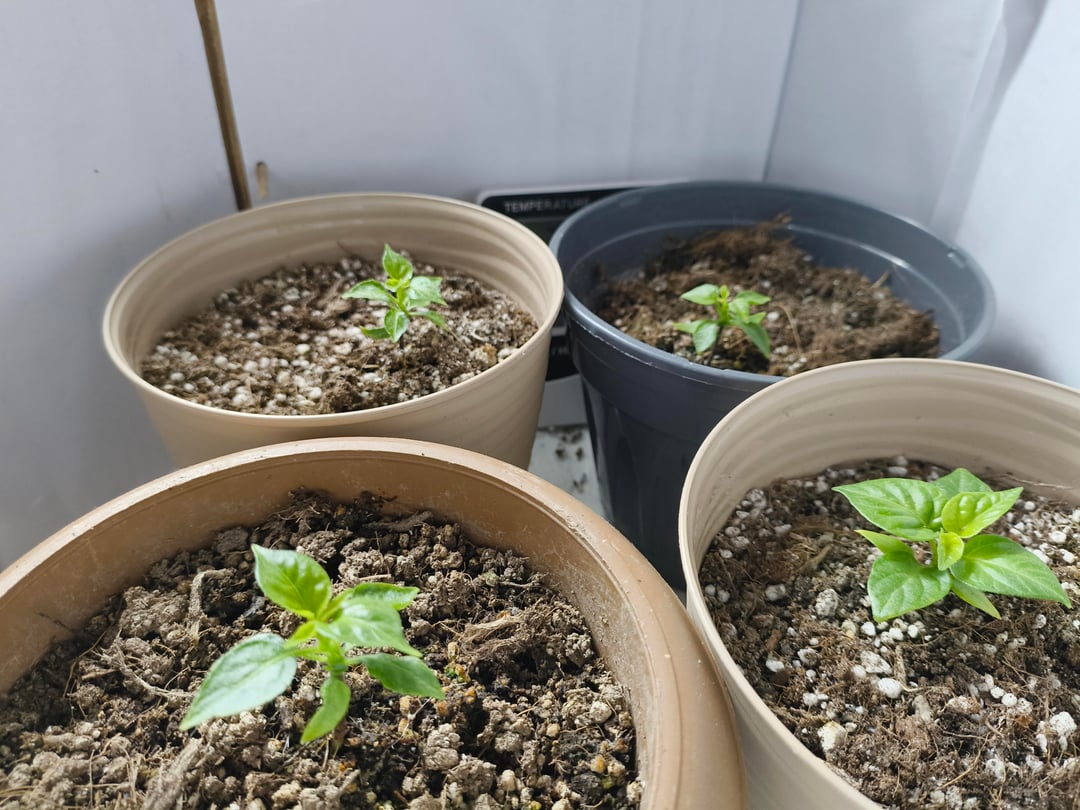
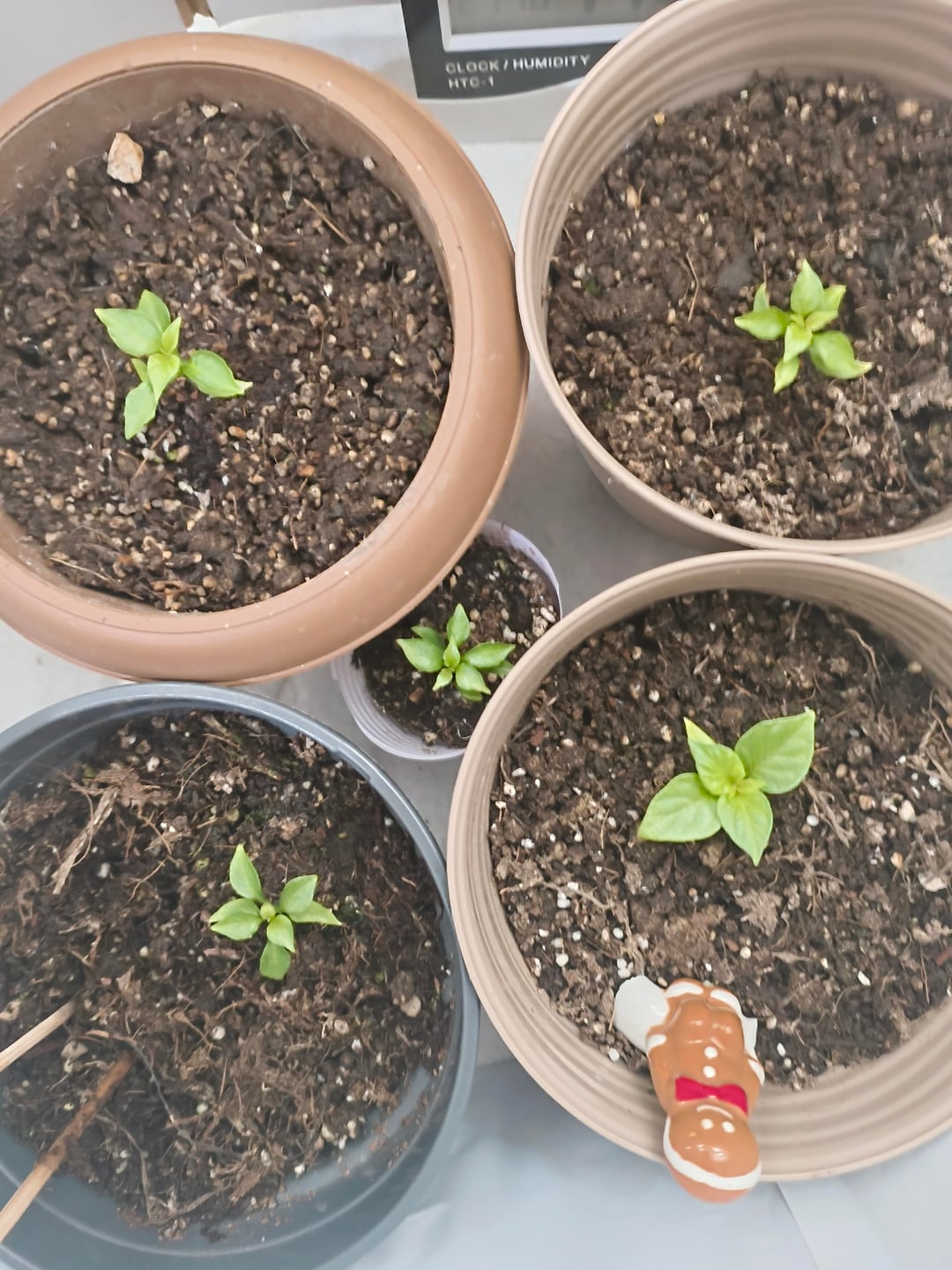
Those guys around 40 days old. they are kept warm, been giving fertilzier since 2 weeks and looking overall healthy. But they look super tiny both leave size and heightwise. I used to give them a bit too much light which led them to curl up their leaves inwards. which is resolved now. idk any other thing that cause this. any idea? most 40 days old seedlings posted here are 3 times in size.
by Natehiggers44
5 Comments
+ They are recently uppoted around 6 days ago. they were in plastic cups before.
Stop fertilizer until a couple inches, intensify the light slowly and gradually. Leaf curling doesn’t mean the plant didn’t like the light, it was because the change was too sudden.
Pepper plants have always been slow growers for me. Once they are finally planted they take off growing. I’d be patient
Mine are bigger than these guys but I put mine to 4 in planters around 2 weeks after germinating and I up potted to 2.6 gal at around 30 days. I feel like anything at hab heat or higher, the plants are slow growing any way.
There is a good chance they are nutrient locked. I’m almost certain of it honestly. No TL;DR cause I wish someone had explained this to me in one place when I first had this issue.
There a few ways this happens, but elevated soil electrical conductivity (EC) from excess salts, and/or soil PH imbalances are the most common.
You are possibly giving fertilizer too soon and too often. Young plants cant handle as high an EC as older plants and the nutrients need certain ph ranges to remain in a state the plant can absorb. If the soil is too acidic, the nutrients will stick to the soil too hard for the roots to pull away (calcium and magnesium won’t stick at all and completely wash away in watering). Too alkaline and the nutrients will turn into solid salts which the roots cant absorb and that also raises EC. Synthetic fertilizers tend to be acidic and can lower the soil ph while tap water tends to be more alkaline, raising the soil ph. On the flip side, water absorbed into the soil that the plant doesn’t drink eventually evaporates, leaving the excess nutrients as salt. This makes the EC go up and if it gets too high, the soil pulls water out of the roots instead of letting it go in, so the plant doesn’t get nutrients.
You need a decent EC and PH meter to check this stuff effectively.
Before you do anything, test the ph/ec of your medium first. You can test for both at the same time but pouring distilled water (EC/ph neutral) in each pot to get enough runoff for you to test with your meters. For PH, coco/peat is more strict and should usually be around 6 without a whole lot of wiggle room. Soil is more forgiving and can be between 6 and 7, but keeping it around 6.5 tends to be the best. EC can be higher for older plants, but since these are young, you want it between 1 and 1.5. The runoff method isn’t the most accurate, but it is the easiest.
There are several ways to fix soil PH, with some activating faster than others. I suggest using the slower methods because it’s much harder to accidentally overcorrect. Dolomite lime if the soil is too acidic, Elemental sulfur if it’s too alkaline.
If the EC is too high, you need to flush all the salt out of the pot. Take the total capacity of the pot and double it for how much water to use. (So if 5 gallon use 10 gallons of water) Measure the EC of the water before you flush. Flush it slowly, in parts. Pour in one or two gallons at a time and let it soak in and run off. Measure the EC of the last bit and compare the difference to the starting EC to determine if you need to flush more.
If you end up doing a flush you’ll need to add beneficial microbes back to the soil.
Cut your fertilizing back and make sure your pots have good drainage.